
xAI Grok AI in El Salvador Schools: Risks & Impact
⚡ Quick Take
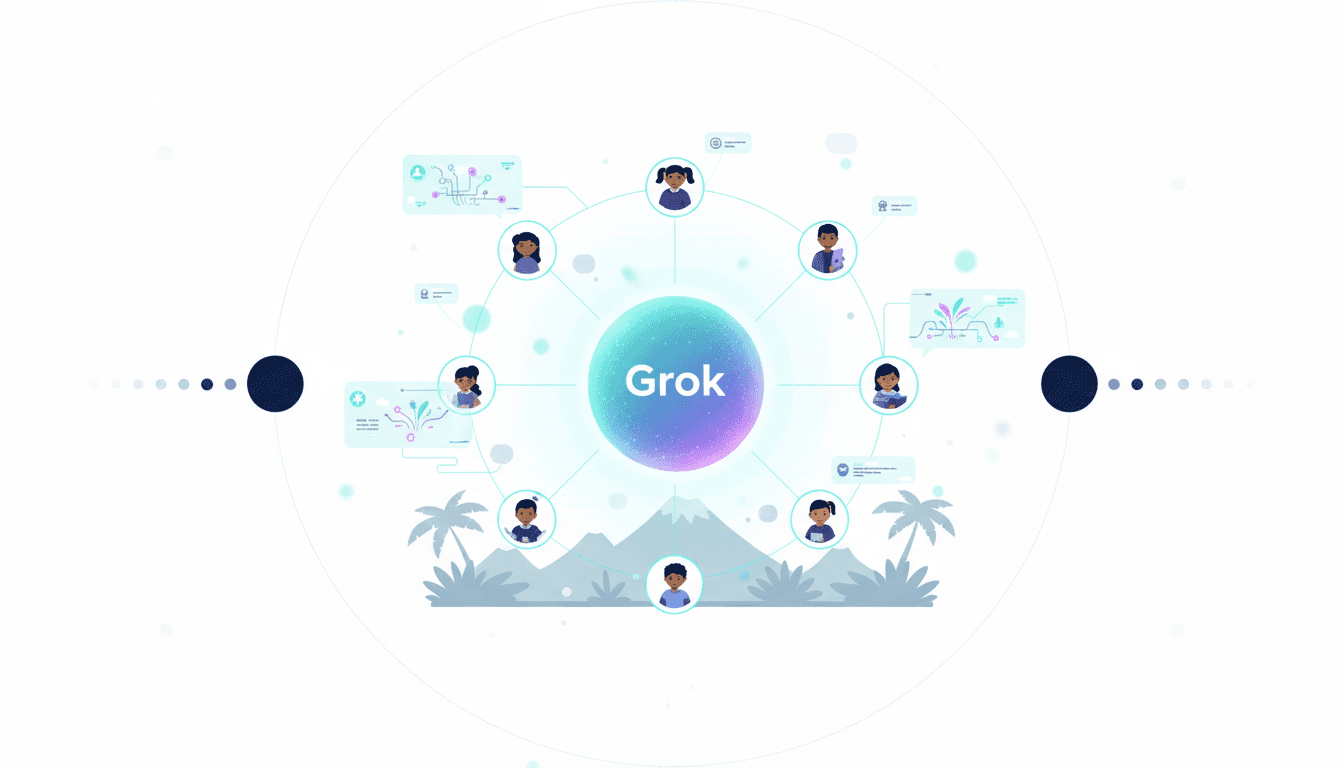
xAI is deploying its Grok model across El Salvador’s entire public school system, creating the world's largest testbed for generative AI in education. While framed as a revolutionary leap in personalized learning, the project is a high-stakes gamble that hinges on unanswered questions about safety, infrastructure, and governance for over one million students.
Summary
Elon Musk’s xAI has partnered with the government of El Salvador to integrate the Grok AI chatbot as a personalized tutor in over 5,000 public schools. The two-year plan aims to reach more than one million students and their teachers, representing a national-scale adoption of a single frontier AI model.
What happened
Ever wonder how a small nation could suddenly become the epicenter of AI in classrooms? The partnership was announced as a landmark initiative to modernize El Salvador's education system. The rollout will be managed by the country's ministry of education, with pilot programs reportedly already underway to test classroom integration and student workflows.
Why it matters now
This move leapfrogs the incremental, opt-in pilots common in the US and Europe, establishing a precedent for nationwide AI deployment in the public sector. For xAI, it represents a massive strategic win, securing a unique, large-scale application that puts pressure on competitors like Google's Gemini and OpenAI's ChatGPT for Education to land similar governmental deals. That said, it's the kind of bold step that could reshape how we think about tech in public services.
Who is most affected
El Salvador’s students and teachers are on the front line, poised to benefit from AI-powered tools but also exposed to the risks of a nascent technology. Rival AI labs are now forced to watch a competitor gain a significant foothold in the global public sector, and education policymakers worldwide have a new, high-stakes case study to monitor. From what I've seen in similar tech rollouts, those front-line folks often bear the brunt of any rough edges.
The under-reported angle
Beyond the topline numbers, the announcement is critically thin on implementation details. There is no public information on the governance framework for child safety, data privacy for minors, or content filtering for a model known for its "edgy" persona. Furthermore, the infrastructure requirements, teacher training curriculum, and total cost of ownership for a developing nation remain completely unaddressed. It's like jumping into deep waters without checking the currents first - plenty of reasons to pause and reflect.
🧠 Deep Dive
Have you ever stopped to think what it might feel like for a teacher in a rural school to suddenly have an AI sidekick? xAI’s official announcement paints a utopian picture: Grok will address learning gaps and reduce teacher workload by providing personalized tutoring at a national scale. Framed as a pioneering partnership to “build a better future for everyone,” the El Salvador deployment is being positioned as a global model for AI in education. This narrative, echoed by most initial news coverage, focuses on the vast potential to modernize a nation’s classrooms with a single, decisive technological leap.
However, the choice of Grok introduces a significant variable that is being largely ignored. Unlike the more sanitized corporate personas of its rivals, Grok was explicitly designed with a "rebellious streak" and access to real-time information from X. Critics have already raised concerns about its suitability for an unfiltered K-12 environment. Deploying it to over a million children without a transparent, robust, and independently audited safety and content moderation plan is not just a technological challenge - it's a massive ethical experiment. And honestly, weighing the upsides against those unknowns feels a bit like walking a tightrope.
The operational and infrastructural hurdles are equally profound. The existing reporting offers no details on the fundamental architecture: will Grok run in the cloud, demanding immense, consistent bandwidth for 5,000+ schools, or will there be an on-device or hybrid model? For a nation with significant connectivity disparities, especially in rural areas, this is a critical failure point. The plan's success depends on unstated assumptions about device availability, maintenance, and the readiness of the national grid and internet backbone to handle such a load - assumptions that could trip things up before they even start.
This initiative also functions as a playbook for a new kind of geopolitical soft power, where technology "gifts" create deep, long-term dependencies. The lack of public information on the budget, total cost of ownership (TCO), and service-level agreements (SLAs) is a major red flag. By embedding its closed-source model into a nation's core educational infrastructure, xAI is creating a powerful data moat and a long-term commercial relationship, the full terms of which are unknown. This raises critical questions about vendor lock-in and accountability, questions that linger like unfinished business.
Ultimately, the El Salvador project is a bold move in the competitive AI landscape. It allows xAI to test its models and gather unique data on learning and interaction patterns at a scale its competitors can only dream of. The insights gained from a nationwide deployment - successful or not - will be invaluable for refining Grok and future models. The question for the rest of the world is what precedents this sets for AI governance, public-private partnerships, and the very definition of a "responsible" AI deployment, leaving us to ponder the ripples ahead.
📊 Stakeholders & Impact
Stakeholder | Impact | Insight |
|---|---|---|
xAI & Elon Musk | High | Secures a landmark national deployment, establishing market leadership in large-scale institutional AI adoption and creating a powerful data and product development advantage. |
El Salvador Govt. & Students | Critical | A high-risk, high-reward bet on AI to leapfrog traditional educational development. Success offers massive learning gains; failure could expose a generation to technological and pedagogical risks. |
Rival AI Providers (OpenAI, Google, etc.) | High | The "AI for a nation" deal raises the competitive stakes. The pressure is now on to move beyond enterprise and secure similar strategic government partnerships. |
Global Educators & Regulators | Significant | El Salvador becomes the world’s most important live case study for AI in education, creating an urgent need for governance models covering child safety, data privacy, and vendor accountability. |
✍️ About the analysis
This i10x analysis draws from public announcements by xAI and the government of El Salvador, along with a roundup of international media coverage. It spotlights the key implementation and governance gaps we've uncovered in our research, giving a clear-eyed strategic view for technology leaders, policymakers, and investors keeping tabs on the AI infrastructure world.
🔭 i10x Perspective
What if handing over a nation's schools to one AI company changes more than just lesson plans? This is more than an edtech pilot; it's the privatization of educational infrastructure at a national level. By handing the keys to a core societal function to a single, closed-source AI provider, El Salvador is pioneering a new model of AI-state integration that blurs the lines between public service and commercial strategy.
The real test will not be whether students’ test scores improve, but whether a commercial AI model, designed for engagement and scale, can align with the public interest goals of safety, equity, and transparency. The world is watching to see if this partnership becomes a template for progress or a cautionary tale about moving fast and breaking things - with a nation's children caught in the middle, and all the what-ifs that come with it.
Ähnliche Beiträge

GPT-5.2: Tiered Models and AI Impact
Explore OpenAI's GPT-5.2 with its innovative tiered lineup: Instant, Thinking, and Pro. Discover how this shift balances speed, cost, and power for developers and enterprises. Learn the key implications for AI strategy and business.

OpenAI's $300B Oracle Deal: Securing AI Future
OpenAI's reported $300 billion, five-year cloud deal with Oracle addresses compute scarcity for AGI pursuits. Explore impacts on Microsoft, NVIDIA, energy sectors, and the shift to multi-cloud AI infrastructure. Dive into the analysis.
ChatGPT vs Gemini: Essential Benchmarks for Devs & Businesses
Explore the gaps in ChatGPT vs Gemini comparisons, focusing on cost, speed, security, and long-context performance. Get insights for developers and enterprises to choose the right AI tool. Discover repeatable benchmarks now.