
Claude 3.5 Sonnet: Rising Choice for Startup AI Stacks
⚡ Quick Take
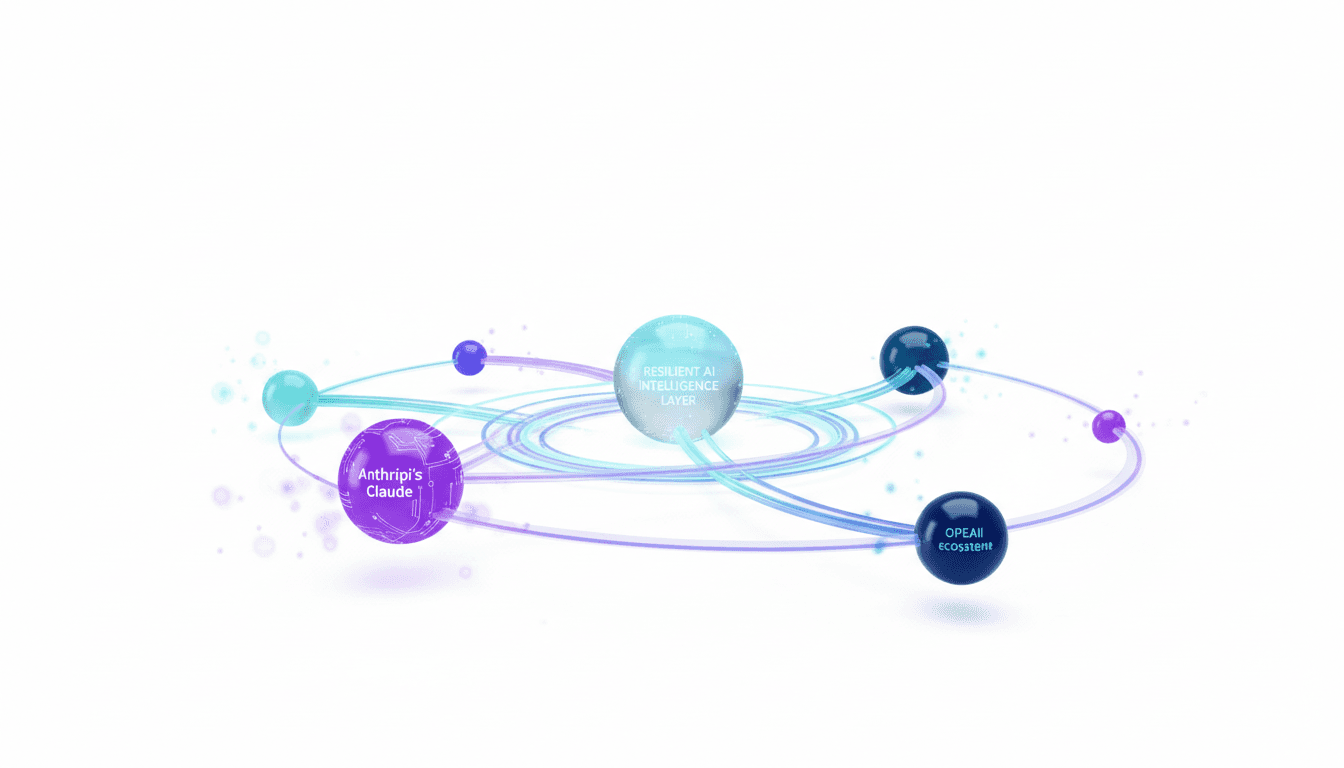
As the AI-native economy matures, the "ChatGPT-first" default is fracturing. Startups are now making sophisticated, second-order decisions about their LLM stack, increasingly integrating Anthropic's Claude not as a replacement, but as a strategic component for specific workloads where cost, speed, and structured output reliability are paramount. This signals a market shift from crowning a "best model" to building a resilient, multi-model intelligence layer.
Have you wondered if the AI world is starting to feel a bit more like a choose-your-own-adventure story, rather than a straight path? That's the vibe I'm picking up lately.
Summary
An increasing number of startups are diversifying their AI stack beyond OpenAI, with Anthropic's Claude family (especially the recent Claude 3.5 Sonnet) gaining significant traction. This adoption is driven by a calculated trade-off favoring Claude's cost-performance ratio, superior capabilities in handling structured data, and a stronger narrative around enterprise-grade safety and compliance. From what I've seen in developer chats, it's less about hype and more about what actually works in the trenches.
What happened
Analysis of founder sentiment from communities like Y Combinator, VC reports from firms like a16z and Menlo, and developer benchmarks reveals a deliberate shift in strategy. Instead of depending on a single provider, startups are moving to multi-model orchestration, where Claude is specifically chosen for production tasks requiring low latency, reliable JSON outputs, and efficient cost-per-interaction. It's like they're piecing together a toolkit, not betting everything on one hammer.
Why it matters now
The recent releases of Claude 3.5 Sonnet and OpenAI's GPT-4o have narrowed the gap in top-tier performance. This pushes the competition into new territory: API latency, throughput-per-dollar, function calling reliability, and specific compliance features (e.g., PHI/PII handling) are now the critical differentiators for developers and CTOs making infrastructure decisions. But here's the thing - these aren't just tech specs; they're the real-world deciders that keep apps humming without breaking the bank.
Who is most affected
Startup CTOs, engineering leaders, and product managers, who must now conduct more sophisticated evaluations beyond leaderboard scores. OpenAI faces its first real challenge to its incumbency as the "default" choice in the startup ecosystem, forcing it to compete on pragmatic metrics, not just brand leadership. I've noticed how this shakes things up - suddenly, everyone's weighing the upsides a little more carefully.
The under-reported angle
This trend is less about "Claude replacing ChatGPT" and more about the emergence of multi-model routing as a core competency for AI-native companies. The smartest teams are abstracting the model layer entirely, building systems to dynamically route prompts to the most efficient model (Claude, GPT, Llama, etc.) to optimize cost, latency, and capability, thereby mitigating vendor lock-in from day one. Plenty of reasons for that, really - it's smart insurance against a volatile market.
🧠 Deep Dive
Ever felt like the early days of AI were all excitement and no fine print? Well, the era of a monolithic AI stack is over, and that's a good thing, even if it means a bit more homework for everyone involved. For the past year, the default path for a startup building with AI was simple: build on OpenAI. But as the rubber meets the road in production environments - you know, when real users start poking at your system - technical founders are evolving from model "fans" to sophisticated "buyers," and their calculus is changing. Data from across the ecosystem shows that Anthropic's Claude is rapidly becoming the second, and sometimes first, call for startups, signaling a deeper maturation of the AI infrastructure market. From my vantage point, it's like watching a kid outgrow their training wheels.
This isn't just about vibes or chasing the latest release - though, let's be honest, those shiny new benchmarks do pull you in. The shift is rooted in three pragmatic drivers: cost, control, and compliance. With the release of Claude 3.5 Sonnet, Anthropic delivered a model that is significantly faster and cheaper than its Opus predecessor and OpenAI’s top-tier GPT-4 models, making it ideal for high-throughput, user-facing applications. Critically, developers report that Claude models, particularly 3.5 Sonnet, offer superior control over outputs. They excel at reliably generating structured data like JSON and executing complex instructions via function calling, reducing the need for output validation and retry logic - a constant headache and hidden cost in production systems, as anyone who's debugged at 2 a.m. can tell you.
Performance is no longer a simple matter of benchmark supremacy, and that's freeing in its own way. For startup CTOs, the critical metric is becoming throughput-per-dollar and time-to-first-token (latency). While GPT-4o remains a formidable all-arounder, startups are carving out specific roles for Claude based on these operational realities. A complex reasoning task might still be routed to GPT-4o, but a customer-service chatbot, a code-generation agent, or a data extraction pipeline now frequently runs on Claude 3.5 Sonnet or Haiku to manage costs and ensure a responsive user experience. This portfolio approach moves beyond a simple "A vs. B" comparison to a more nuanced, task-appropriate model selection strategy - sort of like assembling a dream team where everyone plays to their strengths.
Furthermore, Anthropic has successfully positioned itself as the enterprise-ready and "safer" option. This narrative, reinforced by major partnerships like the one with Accenture, provides a crucial advantage for B2B startups. By building on Claude, they inherit a story of security and compliance that de-risks their product in the eyes of enterprise buyers concerned with data residency, PII handling, and model predictability. For a startup selling into regulated industries like healthcare or finance, choosing Claude is as much a go-to-market decision as a technical one - it treads that line between innovation and caution just right.
Ultimately, the rise of Claude reflects the rise of a more sophisticated architectural pattern: multi-model orchestration. The winning startups of tomorrow won't be locked into a single provider. They are building an abstraction layer that allows them to treat foundation models as commodities. This "model router" can dynamically select the best tool for the job based on real-time cost, latency, and quality requirements. The ascent of Claude is the most visible evidence of this new paradigm, where infrastructure resilience and cost optimization have become the new competitive moats - and honestly, it's exciting to see the ecosystem grow up like this.
📊 Stakeholders & Impact
Stakeholder | Impact | Insight |
|---|---|---|
Startup Founders & CTOs | High | Decision-making becomes more complex but also more strategic. They must now evaluate models on a per-use-case basis, balancing cost, latency, and compliance - it's a shift that rewards the thoughtful planners. |
OpenAI | Medium-High | Faces legitimate competition for its role as the default provider in the startup stack. Must now compete not just on peak performance but on API reliability and TCO, which could reshape their playbook. |
Anthropic | High | Successfully captured significant mindshare by focusing on enterprise needs and cost-effective performance tiers, turning "safety" into a compelling commercial advantage - a move that's paying off big. |
Enterprise Buyers | Medium | Gain more options and leverage. With startups building on "enterprise-friendly" models like Claude, the path to adopting AI-native tools becomes smoother and less risky, easing those tough procurement talks. |
VCs & Investors | Medium | Investment theses must now account for a multi-model world. The value may accrue not just to model builders but to the orchestration and tooling layer that manages them - plenty of opportunity there, really. |
✍️ About the analysis
This i10x analysis is an independent synthesis based on an extensive review of recent VC reports, developer community sentiment, API documentation, and journalistic coverage of the AI market. It's written for technical founders, engineering managers, and product leaders who are building the next generation of AI-native products and need to make strategic infrastructure decisions - the kind that keep you one step ahead in a fast-moving field.
🔭 i10x Perspective
What if the splintering of the LLM market isn't chaos, but the smart evolution we've been waiting for? From where I sit, the fragmentation of the LLM market isn't a bug; it's the future of the intelligence stack. We are moving away from a world with a single "AGI-in-waiting" toward a federated ecosystem of specialized intelligence agents, each optimized for a different task and price point. The core competency for AI-native companies will no longer be mere access to a powerful model, but the sophisticated orchestration of many - and that changes everything.
This trend creates a critical unresolved tension: will foundation model providers like OpenAI and Anthropic move up the stack to offer this orchestration layer themselves, capturing all the value? Or will a neutral, model-agnostic tooling layer emerge as the "Linux" of the AI era, preserving choice and preventing vendor lock-in? The next battle isn't for the "best" model, but for control of the routing layer that sits on top of them all - a pivot that could define the winners for years to come.
Ähnliche Nachrichten

Google's AI Strategy: Infrastructure and Equity Investments
Explore Google's dual-track AI approach, investing €5.5B in German data centers and equity stakes in firms like Anthropic. Secure infrastructure and cloud dominance in the AI race. Discover how this counters Microsoft and shapes the future.

AI Billionaire Flywheel: Redefining Wealth in AI
Explore the rise of the AI Billionaire Flywheel, where foundation model labs like Anthropic and OpenAI create self-made billionaires through massive valuations and equity. Uncover the structural shifts in AI wealth creation and their broad implications for talent and society. Dive into the analysis.

Nvidia Groq Deal: Licensing & Acqui-Hire Explained
Unpack the Nvidia-Groq partnership: a strategic licensing agreement and talent acquisition that neutralizes competition in AI inference without a full buyout. Explore implications for developers, startups, and the industry. Discover the real strategy behind the headlines.