
Nvidia Licenses Groq LPU: License-and-Hire Insights
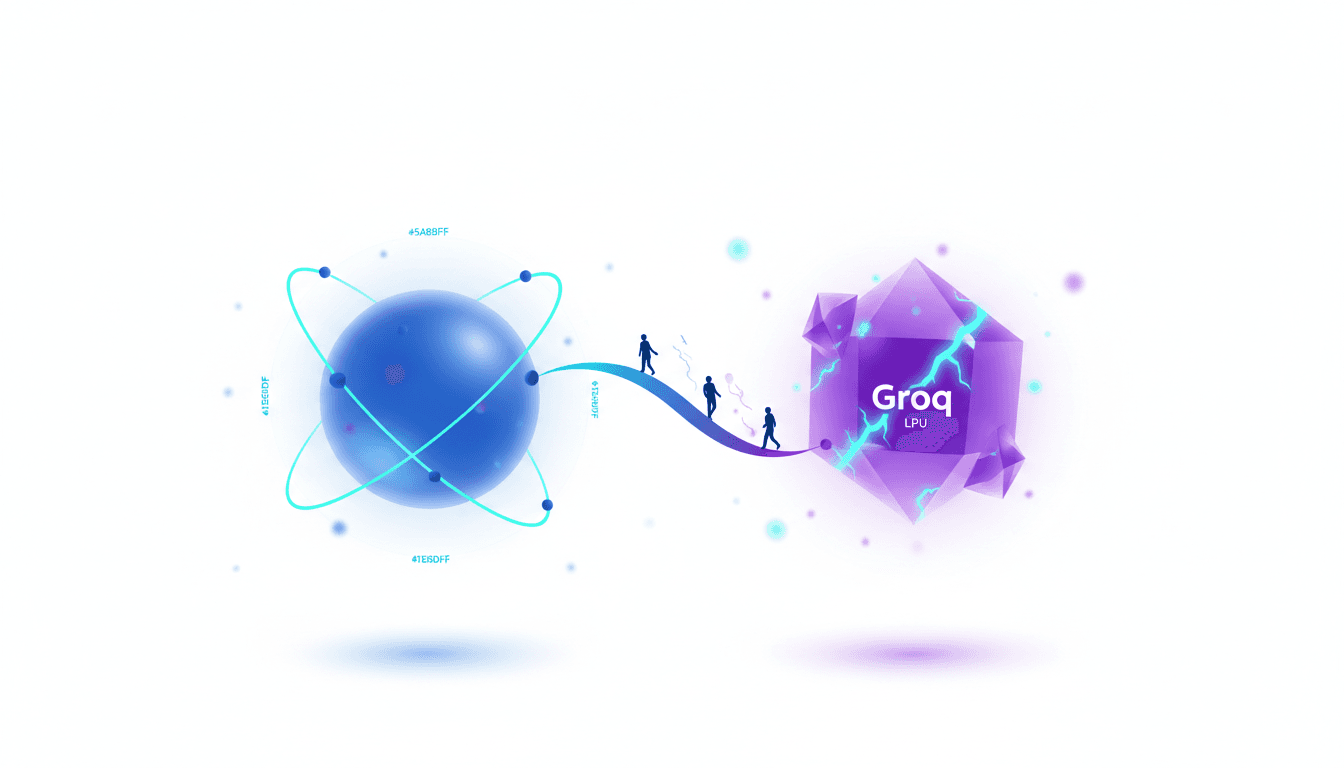
Nvidia Licenses Groq's LPU: License-and-Hire, Not a $20B Buyout
⚡ Quick Take
When those first stories hit about a $20 billion acquisition, it really shook up the AI chip world - but as the dust settled, I realized it's a much smarter, more layered strategy at play. Nvidia isn't swallowing Groq whole; they're opting for a precise maneuver to license that rival's lightning-quick inference tech and bring over its top minds. It's the kind of move that quietly redraws the lines in LLM deployment, all without inviting the usual merger scrutiny.
Summary
Nvidia and the up-and-coming AI chip player Groq have struck a non-exclusive technology licensing agreement. What started as rumors of a massive $20 billion buyout turns out to be this, plus a handful of Groq's key executives heading to Nvidia. Groq keeps running on its own, and customers can still tap into GroqCloud services without a hitch.
What happened
This isn't your standard merger or acquisition - far from it. Nvidia grabbed rights to Groq's intellectual property for its LPU (Language Processing Unit) and scooped up some prime talent, right down to the CEO. That opens the door to the design that's been breaking speed records for LLM inference, cranking out tokens per second like nobody's business. Groq, on the other hand, holds onto its independence and can still shop its tech around to other players, even if it's saying goodbye to some leaders.
Why it matters now
Have you ever wondered if the AI hardware wars are splitting into two fronts? This deal spotlights how specialized chips for inference are carving out their own turf, separate from the GPU stronghold in training. Nvidia licensing the LPU tech feels like a nod to that shift - they're weaving in a disruptor's edge to stay ahead, hinting at a mixed hardware future where no single approach rules everything.
Who is most affected
Think about the AI developers and big enterprises rolling out LLMs - they're likely smiling, with faster, low-latency inference options on the horizon. Chip rivals? They're staring down a beefed-up Nvidia that's just borrowed a game-changing idea. And for regulators, this license-and-hire twist throws a curveball, dodging the big antitrust alarms of an outright takeover.
The under-reported angle
Keeping it non-exclusive is pure strategic gold. Nvidia gets to blunt a threat, snag the smarts, and still pitch to watchdogs that the market's not any less crowded. In this age of tight scrutiny on Big Tech deals, it might just rewrite how these things go down - a way to win without the full fight.
🧠 Deep Dive
Ever catch yourself second-guessing a headline only to find the real story's even more intriguing? That's what happened here, once the acquisition buzz faded into this non-exclusive licensing reveal. Nvidia's playing a long game, not chasing empire-building so much as nabbing a specific edge. Groq's LPU (Language Processing Unit) setup has shown real chops in LLM inference - you know, that phase where a trained model spits out responses on the fly. GPUs from Nvidia own training, no question, but inference? It's a wilder space, where speed (latency) and cost per token call the shots. Bringing in Groq's IP and team feels like Nvidia's way of future-proofing, pulling a potential rival's strength into their fold before it bites.
What strikes me most is how this tackles the split between training and inference demands - two beasts that don't always share the same cage. Groq's been hammering home tokens per second in their pitch, and their LPU lives for it: a steady, software-tweaked processor built for streaming language data with minimal wait times and max output. GPUs, for all their parallel muscle, are more of a jack-of-all-trades. This partnership? It's Nvidia admitting that betting everything on one hardware type might not cut it for the AI that's coming - think apps needing split-second replies, where every millisecond counts.
For folks building AI systems or wiring up infrastructure, the big puzzle is integration - how do these pieces fit without a mess? Reporting's skimped on that, but my take is it'll hinge on software smarts, layering in LPU boosts through Nvidia's tools like TensorRT-LLM or the NIM platform. Developers could then pick the best hardware for the job - GPU for heavy lifting, LPU for speed - based on model scale, timing needs, or budget, all seamless, no code overhaul required. It's not solely about the chips; Nvidia's CUDA world just got a bit stretchier, wrapping around fresh hardware territory.
Shift to the bigger picture, market-wise and rules-wise, and this acquihire-plus-license setup looks like a blueprint for AI-era defense plays. A straight $20 billion grab for a sizzling chip foe? That'd light up the FTC and EU fast. But this way, Nvidia scores the essentials - brains and breakthroughs - while Groq stays upright, sort of on its own. It undercuts the rival's spark, sows doubt in their path ahead, and keeps the antitrust wolves at bay with a straight face. We'll have to see if Groq holds its ground, keeps partners close, or drifts into Nvidia's shadow - it's the kind of tension that keeps things interesting.
📊 Stakeholders & Impact
Stakeholder / Aspect | Impact | Insight |
|---|---|---|
AI / LLM Developers | High | They stand to gain from blending GPU and LPU power through Nvidia's software setup, tailoring inference for top speed (low latency, high tokens/sec) across models and scenarios - something that's been a pain point. |
Nvidia | High | It solidifies their lead by folding in a top inference rival's IP and people, smartly guarding against niche hardware stealing the show in deployment. |
Groq (Company) | Critical | Licensing brings in serious cash, sure, but losing leaders hits hard on operations and direction - that non-exclusive bit? It's a double-edged sword, freedom with strings. |
GroqCloud Customers | Medium | Continuity's promised for now, but the road ahead ties into whatever shakes out between Groq and Nvidia, with its ex-leaders now on the other side. |
Regulators (FTC/EC) | Significant | A prime example of sneaky competition tweaks without the merger label, poking holes in old antitrust playbooks and forcing fresh looks. |
Rival Chipmakers | High | Nvidia's now tougher, having grabbed a standout architecture - the race for inference edge just got steeper for everyone else. |
✍️ About the analysis
This i10x piece draws from public statements by the companies, fresh industry coverage, and what we've pieced together internally on AI chip designs and market shifts. It's aimed at tech execs, AI builders, and planners who want the layers beneath the surface noise.
🔭 i10x Perspective
From what I've observed in these fast-moving spaces, this deal's more than paperwork - it's scripting a fresh rulebook for AI infrastructure, one called "Absorb, Don't Acquire." Nvidia shows how the top dog can disarm upstarts with finesse, dodging the M&A traps that trip up so many. It underscores that AI hardware's still in flux; even the GPU giant's hedging bets on inference-tuned designs for LLMs.
The lingering question, though - and it's a good one - is if Groq turns that licensing payout and loose terms into real staying power, or if the talent drain leaves it circling Nvidia's pull. The fight over AI inference's heart, and its hardware backbone, feels like it's ramping up, with plenty of twists ahead; the key takeaway: Absorb, Don't Acquire.
Ähnliche Nachrichten

Google's AI Strategy: Infrastructure and Equity Investments
Explore Google's dual-track AI approach, investing €5.5B in German data centers and equity stakes in firms like Anthropic. Secure infrastructure and cloud dominance in the AI race. Discover how this counters Microsoft and shapes the future.

AI Billionaire Flywheel: Redefining Wealth in AI
Explore the rise of the AI Billionaire Flywheel, where foundation model labs like Anthropic and OpenAI create self-made billionaires through massive valuations and equity. Uncover the structural shifts in AI wealth creation and their broad implications for talent and society. Dive into the analysis.
Nvidia Groq Deal: Licensing & Acqui-Hire Explained
Unpack the Nvidia-Groq partnership: a strategic licensing agreement and talent acquisition that neutralizes competition in AI inference without a full buyout. Explore implications for developers, startups, and the industry. Discover the real strategy behind the headlines.