
Open Source LLMs: Production Readiness Challenges
⚡ Quick Take
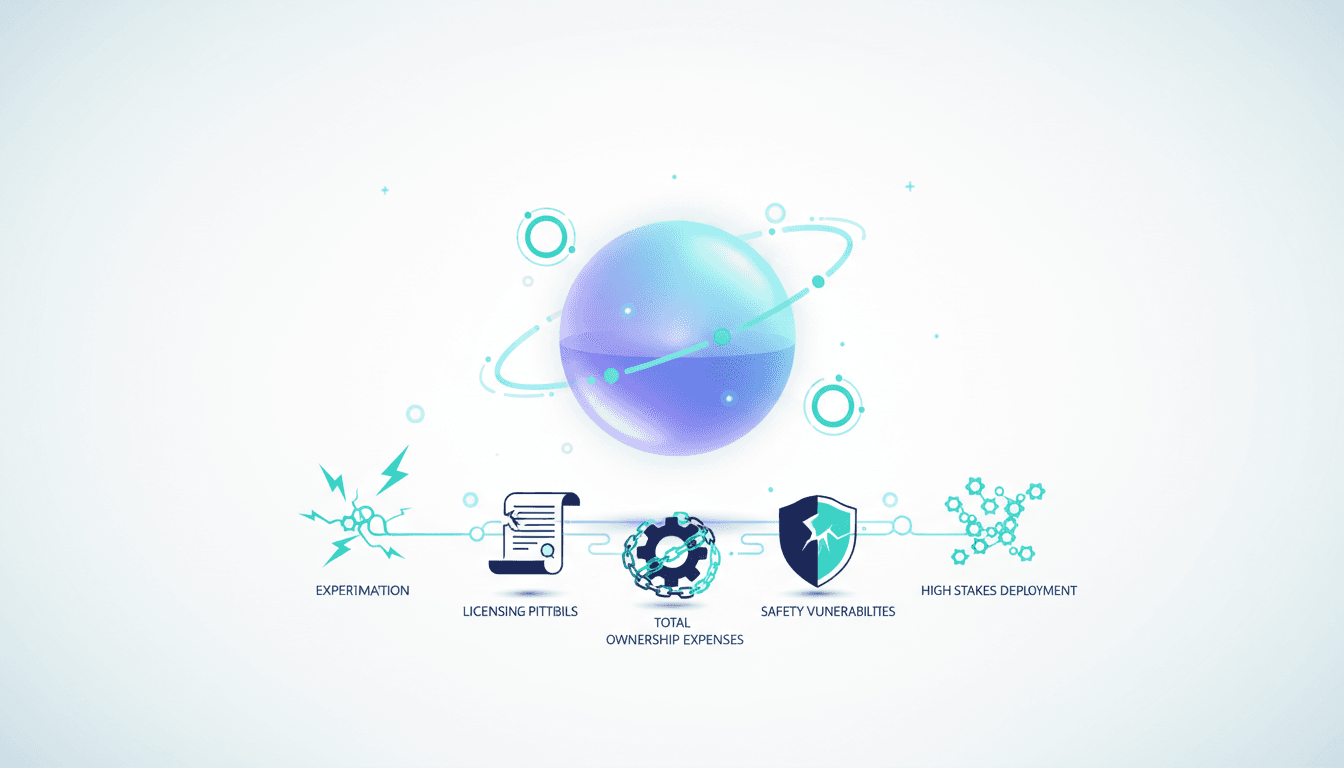
Have you felt the ground shifting under open-source AI lately? It's moved past that raw power struggle into something far more nuanced—a real test of how ready these tools are for the real world. Models from outfits like Meta, Alibaba, and Mistral are holding their own against those proprietary APIs on certain jobs now, so the big questions for developers and companies aren't just about topping charts anymore. They're about the full picture: total cost of ownership, those tricky licensing pitfalls, and the safety issues no one's quite nailed down yet. Forget the days of simply grabbing weights and running; we're in a time of careful, high-stakes rollout.
Summary: All these strong open-source Large Language Models (LLMs)—think Llama 3, Qwen 3, DeepSeek V3—have turned the spotlight in the market. Sure, they're hitting benchmarks like MMLU and HumanEval on par with closed-source setups, but what really keeps developers up at night? Production readiness. That means wrestling with licensing limits, hardware expenses, inference speeds, and keeping things governed properly.
What happened: It's been a flood, really—a rush of open-weight models from big tech names and nimble startups alike. With permissive licenses and clever setups like Mixture-of-Experts (MoE), folks can now piece together and run their own AI systems, cutting ties with the usual suspects like OpenAI or Anthropic.
Why it matters now: This burst of options hands builders real freedom, but it piles on the risks and headaches too. Picking a model? It's not just scanning leaderboards for the winner. It's a deeper call—one that touches on legal headaches, budget strains, and how safe your end product really is.
Who is most affected: Front and center are the developers, engineering leads, and CTOs sifting through the pros and cons of open models' control versus the easy ride of proprietary APIs. Companies eyeing AI rollouts? They're building in-house know-how for stuff they used to hand off to vendors.
The under-reported angle: So much chatter sticks to those performance scores. But the meatier part—the hidden costs of running your own setup, the foggy "community" licenses that could trip you up legally, and how open-source models barely get tested for safety or jailbreak tricks—that's where the real gaps yawn wide.
🧠 Deep Dive
Ever paused to think how the story on open-source AI keeps rewriting itself? For a long while, everyone wondered if these models could even touch the likes of GPT-4. Here in 2025, though? That fight's mostly wrapped up for plenty of everyday tasks. Now the tougher talk is about bridging the gap from tinkering on your laptop with Ollama to scaling for millions. The field's packed—Meta's Llama 3, Alibaba's Qwen lineup, Mistral's Mixtral crew, DeepSeek's code wizards—and it's grown up fast. Capability's table stakes; the squeeze is in making it work day-to-day.
Licensing hits first, and it's trickier than it looks. A bunch come with straightforward Apache 2.0 tags, fine. But more and more lean on custom deals, say the Llama 3 Community License, with fine-print rules that trip up even sharp teams. That haze? It spooks commercial projects, and those glossy "best of" rankings skip it entirely. For a business, it's not some code glitch—pick poorly, and you're staring down lawsuits that could sink your whole venture.
Then there's the money side, Total Cost of Ownership (TCO), which sneaks up on you. "Free" weights sound great, until you tally the hardware beast underneath. Pushing a 70B model smooth? You need the lowdown on quantization tricks (GGUF, AWQ), solid inference kits (vLLM, TensorRT-LLM), and speed hacks like speculative decoding. Not fluff—these demand pros who know their stuff, plus pricey GPUs. Add in power bills, gear wear, and the endless tweaking hours. It's worlds away from an API's neat per-token fee, predictable as clockwork.
That tangle's sparking sharper focus too, you see. No more chasing a do-it-all model. Open-source is birthing specialists: DeepSeek-Coder or StarCoder2 for devs, matching GitHub Copilot on code chores. Or tweaks for long-haul RAG in business setups. It's a sign things are leveling up—from broad chat tools to pinpoint engines that slot into bigger AI puzzles.
Still—and this is the part that nags at me most—safety and alignment lag badly. Big API folks pour cash into red-teaming and filters, but open-source? Scant rules for checking jailbreak toughness, baked-in biases, or toxic outputs. It all lands on you, the user, and plenty aren't geared for it. No clear safety yardsticks? Throwing an open model live feels like a leap of faith, edges blurred.
📊 Stakeholders & Impact
Stakeholder / Aspect | Impact | Insight |
|---|---|---|
Developers & Builders | High | They get this huge boost in tweaking and owning their AI setup, but now shoulder MLOps headaches, governance duties, and cost wrangling too. Skills are pivoting—from quick API plugs to fine-tuning inference on the fly, really. |
Enterprises & CTOs | High | It's the classic build-or-buy fork in the road. Keeping it in-house means privacy wins and custom fits, sure—but brace for hefty infrastructure spends, expert hires, and owning those legal and safety wild cards. |
AI Infrastructure & Hardware | High | Self-hosting surge? Straight fuel for NVIDIA GPU hunts, engines like vLLM, and tools galore for quantization, LoRA fine-tunes, even keeping tabs on it all—ecosystem's buzzing. |
Proprietary API Providers | Medium | They're scrambling beyond brute force scores now. To stand out, it's about rock-solid uptime, built-in safety nets, hassle-free ops, and that smooth dev flow—especially against open-source's rougher edges. |
✍️ About the analysis
I've pulled this together as an independent i10x take, drawing from market vibes, dev docs, and fresh patterns in rolling out open-source AI. It pulls in bits on licensing quirks, benchmark runs (MMLU, HumanEval), and the nuts-and-bolts of inference stacks (vLLM, GGUF) to sketch a roadmap—tailored for developers, engineering managers, CTOs feeling their way through today's AI terrain.
🔭 i10x Perspective
What strikes me about the open-source push? It's not mere backups to closed AI—it's forging a whole separate web of smarts, with rules all its own. That splits the scene clean: the tidy, overseen API lane on one side, the wild, potent scatter of open weights on the other.
Gone are the straight-up OpenAI showdowns. Now it's a messy, many-sided scrap, where Meta or Mistral drop open models like chess pieces—building alliances, cheapening the brainy core.
But the knot that won't untie, not for years? Liability and reins. These tweakable powerhouses spread fast, and pinning blame on outputs—post-fine-tune, post-deploy—stays a murky mess. Benchmarks? Nailed. But governance? That's the storm brewing, no doubt.
Ähnliche Nachrichten

Google's AI Strategy: Infrastructure and Equity Investments
Explore Google's dual-track AI approach, investing €5.5B in German data centers and equity stakes in firms like Anthropic. Secure infrastructure and cloud dominance in the AI race. Discover how this counters Microsoft and shapes the future.

AI Billionaire Flywheel: Redefining Wealth in AI
Explore the rise of the AI Billionaire Flywheel, where foundation model labs like Anthropic and OpenAI create self-made billionaires through massive valuations and equity. Uncover the structural shifts in AI wealth creation and their broad implications for talent and society. Dive into the analysis.

Nvidia Groq Deal: Licensing & Acqui-Hire Explained
Unpack the Nvidia-Groq partnership: a strategic licensing agreement and talent acquisition that neutralizes competition in AI inference without a full buyout. Explore implications for developers, startups, and the industry. Discover the real strategy behind the headlines.