
Apple-Google AI Deal: Siri’s Hybrid Future
⚡ Quick Take
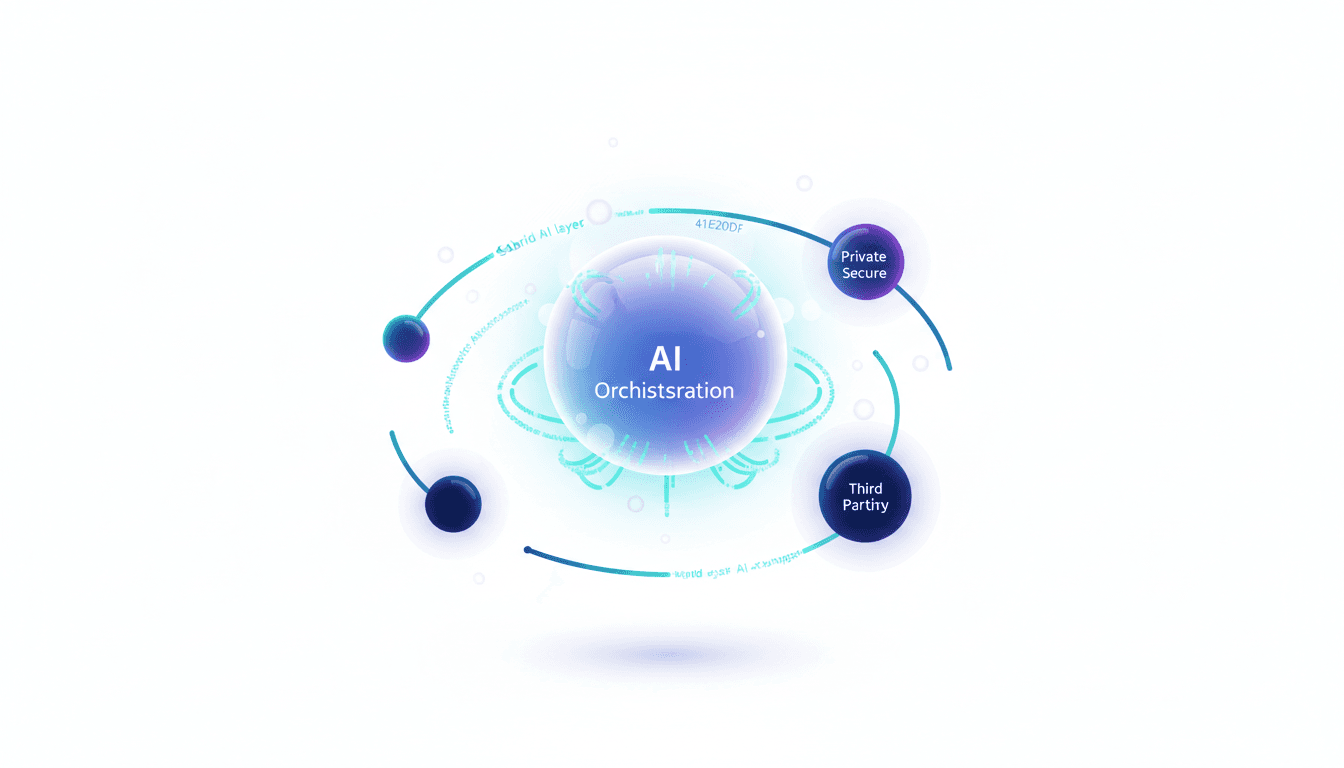
A potential Apple-Google alliance to inject Gemini into the iPhone isn't just a catch-up play for Siri. It signals a fundamental shift in the AI race, positioning Apple not as a model builder, but as the world's most powerful AI orchestrator, deciding which model—on-device, private cloud, or third-party—answers a billion users' queries. This hybrid strategy could redefine AI distribution and create an existential threat for players like OpenAI who are left out of the ecosystem.
What happened: Apple is reportedly in active negotiations with Google to license the Gemini suite of AI models. The deal would integrate Gemini's powerful cloud-based generative AI capabilities into upcoming iPhone features for iOS 18, most notably for a long-awaited overhaul of Siri.
Why it matters now: Have you ever wondered how a company like Apple, always one step ahead in hardware, might leapfrog ahead in AI without starting from scratch? This move short-circuits Apple's perceived lag in the large-scale generative AI race. Instead of waiting to perfect its own foundational models, Apple could instantly deploy state-of-the-art capabilities by treating a competitor's AI as a component. It reframes the battle from who builds the best single model to who controls the user endpoint and the intelligent routing system - a shift that's both pragmatic and forward-thinking.
Who is most affected: Developers, who will need to adapt to a potential multi-model API architecture; OpenAI, which faces the risk of being locked out of the world's most lucrative device ecosystem; and Google, which could solidify its AI dominance by making Gemini the default intelligence layer for both Android and iOS.
The under-reported angle: Most coverage frames this as "Apple playing catch-up," but from what I've seen in similar tech pivots, that's missing the bigger picture. The real story is the underlying technical architecture this implies: a sophisticated, multi-layered orchestration engine. Apple is likely building a system that seamlessly routes user requests between its own on-device models for speed and privacy, its Private Cloud Compute for sensitive tasks, and a powerhouse like Gemini for complex, world-knowledge queries, creating a hybrid AI invisible to the user. It's the kind of layered approach that could quietly reshape how we interact with our devices every day.
🧠 Deep Dive
Ever feel like the AI world is moving so fast that even the giants are scrambling to keep up? The rumored pact between Apple and Google represents a pragmatic - and potentially brilliant - pivot in the AI platform wars. While competitors like Microsoft bet everything on a single partner (OpenAI), Apple appears to be architecting a more resilient, multi-polar AI strategy. This isn't about admitting defeat; it's about defining a new role as the ultimate arbiter of AI models for the consumer edge. The core of this strategy lies in a hybrid, three-tiered system that prioritizes user experience and privacy over monolithic model allegiance, and honestly, it's a reminder of how flexibility can be a real strength in tech.
First layer: Apple's silicon
The first layer is Apple's own silicon. The Neural Engine in recent iPhones is already optimized for fast, low-latency, on-device AI for tasks like dictation, photo sorting, and predictive text. This "small language model" layer handles personal and immediate tasks without ever touching the cloud, forming the bedrock of Apple's privacy-first "Apple Intelligence" branding. It's efficient, secure, and preserves battery life - plenty of reasons why it's stayed a cornerstone - but it lacks the vast world knowledge and complex reasoning of a large-scale model. That said, for everyday stuff, it's spot on.
Second layer: Private Cloud Compute
This is where the next layer comes in, bridging gaps without compromising too much. For more complex queries that require personal context (e.g., "Summarize my unread emails from the last three days about Project X"), a request would likely be routed to Apple’s “Private Cloud Compute.” This system is designed to run more powerful models on Apple silicon in the cloud but with cryptographic guarantees that Apple cannot access the data. It's the secure bridge between the device and the public internet, handling those in-between moments thoughtfully.
Third layer: Third-party models (e.g., Gemini)
For everything else - creative writing, complex trip planning, image generation, and broad factual queries - the system would hand off the request to a third-party powerhouse like Gemini. This makes Gemini a feature, not the entire foundation, insulating Apple from its partner's model failures or brand crises, which, let's face it, can happen in this space.
The "orchestration engine" is the real innovation here - the quiet engine room making it all hum. The central challenge for Apple is building the routing logic that decides, in milliseconds, which model gets which query based on intent, complexity, and privacy sensitivity. This is a monumental technical task involving latency optimization, context management across models, and creating a unified user interface that hides the seams. It also presents a massive economic opportunity, extending the logic of the multi-billion-dollar Google Search deal into the AI era. Apple wouldn't just be licensing a model; it would be selling access to the world's most valuable user base, query by query - a move that could echo through the industry for years.
For developers, this signals a future where building for iOS may mean targeting abstract "intents" rather than a specific AI model API. An app could request a "text summary" or a "creative image," and the OS would fulfill it using the most appropriate resource, whether it's an on-device model or a call to Gemini. This abstracts away the complexity of the underlying model ecosystem, but it also solidifies Apple's control as the central gatekeeper, deciding which AI players get access to the rich stream of user and app data flowing through its platform. It's empowering in one sense, a bit restrictive in another - the trade-offs we often see in closed ecosystems.
📊 Stakeholders & Impact
Stakeholder / Aspect | Impact | Insight |
|---|---|---|
Apple | High | Leverages a competitor's strength to bridge its own generative AI gap while doubling down on its unique role as a privacy-focused hardware and software integrator. Solidifies its platform control. |
High | A monumental distribution win. Makes Gemini the de facto back-end for the two largest mobile ecosystems, potentially marginalizing competitors and creating an unparalleled data flywheel. | |
OpenAI & Competitors | High | An existential threat. Being locked out of the iPhone's native AI integration layer would severely limit their primary distribution channel and cede the consumer market to Google. |
Developers | Medium–High | Potentially a more powerful but more opaque API landscape. Developers might gain access to state-of-the-art AI via simple system intents but lose direct control over which model is used. |
Regulators | Significant | This deepens the Apple-Google duopoly. Antitrust bodies in the EU and US, already scrutinizing their search deal, will view this as a major consolidation of power in the AI market. |
✍️ About the analysis
This is an independent i10x analysis based on public reports and market intelligence. It interprets the strategic implications of a potential Apple-Google AI partnership by examining technical architecture trends, developer ecosystem dynamics, and the competitive landscape for foundational models. This article is written for technology leaders, developers, and strategists seeking to understand how the AI infrastructure and distribution stack is evolving - insights that, in my view, feel especially timely as we watch these shifts unfold.
🔭 i10x Perspective
This potential alliance is a masterclass in platform leverage, the sort that makes you rethink the whole game. While the world watches the race to build the biggest and best LLM, Apple is quietly building the tollbooth. By positioning itself as the intelligent orchestrator between on-device, private cloud, and third-party AI, Apple is making a bid to control the entire AI value chain from the user's perspective, turning foundational models into commoditized back-end services. It's strategic, almost chess-like in its patience.
The unresolved tension is whether this hybrid model can truly protect user privacy when one of the endpoints is owned by the world's largest advertising company - a fair question that lingers. The success of this strategy hinges on Apple's ability to create technical and contractual "guardrails" that are robust enough to convince users - and regulators - that Siri's new brain doesn't come at the cost of their data. Not a battle of models, but a war of integration, trust, and distribution is the new frontier of the AI wars, and it'll be fascinating to see how it plays out over the next few years.
Похожие новости
Google Gemini 3 Momentum: AI's Enterprise Shift
Google's Gemini 3 is gaining traction in the AI race, emphasizing enterprise integration, cost efficiency, and compliance over benchmarks. Learn why this matters for CIOs, developers, and cloud strategies in the evolving AI landscape.

Google Gemini Answer Now: Faster Responses Explained
Discover Google's new Answer Now button in Gemini, skipping step-by-step reasoning for quick answers. Explore impacts on users, developers, and enterprises in this in-depth analysis. Learn more about speed vs. transparency trade-offs.

IBM Sovereign Core: Open-Source AI Data Sovereignty Blueprint
Discover IBM's Sovereign Core, an open-source Kubernetes-based stack for building compliant AI platforms that ensure data sovereignty and meet regulations like the EU AI Act. Ideal for enterprises avoiding vendor lock-in. Explore the details.