
xAI's Gigafactory of Compute in Memphis: Colossus 2 Build
⚡ Quick Take
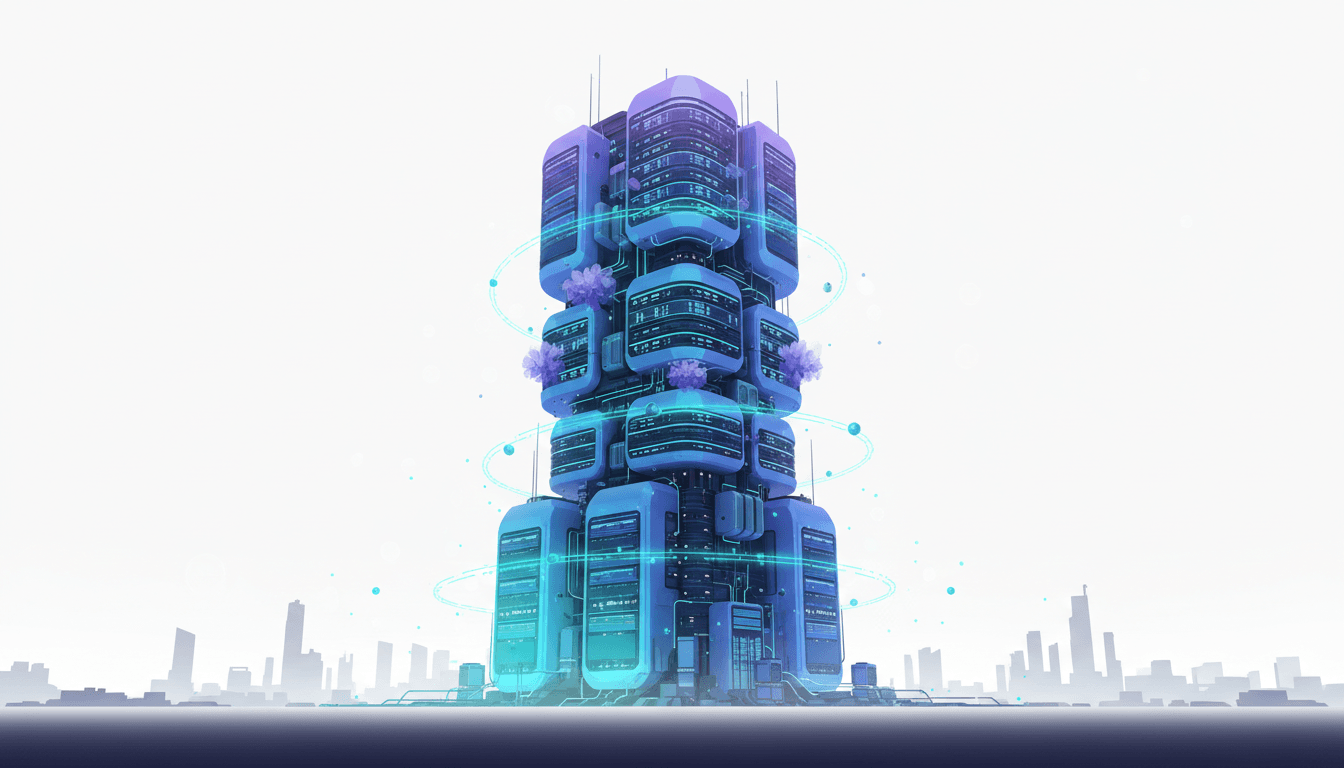
Elon Musk's xAI is moving to build a "Gigafactory of Compute" in Memphis, Tennessee, expanding its physical footprint with a third major building purchase. This move aims to operationalize the company's ambition to deploy one million GPUs by late 2025 or early 2026, directly challenging the compute scale of rivals like OpenAI and Anthropic by translating AI ambition into a massive, capital-intensive infrastructure project.
Summary: xAI has acquired a third building in Memphis, part of a larger strategy to construct a massive data center complex. This physical expansion is directly tied to the "Colossus 2" supercomputer project and a broader goal of amassing 1 million GPUs to train and run next-generation AI models. From what I've seen in the industry, these kinds of builds aren't just about tech—they're about staking a claim in the real world, where silicon meets steel.
What happened: Following previous property acquisitions in Memphis's Pidgeon Industrial Park, Elon Musk confirmed the purchase of a third facility. Renovations are slated to begin in 2026, aligning with a reported $15 billion funding pursuit designed to fuel this aggressive, vertically-integrated hardware build-out. It's a step-by-step ramp-up, really, and one that feels like it's gathering real momentum.
Why it matters now: Ever wonder if the AI race is starting to feel more like a construction site than a code sprint? This signals a critical shift from purely algorithmic competition to a brutal war over physical resources. xAI is betting that owning its infrastructure—from buildings to power interconnects—will provide a decisive long-term advantage, a strategy that contrasts with competitors who heavily leverage cloud partners like Microsoft and Google. That said, it's a gamble on control, one that could pay off big if the pieces fall into place.
Who is most affected: This directly impacts AI developers who will eventually vie for access to this compute, NVIDIA, which sees a massive demand signal for its Blackwell (GB200) architecture, and regional utility providers like the Tennessee Valley Authority (TVA), who must now plan for a potential gigawatt-scale power customer. The ripples go far, touching everyone from chip makers to the folks keeping the lights on.
The under-reported angle: While headlines focus on GPU counts, the real bottleneck for xAI's timeline isn't just chip availability. It's the "boring" but critical infrastructure: multi-year lead times for high-voltage transformers, grid interconnection permits, and fiber backhaul. The success of Colossus 2 will be determined as much by electricians and civil engineers as by AI researchers. And here's the thing—those unsung heroes often hold the keys to whether these grand visions actually boot up on time.
🧠 Deep Dive
Have you ever paused to think how the dreams of AI leaders like Elon Musk start taking shape in places like Memphis? His vision for AI supremacy is taking concrete form there in Tennessee. The recent acquisition of a third industrial building solidifies xAI's plan to build a "Gigafactory of Compute," a sprawling, self-controlled supercomputing campus. This project, internally codenamed "Colossus 2," isn't just about stacking servers; it's a strategic move to vertically integrate the physical layer of intelligence, giving xAI direct control over the three resources that now define the frontier of AI: compute, power, and capital. I've noticed how this kind of integration can change the game—it's not flashy, but it's foundational.
The scale is staggering, no question. The ambition points toward one million GPUs operating by late 2025 or early 2026, a target that would place xAI in the top tier of global AI labs. To fuel this, the company is reportedly pursuing a massive $15 billion funding round. This capital isn't for R&D salaries alone; it's earmarked for the immense cost of NVIDIA's next-gen Blackwell GPUs, data center cooling systems, and, most critically, the electrical infrastructure needed to power what could become one of the world's largest AI clusters. We're talking costs that stack up fast, layer by layer.
This infrastructure-first approach surfaces the true gatekeeper of AI progress: energy. An installation of this size could ultimately draw hundreds of megawatts, potentially approaching a gigawatt of power—the output of a small nuclear reactor. This places enormous pressure on the local grid operator, the Tennessee Valley Authority (TVA), to guarantee stable, sufficient power. xAI's timeline is now inextricably linked to the TVA's ability to plan, permit, and build out new substations and transmission lines, a process that often moves on a multi-year timescale that AI development does not. It's a reminder that progress can hit snags in the wires, not just the code.
Beyond the power grid, the global supply chain for data center components poses another significant risk. While the tech world obsesses over NVIDIA's GPU roadmap (from H100 to GB200), xAI's procurement team is likely battling for far less glamorous hardware. Lead times for custom high-voltage transformers, switchgear, and liquid cooling components can exceed 18–24 months, creating a hidden timeline that could easily delay Colossus 2's "go-live" date. xAI isn't just competing with OpenAI for talent; it's competing with every other hyperscaler and utility for the same limited pool of industrial hardware—plenty of reasons for caution there.
This move marks a philosophical divergence in the AI infrastructure race. While competitors like OpenAI and Anthropic have leaned on partnerships with Microsoft Azure, Amazon AWS, and Google Cloud, xAI is adopting the Tesla manufacturing playbook: build and own the factory. The bet is that direct control over the physical stack will yield efficiencies and a strategic agility that cloud-dependent rivals lack. The risk? That xAI becomes mired in the capital-intensive, slow-moving worlds of construction, energy procurement, and supply chain logistics, while more asset-light competitors race ahead on the software front. Either way, it's reshaping how we think about building the future.
📊 Stakeholders & Impact
Stakeholder / Aspect | Impact | Insight |
|---|---|---|
xAI & Competing Labs | High | Puts immense pressure on funding and supply chain execution to secure a leadership position in training next-gen foundation models. It's a high-stakes push, one that could redefine who's leading the pack. |
NVIDIA & GPU Supply Chain | Very High | Creates a massive, sustained demand signal for H200/GB200 systems, but also intensifies the scramble among AI labs for a finite supply of chips and networking. Demand like this doesn't come around every day. |
Energy & Grid Operators (TVA) | Critical | The multi-hundred-megawatt to gigawatt-scale power demand will stress-test regional grids, planning cycles, and potentially accelerate new power generation projects. They're in the hot seat now, planning for loads that could light up a city. |
Investors & Capital Markets | High | The reported $15B funding round signals a new era of capital intensity for AI, where infra build-outs are as critical as algorithmic breakthroughs. Money's flowing, but so are the expectations. |
✍️ About the analysis
This is an independent analysis by i10x, based on our synthesis of news reports, financial filings, and infrastructure market data. It is written for technology leaders, strategists, and developers who need to understand the physical and economic forces shaping the future of AI. We've pieced it together from the ground up, aiming to cut through the noise.
🔭 i10x Perspective
xAI’s Memphis project is more than a data center; it’s a declaration that building artificial general intelligence is now an industrial pursuit, subject to the laws of physics and economics. The race for AGI is no longer just about algorithms and data, but about land, power, and steel. From my vantage, this feels like a turning point—where the abstract meets the tangible.
This move forces a critical question upon the AI industry: will the winning model be the asset-heavy "Gigafactory" approach of xAI, or the asset-light, cloud-native strategy of its rivals? The answer will define the financial structure and physical footprint of intelligence for the next decade. The biggest unresolved tension to watch is the head-on collision between Silicon Valley's exponential timelines and the linear, unforgiving pace of the physical world. It's a clash worth keeping an eye on, as it unfolds.
Похожие новости

Grokipedia Doubles to 1.7M Articles: AI Knowledge Insights
xAI's Grokipedia has rapidly expanded from 885K to over 1.7 million articles since its October 2025 launch, powered by Grok LLM. Explore the implications for reliability, governance, and competition with Wikipedia in this in-depth analysis.

Google Gemini Image Recognition: API Choices Explained
Explore the fragmentation in Google's Gemini image recognition capabilities across Gemini API, Vertex AI, and Cloud Vision. Learn key trade-offs for developers building visual AI features and avoid common pitfalls. Discover the best path for your project.

xAI Colossus 2: Private Power for AI Infrastructure
xAI's Colossus 2 supercomputer pioneers a gigawatt-scale private power island in Mississippi to fuel Memphis GPU clusters. This bold move ensures energy sovereignty for AI amid grid constraints. Discover impacts on industry, environment, and economy.