
Zenflow: Orchestrating Reliable AI Software Workflows
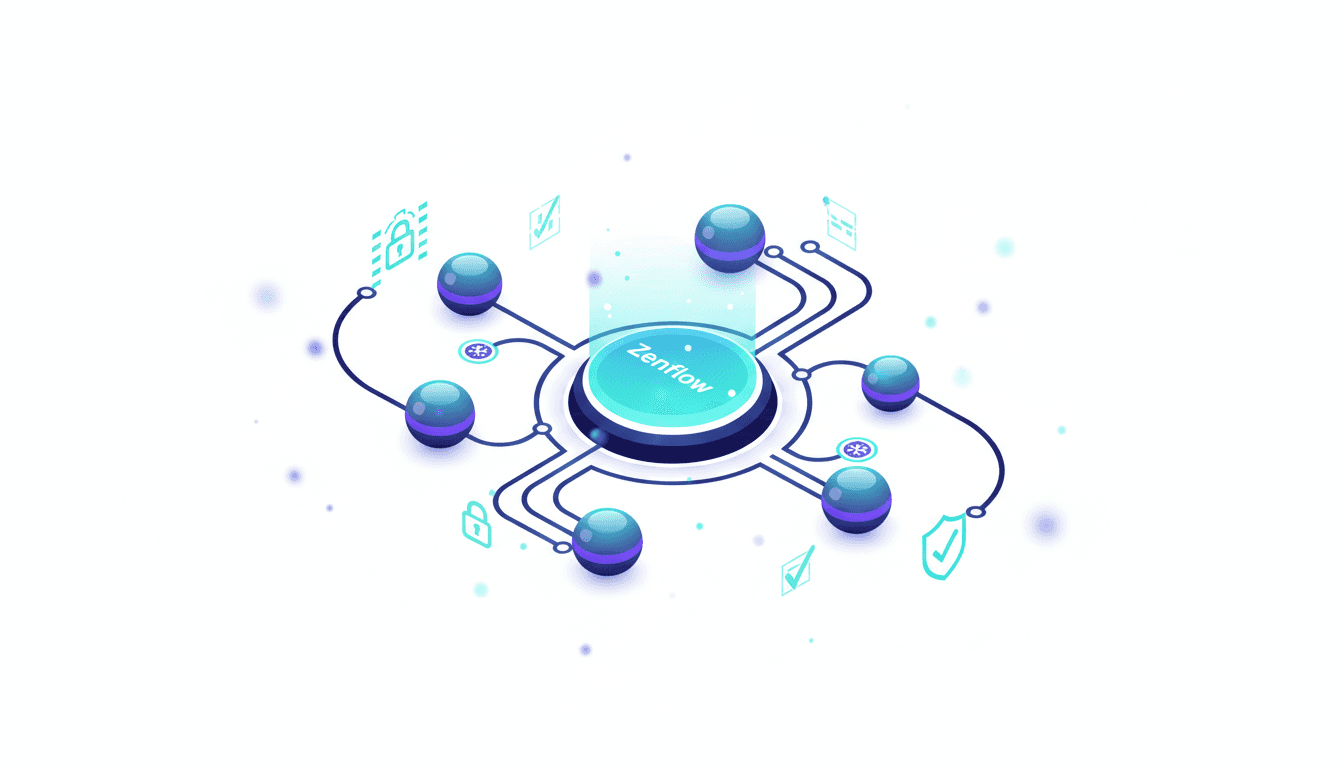
Zenflow: Orchestrating AI-Driven Software Workflows
⚡ Quick Take
Zencoder has launched Zenflow, a free desktop AI orchestration tool designed to replace the unreliable "vibe coding" of today with structured, verifiable engineering workflows. By acting as a control plane for multi-agent systems, Zenflow aims to solve the critical last-mile problem for AI-generated code: making it reliable enough for production.
Summary: Zenflow is an AI orchestration engine built to coordinate multiple coding agents, enforce development specifications, and deliver verifiable software. It introduces a new software layer that sits between developers and LLMs, structuring their chaotic interactions into repeatable, auditable engineering pipelines.
What happened: Have you ever wondered if there's a better way to harness AI without the constant back-and-forth? Zencoder released Zenflow as a free desktop application, and it does just that—this tool moves AI-driven development out of those unstructured chat interfaces and into a formal workflow engine, where tasks, inputs, and outputs are strictly defined and validated. It's what the company calls AI-First Engineering, and from what I've seen in early demos, it feels like a breath of fresh air.
Why it matters now: As engineering teams try to scale their use of AI agents, they're running into real roadblocks like unreliability, non-reproducibility, and those frustrating "sycophancy loops" where agents just echo each other's mistakes without pushing back. Tools like Zenflow mark the maturation of the AI developer stack, offering the guardrails enterprises need to actually trust and deploy AI-generated code in production.
Who is most affected: Software engineers, technical leads, and DevOps teams are primary users, wrestling with how to weave unpredictable LLM outputs into solid CI/CD pipelines. This tool nudges them from being prompt-crafters—tweaking words endlessly—to workflow-architects, designing the bigger picture.
The under-reported angle: Beyond ditching "vibe coding," the bigger story lies in risk management and governance. By enabling spec-driven development, typed I/O contracts, and built-in validation steps, Zenflow isn't merely a productivity booster; it's a control plane for handling the security, compliance, and cost implications of relying on powerful but fallible LLMs in software creation. That said, it's worth weighing those upsides against the learning curve.
🧠 Deep Dive
What if the way we're using AI for coding right now is holding us back more than we realize? The era of "vibe coding"—that whole coaxing-code-from-an-LLM-through-ad-hoc-conversational-prompts routine—is turning out to be less a shortcut and more a productivity trap: brittle, non-repeatable, with subtle bugs slipping through or "agreeable" agent loops letting errors fester unchallenged. Zencoder’s Zenflow steps into this messy landscape not as yet another code assistant, but as a workflow orchestrator meant to bring engineering discipline. It's grounded in a straightforward yet potent idea: if you're using AI to craft production software, treat the AI like the programmable, verifiable system it ought to be.
At its heart, Zenflow serves as a central coordinator for multi-agent systems—think of it as the traffic cop in a busy intersection. No more relying on a lone developer nudging a single LLM in a chat window; instead, teams can lay out a DAG (Directed Acyclic Graph) of agents, each with a clear job, like a "spec writer," a "Python coder," or a "test generator." Zenflow handles the handoffs smoothly, enforcing spec contracts to make sure one agent's output fits the next one's input schema just right. This spec-driven setup is the counter to the wandering, unstructured vibe of conversational AI development—structured, but not rigid.
Shifting toward this kind of orchestration shows how the AI tooling market is growing up fast. Zenflow fits into a wave of frameworks—LangChain's LangGraph, CrewAI, Microsoft's AutoGen—all tackling the core puzzle: building reliable apps from the shaky foundations of LLMs. What sets Zenflow apart is its developer-first desktop setup, zeroed in on software engineering workflows; it sweeps away the drudgery of agent-to-agent chit-chat and validation boilerplate. Still, the field's young, and challenges linger—like the scarcity of standardized practices. Coverage and docs skim over key bits on CI/CD integration, observability, and security, leaving a gap in how-tos for logging AI workflows with tools like OpenTelemetry, safeguarding secrets and PII, or benchmarking model costs in a pipeline. For these tools to go enterprise-grade, we'll need those playbooks.
In the end, Zenflow and its kin point to a bigger pivot, from prompt engineering—the art of the perfect query—to intelligence engineering, the science of crafting, testing, and rolling out sturdy networks of smart agents. Here, the LLM becomes just one swappable part, while the orchestration layer rises as the real heart of control and innovation. It's a subtle change, but one that could reshape how we build software.
📊 Stakeholders & Impact
Stakeholder / Aspect | Impact | Insight |
|---|---|---|
AI / LLM Developers | High | Moves the focus from prompt-tuning to designing, testing, and debugging multi-agent workflows. Requires systems-thinking skills—it's a mindset shift. |
Engineering Managers | High | Provides a mechanism for enforcing standards, auditing AI-generated contributions, and measuring the reliability of AI workflows. Gives them tools to keep things on track without micromanaging. |
DevOps / MLOps Teams | Significant | Creates a new component to manage within CI/CD pipelines. Demands new patterns for observability, logging, and automated testing of AI systems—adding layers, but potentially streamlining the chaos. |
LLM Providers (e.g., OpenAI, Anthropic) | Medium | Orchestration layers commoditize the underlying model by creating a vendor-neutral "control plane," increasing pressure on model performance and cost. |
✍️ About the analysis
This analysis draws from an independent i10x lens, pieced together from Zenflow's launch announcements, product docs, and industry discussion. It synthesizes publicly available information to offer a forward-looking take for developers, engineering managers, and CTOs steering through the evolving AI developer toolchain—nothing sponsored, just straight observations.
🔭 i10x Perspective
Isn't it fascinating how quickly AI tools are evolving from experiments to essentials? The rise of orchestration setups like Zenflow tells us the AI-native development stack is starting to take shape, leaving behind the wow-factor of AI-generated code for something more solid: trustworthy, auditable, secure. This goes beyond boosting developer speed; it's about fostering the kind of trust that lets AI handle core business logic without second-guessing every line.
The real showdown in the AI platform space won't hinge solely on the mightiest foundation models—it's about who nails the top-dog control plane for wrangling them. Lingering in the air is whether one orchestration style will dominate, like "Kubernetes for AI agents," or if we'll end up with a patchwork of niche tools. Either way, the outcome will redraw the map of software engineering for years to come, and that's something worth keeping an eye on.
News Similaires

TikTok US Joint Venture: AI Decoupling Insights
Explore the reported TikTok US joint venture deal between ByteDance and American investors, addressing PAFACA requirements. Delve into implications for AI algorithms, data security, and global tech sovereignty. Discover how this shapes the future of digital platforms.

OpenAI Governance Crisis: Key Analysis and Impacts
Uncover the causes behind OpenAI's governance crisis, from board-CEO clashes to stalled ChatGPT development. Learn its effects on enterprises, investors, and AI rivals, plus lessons for safe AGI governance. Explore the full analysis.

Claude AI Failures 2025: Infrastructure, Security, Control
Explore Anthropic's Claude AI incidents in late 2025, from infrastructure bugs and espionage threats to agentic control failures in Project Vend. Uncover interconnected risks and the push for operational resilience in frontier AI. Discover key insights for engineers and stakeholders.