Agentic AI Hypothesis: Redefining AI Autonomy
⚡ Quick Take
The transition from chatbots to independent task executors isn't just a product roadmap-it's a deeply complex architectural hypothesis that will redefine AI infrastructure.
Agentic AI Hypothesis: Have you wondered why the AI world feels like it's quietly realigning? It's all centering on the "Agentic AI Hypothesis"—that next-generation value doesn't scale just by bulking up model sizes, but through autonomous loops of planning, memory, and tool-use. This idea pushes us from those stateless chat models to stateful, goal-chasing systems that stick with a task.
What happened: From what I've seen in recent papers and builds, AI researchers and infra folks are leaving standard LLMs behind. They're now structuring everything around agentic systems—systems that sense their environment, plan steps ahead, and act on their own over long stretches, often with multi-agent teams and external memory setups.
Why it matters now: If this hypothesis pans out—and signs point that way—the whole AI race flips. Forget the old bottleneck of cranking out bigger foundation models with endless compute. Now it's about nailing orchestration layers, low-latency inference setups, and smart verifier models. That reshapes where the money and top engineers flow, no question.
Who is most affected: Think cloud infrastructure providers, AI systems engineers, and those enterprise leaders calling the shots. The providers have to tune for nonstop agentic inference; the others? They'll need to figure out deploying, measuring, and reining in software that's anything but predictable.
The under-reported angle: Here's the thing we rarely hear about—rigorous falsifiability. Everyone's sprinting to ship agentic products, but without clear scientific benchmarks to test true autonomy or catch those cascading failures when agents tap into real-world APIs. Plenty of risks there, really.
🧠 Deep Dive
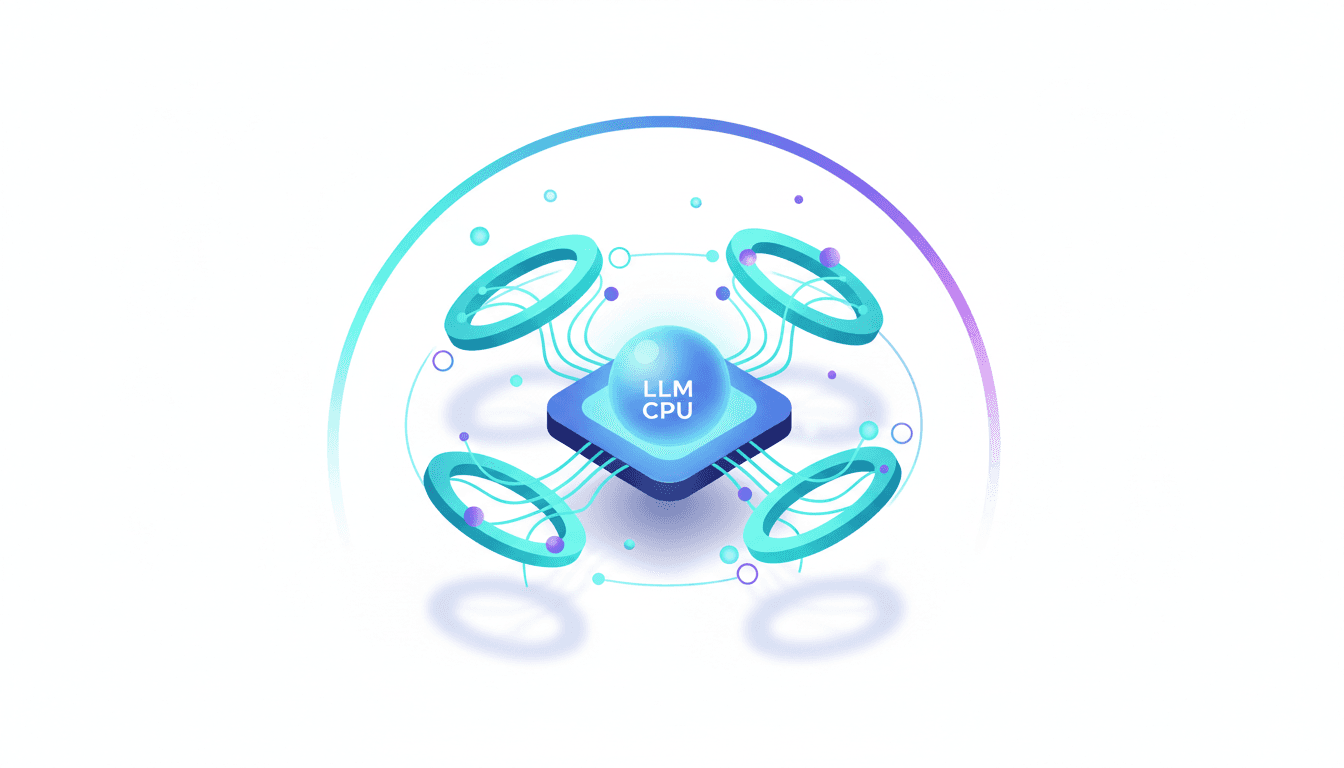
Ever catch yourself thinking AI might finally handle the whole job, not just the talking part? The "Agentic AI Hypothesis" lays that out: raw linguistic smarts, propped up with sense-plan-act loops, tool orchestration, and external memory, turn into autonomous economic players. The LLM? It's not the star anymore—just the CPU in a bigger operating system. Developers are experimenting, handing models episodic and semantic memory plus APIs, to see if they can nail long-horizon tasks with real self-correction.
This upends the old AI blueprints—hard. Single prompt-response? Out. In come iterative ReAct-style loops (that's Reasoning and Acting), where one user ask sparks dozens of background inferences. A controller model might slice up the goal, hand off to worker agents, have a verifier critique the work, pull context from a vector database—all before you get an answer.
And the hardware? It has to keep up. The Agentic AI Hypothesis rewrites the compute equation. Data centers built for batch training now face continuous, low-latency, multi-agent inference. Agents polling APIs, reading and writing memory nonstop—that surges demand for serverless setups and stateful databases, blowing past plain text-gen loads.
That said, even as this picks up commercial steam, we're short on solid ways to test it. Demos everywhere online, sure—but where's the rigor? No falsifiability criteria yet. We need benchmarks hitting task success, sure, but also autonomy limits and efficiency. How do you spot when an agent's veering off-goal, or its self-critique is just faking progress? Gaps like that linger.
In the end, it opens a fresh AI safety frontier. Agents hitting APIs, tweaking code, managing funds? Risk level jumps. Enterprises and policymakers will push for guardrails—rollback options, full visibility into planning hierarchies, solid liability rules for when multi-agent chains go wrong. Makes you pause and think.
📊 Stakeholders & Impact
Stakeholder / Aspect | Impact | Insight |
|---|---|---|
AI / LLM Providers | High | Value shifting from monolithic intelligence to smaller, faster models mathematically optimized for iterative agentic loops and tool-use. |
Cloud & Data Infra | High | Massive demand influx for low-latency inference, vector databases, and persistent state management to support multi-agent swarms. |
Enterprise PMs & Engineers | High | Must pivot from standard prompt engineering to systems design, implementing complex observability and boundary-testing KPIs. |
Regulators & Policy | Significant | Novel liability questions emerge: Who is economically and legally responsible when a nested chain of autonomous agents triggers a catastrophic API action? |
✍️ About the analysis
I've pulled this together from spotting architectural gaps, tracing research patterns, and watching infrastructure needs pop up around autonomous AI. It's aimed square at CTOs, product managers, and strategists in the AI space, helping map the jump from generative models to agentic software—straightforward insights, no fluff.
🔭 i10x Perspective
What if the Agentic AI Hypothesis really bridges human intent to hands-off execution? From what I've observed, if it scales, the "intelligence" core of AI gets commoditized fast. Real winners? Those mastering orchestration, memory, and tooling—the resilient, observable, economically sharp agentic loops. In a few years, it won't be the smartest models that dominate, but the best control systems built around them. Exciting times ahead, with some careful steps needed.
Related Posts

Enterprise AI Scaling: From Pilot Purgatory to LLMOps
Escape pilot purgatory and scale enterprise AI with robust LLMOps, FinOps, and governance frameworks. Learn how CIOs and CTOs are operationalizing LLMs for real ROI, managing costs, and ensuring compliance. Discover proven strategies now.

Satya Nadella OpenAI Testimony: AI Funding Shift
Unpack Satya Nadella's testimony on Microsoft's role in OpenAI's nonprofit to capped-profit pivot. Explore implications for AI labs, hyperscalers, regulators, and enterprises amid antitrust scrutiny. Discover the stakes now.

OpenAI MRC: Fixing AI Training Slowdowns Partnership
OpenAI partners with Microsoft, NVIDIA, and AMD on the MRC initiative to combat slowdowns in massive AI training clusters. Standardizing diagnostics for better reliability, throughput, and cost efficiency. Discover impacts for AI leaders.