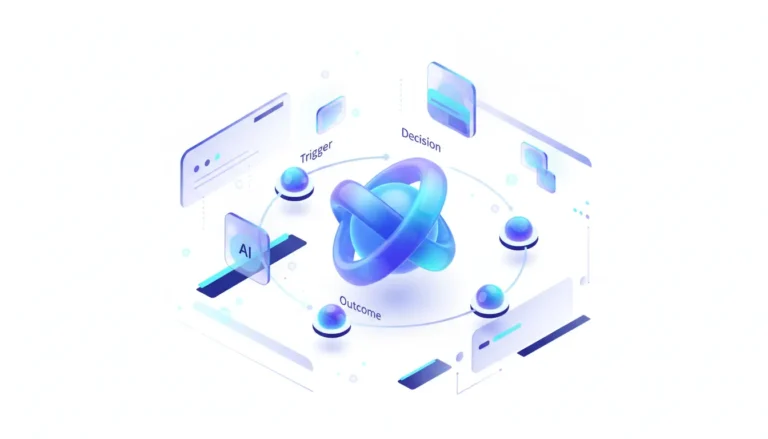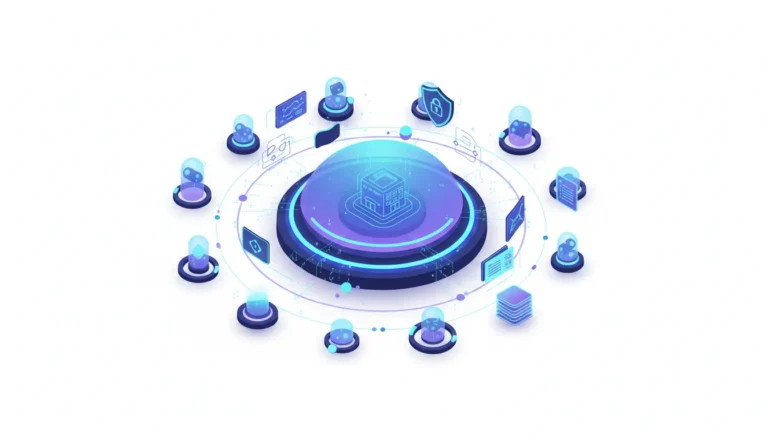
Have you ever built an AI agent only to watch it forget everything after one chat? The AI agent development ecosystem is shifting from stateless, session-based memory hacks to a dedicated, universal long-term memory layer. Led by open-source tools like Mem0 and ChromaDB, this new architecture promises to give agents persistent, queryable context, but it also surfaces a new class of production challenges around governance, cost, and reliability that existing tutorials largely ignore.
Quick Take
- Summary: Developers are moving beyond the simple memory modules in frameworks like LangChain and LlamaIndex to build a dedicated, universal memory service for AI agents. This involves a pipeline that extracts structured data from conversations, embeds it, and stores it in a vector database for sophisticated retrieval, enabling agents to remember user preferences, context, and history across infinite sessions. From what I’ve seen in recent projects, this setup isn’t just a nice-to-have- it’s starting to feel essential.
- What happened: A new architectural pattern is solidifying around specialized tools to create this memory layer. The dominant stack involves Mem0 for intelligent memory extraction, an embedding model (often from OpenAI or a local provider), and a vector database like ChromaDB for storage and retrieval. This decouples memory from the agent’s core logic, treating it as a first-class, pluggable component- something that’s making agents feel less like brittle scripts and more like reliable partners.
- Why it matters now: This evolution from simple Retrieval-Augmented Generation (RAG) to a structured memory system is the key to unlocking more autonomous, personalized, and complex agentic workflows. As agents tackle multi-step, long-running tasks, a robust and stateful memory becomes a non-negotiable part of the intelligence infrastructure, directly impacting task success rates and user trust. That said, it’s worth weighing the upsides against the hidden pitfalls that come with scaling this up.
- Who is most affected: AI engineers and developers building agentic applications are immediately impacted, as they must now architect for state persistence, lifecycle management, and retrieval quality. Enterprises looking to deploy these agents face a host of governance, privacy (PII handling), and cost-management challenges that aren’t addressed by simple proof-of-concept code. Plenty of reasons, really, why this shift is stirring things up in teams I’ve talked to.
- The under-reported angle: While the web is full of “how-to” guides for wiring these tools together, the critical “Day 2” operational problems are almost completely unaddressed. There is a massive content and tooling gap around memory governance, automated quality evaluation, observability, cost modeling, and secure lifecycle management (e.g., memory decay, merging, and deletion). It’s like we’ve got the blueprint, but not the maintenance manual- and that’s where things could go sideways.
Deep Dive
Ever wonder why your AI agent seems sharp in demos but clueless in real use? The promise of AI agents that learn and adapt has long been hampered by a critical limitation: amnesia. Most agents, even those using Retrieval-Augmented Generation (RAG), operate with a memory confined to a single session or a crude conversational buffer. Now, the AI development landscape is rapidly standardizing an architecture for a “universal long-term memory” layer, marking a crucial step towards building truly stateful and intelligent systems. This new stack treats memory not as a feature of a framework like LangChain, but as a dedicated, standalone service- a move that’s breathing fresh life into what agents can actually do.
The emerging blueprint is a clear data pipeline: user interactions are fed into an extraction module, often powered by a tool like Mem0, which uses an LLM to identify and structure key entities, events, and user preferences. These structured memories are then converted into vectors using an embedding model and persisted in a specialized database like ChromaDB. When the agent needs context, it queries this memory layer, retrieving relevant information based on semantic similarity and metadata filters- far more sophisticated than a simple chat history, and honestly, a game-changer for handling nuanced conversations. This architecture solves the “forgetting” problem, but in doing so, creates a new set of enterprise-grade challenges that I’ve noticed cropping up more in discussions.
While tutorials provide the “hello, world” for connecting these components, they stop short of production realities. The most significant gap is governance and privacy. How do you manage Personally Identifiable Information (PII) stored indefinitely in a vector database? What are the mechanisms for consent, data retention policies (TTL), and secure deletion? These are not features but fundamental requirements for any agent that interacts with user data, especially in regulated industries. The current crop of open-source guides leaves these questions entirely to the developer- treading carefully here is key, since one oversight could unravel trust overnight.
Furthermore, the operational burden is non-trivial. Developers are discovering the need for a memory lifecycle playbook to handle issues like catastrophic forgetting, embedding model drift, and memory consolidation. Without clear strategies for merging duplicate memories, decaying irrelevant information, and safely re-indexing data when models are upgraded, the memory layer risks becoming a source of noise and errors. This requires a new discipline of memory observability– metrics, traces, and dashboards to monitor recall precision, latency, and cost- which is virtually non-existent in the current tooling ecosystem. The conversation is shifting from “Can we build it?” to “How do we run it reliably, securely, and cost-effectively at scale?” And that’s a pivot worth leaning into, as it points to where the real innovation needs to head next.
Stakeholders & Impact
| Stakeholder / Aspect | Impact | Insight |
|---|---|---|
| AI/LLM Developers | High | Moves memory from a simple framework module to a core architectural component requiring specialized design. They need playbooks for reliability, governance, and cost- I’ve seen this push folks to rethink their whole workflow. |
| Enterprises & CTOs | High | Unlocks capabilities for personalized, stateful AI assistants but introduces significant new risks around data privacy, security, and runaway cloud costs if not properly managed. It’s exciting, yet demands a cautious eye on the bigger picture. |
| Agent Frameworks (LangChain/LlamaIndex) | Medium | These frameworks must adapt, potentially offering deeper integrations with external memory services like Mem0 or building out their own enterprise-grade memory management features to stay relevant. Change like this keeps the ecosystem evolving, for better or worse. |
| Vector DB Vendors (Chroma, Pinecone) | High | The rise of agent memory creates a massive new use case. Success will depend not just on query performance but on features that support memory lifecycle, security, and cost control- a shift that’s bound to spark some healthy competition. |
About the analysis
Researched and written with AI assistance under the editorial responsibility of the i10X News team. The title image is an AI-generated illustration. Read our AI Use Policy. Spotted an error? Request a correction.
This i10x analysis draws from my own dives into technical documentation, developer tutorials, and the gaps I’ve spotted in current best practices for building AI agents. It weighs the aspirational goal of “universal memory” against the nuts-and-bolts demands of production- security, observability, governance- to give a grounded, forward-looking take for developers, solution architects, and CTOs steering through the AI agent world. It’s not exhaustive, but it highlights the threads that matter most right now.
i10x Perspective
What if the real test of an AI agent isn’t what it remembers, but how well we manage what it does with those memories? The emergence of a dedicated memory layer signals the end of the AI agent “prototype” era. Building a memory service is rapidly becoming commoditized; managing it is the new competitive frontier. This shift will create a clear dividing line between consumer-grade agent toys and enterprise-ready AI systems. In the coming years, the winners in the agent space won’t be those who simply build agents that remember, but those who build systems to govern, observe, and secure that memory at scale. The unspoken challenge of long-term memory is not recall, but responsibility– and getting that right could redefine what’s possible.