Have you ever wondered if the smartphone’s future lies less in its shiny hardware and more in some invisible software uprising? The “AI Smartphone” isn’t just about better cameras or on-device translation. It’s the battleground for the next operating system—an “agentic operating system” powered by LLMs that threatens to run on top of iOS and Android, and in the process, dismantle the app store economy. The hardware isn’t what’s being disrupted; it’s the entire mobile software paradigm.
Quick Take
- Summary: From what I’ve seen in recent discussions, the conversation around AI’s impact on smartphones is rapidly evolving. While OEMs like Samsung focus on scaling on-device features across hundreds of millions of devices, a more fundamental shift is underway: AI assistants are evolving into “agentic operating systems” that can execute complex tasks across multiple applications, challenging the core dominance of Apple’s and Google’s app-centric ecosystems.
- What happened: The market is bifurcating, really splitting into two paths that feel worlds apart. Incumbents are pushing incremental AI features like computational photography and real-time translation. At the same time, dedicated AI-first devices—think pins or wearables—and powerful, cloud-connected assistants from model providers like OpenAI and Meta are pioneering agentic workflows that orchestrate user intent without needing to open individual apps.
- Why it matters now: This creates a new competitive layer above the mobile OS, one that could change everything. The company that owns the dominant AI agent—the one users trust to manage their digital lives—controls the point of interaction and value exchange. This could render the underlying OS and its tightly controlled app store into a commoditized utility, upending a trillion-dollar economy.
- Who is most affected: OS providers like Apple and Google face an existential threat to their gatekeeper status—it’s like the ground shifting under their feet. App developers must consider a future where their primary interface is an API call from an agent, not a user tapping on their icon. Hardware OEMs must now bet on which AI ecosystems and on-device NPUs will win, weighing those choices carefully.
- The under-reported angle: Most analysis pits new AI gadgets against the smartphone, but that’s missing the bigger picture. The real war is software-defined: it’s the fight to become the default “agent layer” on the most ubiquitous piece of hardware in history. This isn’t about replacing the phone; it’s about hijacking its purpose, and that shift feels both exciting and a bit unsettling.
Deep Dive
What if the “AI Smartphone” label is hiding something bigger, like a clever disguise for deeper changes? The term “AI Smartphone” is a Trojan horse. On the surface, it signifies iterative enhancements that make our devices more helpful. Samsung aims to have Galaxy AI on nearly 800 million devices by 2026, focusing on features that make cameras smarter and communication seamless. This is the incremental path: using AI to refine the existing smartphone paradigm. OEMs are in an arms race to embed more powerful NPUs to handle these tasks on-device, optimizing for the critical trade-offs between performance, privacy, and battery life. This strategy defends the current ecosystem, making the phone itself better without changing the fundamental app-based model—or at least, that’s the hope.
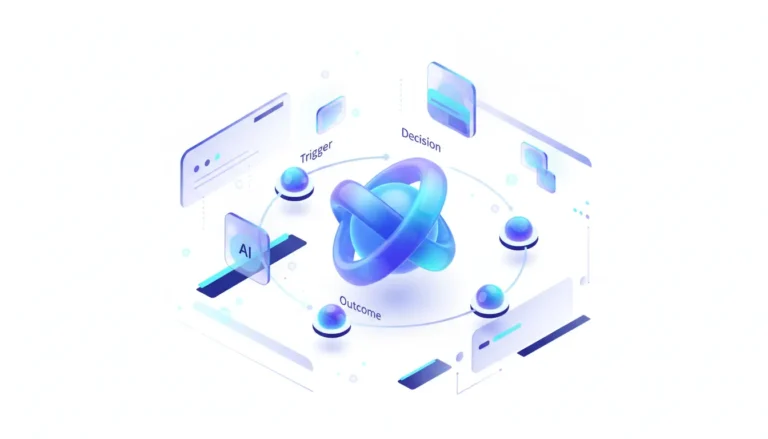
But here’s the thing—a more disruptive force is emerging from the AI-native world. Challengers like OpenAI, Meta, and even Amazon are not trying to build a better phone; they are building a better interface to reality. Their goal is to create an agentic software layer that can understand a user’s intent—”Book me a flight to JFK for next Tuesday and find a hotel near the conference”—and execute it by interacting with airline, hotel, and calendar APIs directly. This “agentic OS” would run on any device, but the smartphone is its most natural home. This represents the disruptive path, where the primary user interface is a conversation with an agent, not a grid of apps. I’ve noticed how this idea alone starts to blur the lines we take for granted.
That said, this creates a fundamental architectural conflict between the edge and the cloud. On-device AI, powered by increasingly capable NPUs, promises privacy, speed, and offline functionality. It’s perfect for features like Magic Eraser or live translation—quick, personal wins. But the most powerful, context-aware agentic capabilities require the scale of massive, cloud-based LLMs. The winning architecture will inevitably be a hybrid, where the device handles immediate, private tasks while seamlessly offloading complex reasoning to the cloud (and managing that handoff smoothly, no doubt). The key battleground is who manages this orchestration and reaps the economic benefits—it’s the orchestration that could tip the scales.
The ultimate stake in this game is the future of the app economy, plain and simple. For 15 years, developers have built for iOS and Android, paying a toll to Apple and Google for distribution and payment processing. If a user can accomplish tasks via a universal AI agent, the need to download, open, and navigate individual apps diminishes—tasks just happen, in the background. This disintermediates the OS provider and threatens to turn the app store into a backend service directory. Developers who re-architect their services to be agent-callable may thrive in this new ecosystem, while those who rely solely on their graphical user interface risk being abstracted away into irrelevance. It’s a pivot that demands rethinking, doesn’t it?
Stakeholders & Impact
| Stakeholder / Aspect | Impact | Insight |
|---|---|---|
| AI / LLM Providers (OpenAI, Meta, Anthropic) | High | The smartphone becomes the primary distribution vehicle for their agentic models, potentially bypassing the OS and App Store gatekeepers. The race is to become the default agent—and that default status could lock in loyalty for years. |
| OS Providers (Apple, Google) | Existential | They risk being commoditized. Their OS could become a mere utility layer beneath a dominant third-party AI agent, eroding control over the user experience and app economy revenues. It’s a tough spot, watching your moat get undercut. |
| App Developers | High | The business model shifts from building compelling UIs to creating robust APIs that AI agents can interact with. Failure to adapt risks disintermediation—your app might still exist, but users won’t see it anymore. |
| Hardware OEMs (Samsung, Motorola) | Significant | Differentiation shifts from hardware specs to the quality of the AI experience. They face new strategic choices about which AI ecosystems to partner with and how to optimize on-device NPUs, betting on the right horses in a crowded race. |
| Users | High | Potential for vastly more powerful and seamless experiences, but also new risks around privacy, data security, and being locked into a single, all-knowing AI agent’s ecosystem. More convenience, yes—but at what cost to your autonomy? |
About the analysis
Researched and written with AI assistance under the editorial responsibility of the i10X News team. The title image is an AI-generated illustration. Read our AI Use Policy. Spotted an error? Request a correction.
Ever feel like you need a clear-eyed view amid all the hype? This analysis is an independent i10x synthesis based on a review of industry news, product strategy reports, and market gap analysis data. It is written for product leaders, strategists, and engineers in the AI and mobile ecosystems who need to understand the fundamental shifts happening beyond surface-level feature announcements—shifts that could redefine their strategies overnight.
i10x Perspective
Isn’t it fascinating how the smartphone, once the pinnacle of innovation, now faces questions about its very essence? The smartphone’s physical form is likely to endure, but its soul—the operating system—is facing its first real existential crisis since its inception. The next decade of mobile innovation won’t be defined by folding screens or camera megapixels, but by the war between integrated, on-device AI from Apple and Google versus a more open, cross-platform agentic layer from model-first companies.
This isn’t just a technology platform shift; it’s a battle for agency itself. The unresolved question is one of trust and control: will users cede orchestration of their digital lives to a single AI entity, and how will regulators contend with the immense concentration of power this creates? The winner won’t just own the next-generation interface; they’ll own the primary channel to human intent—and that ownership, well, it carries weight far beyond code.