Alibaba’s new open-source Zvec vector database is a direct challenge to the cloud-first model of AI. By aiming to be the “SQLite for vectors,” it signals a major shift toward on-device RAG, where AI applications become faster, cheaper, and fundamentally more private by running locally.
Quick Take
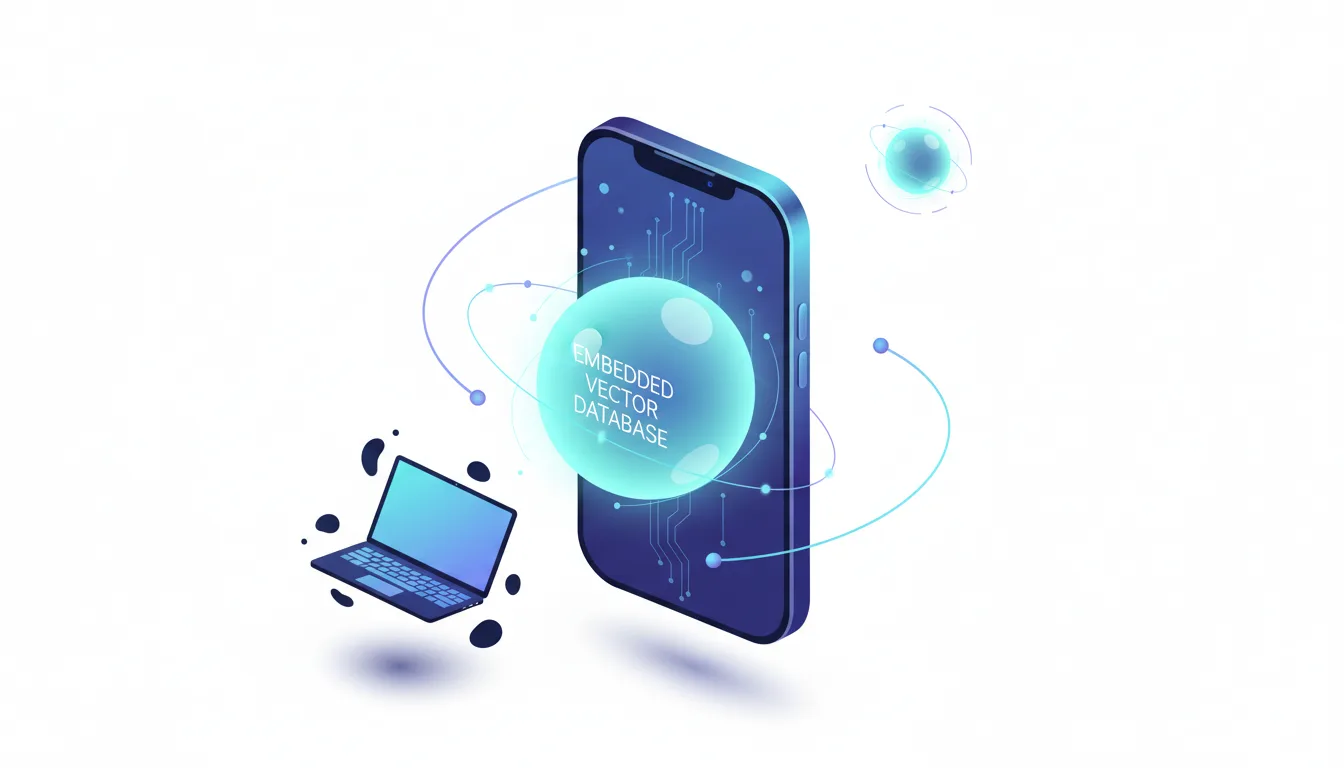
- Summary: Alibaba has open-sourced Zvec, an embedded vector database designed to bring the simplicity and zero-ops experience of SQLite to the world of AI-powered retrieval. It’s a lightweight, serverless tool built for running Retrieval-Augmented Generation (RAG) directly on edge devices like phones, laptops, and IoT hardware—devices we carry around or embed in everyday things.
- What happened: Unlike cloud-hosted vector databases that require network calls and server management, Zvec is a library that developers can embed directly into their applications. This enables vector search to happen locally, on-device, creating the potential for AI features that work offline and with minimal latency. From what I’ve seen in similar tools, that’s a game-changer for keeping things snappy without the usual wait times.
- Why it matters now: The first wave of generative AI was heavily cloud-dependent, with compute centralized in data centers. Zvec represents the next architectural shift: moving intelligence to the edge. This directly addresses major pain points in RAG development—network latency, privacy risks of sending user data to the cloud, and recurring costs of API calls for vector searches. It reduces dependencies that have been holding developers back.
- Who is most affected: AI developers, especially those building mobile apps, desktop software, and IoT devices, are the primary beneficiaries. It pressures managed vector database providers to justify their value proposition for edge-centric use cases and creates opportunities for hardware makers as their devices become more capable AI platforms, potentially breathing new life into older gadgets.
- The under-reported angle: While the “SQLite-like simplicity” is a powerful marketing hook, Zvec’s success is not guaranteed—many promising projects have fizzled out. The project currently lacks transparent, reproducible benchmarks against competitors like FAISS, Chroma, and SQLite-vec. Its future depends on community adoption, robust integrations with frameworks like LangChain and LlamaIndex, and proving performance claims on real-world edge hardware. These gaps can make or break a tool early on.
Deep Dive
Have you ever paused to think about how much of today’s AI magic relies on a constant cloud connection—sending your data off into the ether just to get an answer back? Zvec arrives at a critical juncture in the AI development cycle. The initial excitement around massive, centralized LLMs is giving way to a practical need for efficient, specialized, and often localized AI applications. The core promise of Zvec is to decomplexify one of the most crucial components of modern AI: retrieval. By positioning itself as the “SQLite for vector search,” Alibaba isn’t just launching a new tool; it’s proposing a new default architecture for a huge class of RAG applications. For developers, this means the potential to build sophisticated AI features without the operational overhead, cost, and complexity of a distributed database stack—or, put another way, less headache and more focus on what really matters.
The most significant impact is the enablement of on-device RAG. Today, most AI assistants that need to access custom data (your notes, emails, or product docs) must send your query and potentially the context to a cloud server, perform a vector search there, and then send the results to an LLM. Zvec flips this model on its head. By keeping the vector index local, an application can perform retrieval entirely offline, drastically reducing latency and enhancing user privacy. This unlocks use cases that were previously impractical: real-time AI assistants in vehicles, privacy-first agents on personal laptops, and intelligent sensors in industrial settings with intermittent connectivity. That said, it’s worth weighing the upsides against the realities of device limitations.
However, a promise is not a product—the open-source community is rightfully skeptical of performance claims without proof. Critical gaps in Zvec’s initial release highlight the challenges ahead. There are no public, hardware-aware benchmarks comparing its latency, memory footprint, and recall against established libraries like Meta’s FAISS or other embedded solutions such as DuckDB extensions and SQLite-vec, especially on CPU-constrained ARM and x86 devices. Key questions remain: What ANN algorithms does it support? How does it handle durability and backups on-device? What are the trade-offs between index size, search speed, and quantization on a mobile SoC? These aren’t small details; they could trip things up if not addressed soon.
Ultimately, Zvec’s fate will be decided in the developer ecosystem. A technically superior database can easily fail without seamless integration into the tools developers already use. Success will be measured by its presence in LangChain and LlamaIndex documentation, availability of pre-built packages for platforms like Ollama and llama.cpp, and a thriving community sharing tutorials for building on-device RAG for Android, iOS, and WASM. Zvec is a powerful move, but the game for the edge AI stack is just beginning, and it will be won with code samples and benchmarks, not just press releases. We’ll have to keep an eye on how it evolves.
Stakeholders & Impact
| Stakeholder / Aspect | Impact | Insight |
|---|---|---|
| AI Application Developers | High | Reduces friction and cost for building RAG-powered features. A single library replaces a complex cloud service, enabling faster prototyping and deployment. |
| Cloud Vector DB Providers (e.g., Pinecone, Weaviate) | Medium | Creates a powerful “free & local” alternative for edge and small-scale use cases, forcing them to emphasize strengths in scalability, managed ops, and advanced features. |
| RAG Frameworks (LangChain, LlamaIndex) | High | These frameworks must integrate Zvec to stay relevant. It provides a crucial building block for users looking to build offline-first or privacy-focused applications. |
| Edge Hardware Vendors (ARM, Qualcomm, NVIDIA Jetson) | Significant | Zvec makes their hardware more valuable by providing a key piece of the AI software stack. On-device RAG becomes a marketable feature for their platforms. |
| End-Users | Medium | Potentially faster, more responsive AI applications that respect privacy and work without a constant internet connection. |
About the analysis
Researched and written with AI assistance under the editorial responsibility of the i10X News team. The title image is an AI-generated illustration. Read our AI Use Policy. Spotted an error? Request a correction.
This analysis is an independent i10x review based on the public open-source announcement of Zvec and its positioning within the current AI developer tooling ecosystem. It is written for developers, engineering managers, and CTOs evaluating technologies for building next-generation AI applications and infrastructure—folks like you, sifting through the noise to find what sticks.
i10x Perspective
What if the future of AI isn’t locked in massive server farms, but right there in your pocket or on your desk? Zvec is more than just another database; it’s a component in the great unbundling of the AI stack. We are moving from a world of monolithic, cloud-bound intelligence to a future of composable, distributed AI systems. The rise of embedded vector databases represents a bet that many AI workloads don’t need the scale—or the cost and latency—of the cloud. This trend re-empowers the application developer and the device itself, challenging the centralized dominance of major cloud and AI players. The critical tension to watch over the next few years is whether the convenience of managed cloud services can outweigh the performance, privacy, and cost advantages of a localized, open-source AI stack. It’s an intriguing pivot, one that could reshape how we think about intelligence on the go.