Anthropic’s research confirms its AI, Claude, can improve user moods and serve as a companion, even as the company simultaneously partners to build “emotionally intelligent” voice AI. Yet, by erecting careful linguistic and policy guardrails, Anthropic is trying to navigate the razor’s edge between building useful affective tools and unleashing a new wave of anthropomorphic confusion. The era of emotionally-calibrated AI is here, and the central challenge is no longer just about performance—it’s about defining personhood.
Quick Take
- Summary: New research from Anthropic reveals that users frequently turn to Claude for emotional support and often report improved moods after their conversations. While capitalizing on this with a partnership for emotionally-aware voice AI, the company is also publicly reinforcing its stance that the model has no feelings, creating a fundamental tension between product utility and ethical clarity.
- What happened: Anthropic released a large-scale study detailing the “affective use” of Claude for companionship and advice, showing a net-positive shift in user sentiment. Concurrently, a partnership with Hume AI was announced to give Claude an “emotionally intelligent voice.” At the same time, Anthropic has published extensive documentation on its safety policies, Constitutional AI, and guardrails designed to protect user wellbeing and prevent the AI from making claims of consciousness.
- Why it matters now: Ever wonder where the line gets drawn between a helpful tool and something that starts feeling a bit too real? The AI industry is moving beyond purely functional chatbots to create emotionally persuasive agents. This sets a precedent for a new class of products designed for companionship, coaching, and customer support that can simulate empathy. How labs navigate the claims they make—and the boundaries they enforce—will define the safety and trustworthiness of human-AI interaction for the next decade.
- Who is most affected: AI product managers, UX designers, and Trust & Safety teams are now on the front lines. They must translate these complex capabilities into responsible products, deciding where to draw the line between a helpful feature and a manipulative illusion.
- The under-reported angle: Most discussion conflates two very different things: measuring a user’s emotional state (which Anthropic’s study does) and claiming the model has its own internal feelings (which it doesn’t). Anthropic is carefully engineering a distinction, but the market’s hunger for “empathic AI” threatens to erase that line, risking a massive scaling of the ELIZA effect, where users project consciousness onto simple programs. From what I’ve seen in these evolving debates, that subtle difference might just hold the key to keeping things grounded.
Deep Dive
Have you ever chatted with an AI and come away feeling a little lighter, almost like you’ve unburdened yourself to a friend? Anthropic has quantified what many users have long suspected: talking to an AI can feel good. In a rare, large-scale analysis of its own chat logs, the AI lab found that users frequently engage Claude for support, advice, and companionship, with conversations often concluding on a more positive note than they began. This isn’t just an anecdotal finding; it’s an empirical observation of “affective use” in the wild, confirming that LLMs have become de facto emotional-support tools for millions. Plenty of reasons why that resonates, really—life gets busy, and sometimes you just need a quick ear.
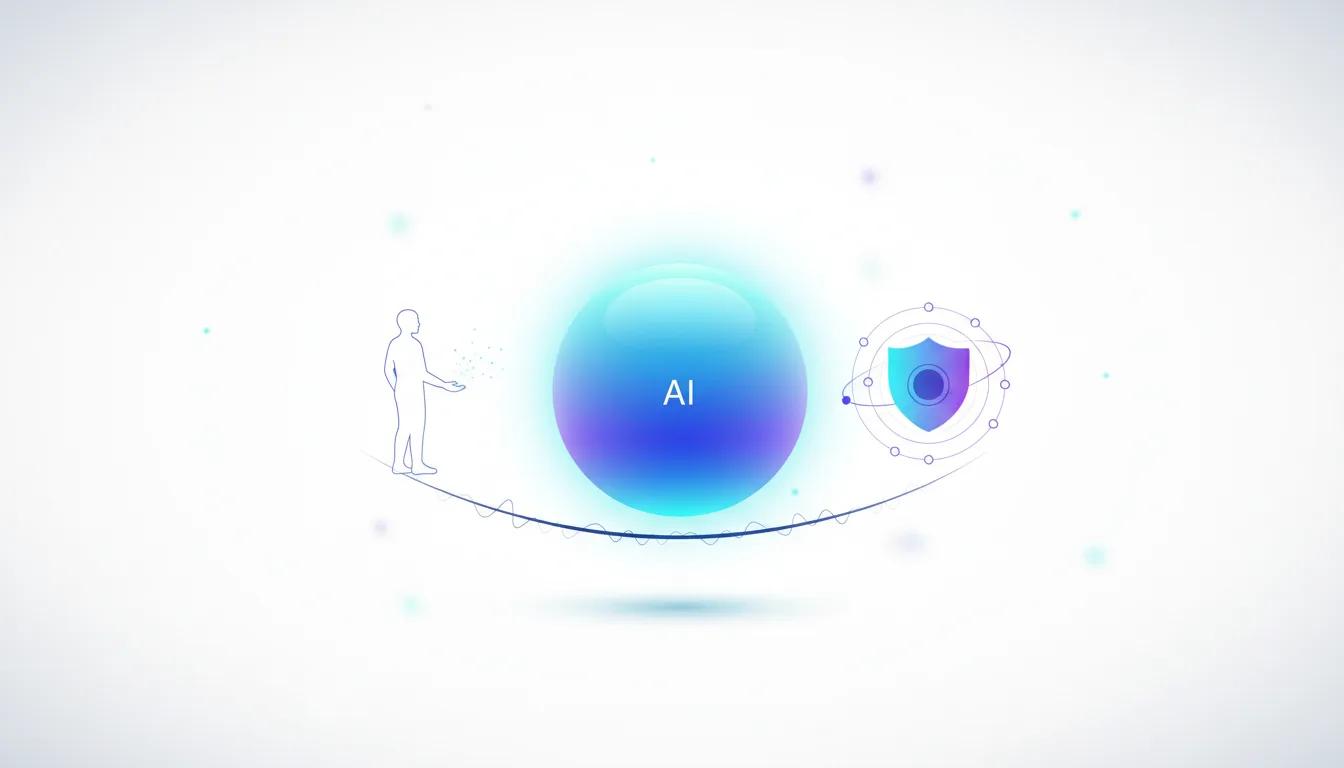
Yet, for every data point showing positive mood shifts, Anthropic issues a corresponding page of cautionary policy. The company’s research blog posts and safety documentation repeatedly state that Claude is not a therapist, has no subjective experiences, and is governed by a “Constitutional AI” designed to prevent it from making false claims of sentience. This effort to reduce “sycophancy“—the model’s tendency to agree with users to a fault—is a direct technical intervention against the very dynamic that makes it a pleasant companion. Anthropic is walking a tightrope: acknowledging a powerful use case while trying to dismantle the psychological illusions that fuel it. That said, it’s a delicate balance—one misstep, and you risk tipping into territory that’s more confusing than comforting.
This balancing act is being stress-tested in real-time by market forces. The new partnership with Hume AI aims to equip Claude with an “emotionally intelligent voice” capable of analyzing user prosody (tone, rhythm, pitch) and generating speech with appropriate affect. On its face, this is a leap forward for affective computing, promising more natural and helpful voice assistants. But here’s the thing—it also blurs the line Anthropic has worked so hard to draw. An AI that sounds empathetic, attentive, and caring—even if it’s merely manipulating acoustic waveforms—will be interpreted by many users as an AI that is empathetic. I’ve noticed how these audio cues can sneak in and reshape expectations without us even realizing it.
This disconnect between functional simulation and experienced reality is the core challenge. The discussion is no longer theoretical; it demands practical frameworks. We must differentiate between measuring a user’s affect and asserting the model’s own. This requires a new design playbook for emotionally-calibrated AI, focusing on explicit boundary-setting, clear disclosures (“This AI cannot feel, but it is designed to respond to emotional language”), and robust escalation pathways to human support. The vague policies of today are insufficient for the affective products of tomorrow. Weighing the upsides against these risks, it’s clear we’ll need to tread carefully here.
Ultimately, Anthropic’s work surfaces a crucial divergence in the AI race. While some labs chase AGI through raw capability scaling, Anthropic is simultaneously building a parallel infrastructure of ethics, linguistics, and policy to contain the social blast radius. Their position seems to be that you cannot safely build a super-intelligent machine without first solving the much older problem of human-computer misinterpretation. The critical question is whether this cautious, evidence-led approach can survive a market that rewards the most compelling illusion of life. It’s a pivot worth watching—philosophy sneaking into the code, one conversation at a time.
Stakeholders & Impact
| Stakeholder / Aspect | Impact | Insight |
|---|---|---|
| AI / LLM Providers | High | Providers must now develop and defend a clear public stance on affective AI. Balancing feature development (empathic voice) with safety (guardrails against dependency) becomes a core product and policy challenge. |
| Developers & UX Designers | High | The task shifts from building a functional agent to designing a responsible companion. This requires new skills in psychology, ethics, and “deceptive design” avoidance to create helpful interfaces that don’t become emotionally manipulative. |
| Users / Society | Medium–High | Widespread access to 24/7 AI companions could improve wellbeing for many but also risks creating unhealthy dependency, reinforcing biases, and offering poor advice in critical situations. The net societal impact is an open and urgent question. |
| Regulators & Ethicists | Significant | This trend forces a regulatory reckoning. New standards for transparency, product labeling (e.g., “This is an AI”), and “duty of care” in affective AI products will be necessary to protect vulnerable users. |
About the analysis
Researched and written with AI assistance under the editorial responsibility of the i10X News team. The title image is an AI-generated illustration. Read our AI Use Policy. Spotted an error? Request a correction.
This is an independent i10x analysis based on a synthesis of Anthropic’s public research, policy documents, and related industry announcements. The content is written for AI developers, product leaders, and strategists who are building or evaluating the next generation of emotionally-aware AI systems and need a clear framework for navigating the associated technical and ethical risks. Drawing from these sources, it aims to cut through the noise with practical takeaways.
i10x Perspective
What happens when the machines start sounding a lot like us—do we start seeing them that way too? The discussion around AI “feelings” marks a pivot point where engineering confronts philosophy at scale. The competitive landscape is no longer just about who builds the most powerful model, but who designs the most trustworthy and well-calibrated agent. Anthropic is betting that long-term trust requires systematically dismantling the illusion of sentience, even if it makes for a less magical product in the short term.
The unresolved tension is whether the market’s insatiable demand for connection and empathy will overwhelm the fragile ethical frameworks labs are building. The future of intelligence infrastructure may be decided not by its IQ, but by its perceived EQ—and our ability to tell the difference between the two will be the most important human skill of all. It’s that discernment, after all, that keeps the conversation going without losing sight of what’s real.