Quick Take
Have you ever wondered what happens when AI steps in to handle the messy, human side of research? Anthropic has just unveiled a new AI tool that automates large-scale qualitative interviews, signaling a strategic shift from basic models toward productized workflows that make user research scalable for enterprise use.
Summary
Anthropic Interviewer launched a limited pilot to streamline conducting and analyzing thousands of structured interviews. Using a predefined rubric, it guides conversations and then applies AI to extract themes, summarize findings, and surface notable quotes—reducing the manual effort typically required for qualitative research.
What happened
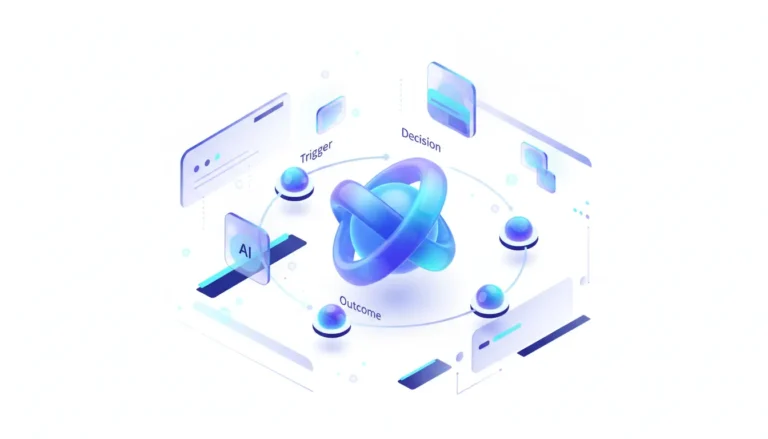
Anthropic opened a limited-time pilot at claude.ai/interviewer and published a research post describing the tool’s three-phase setup: plan, interview, analyze. The announcement frames Interviewer as more than a gadget—positioning it as a methodological product that showcases how agent-like workflows can run complex, multi-step research processes.
Why it matters now
This launch highlights Anthropic’s strengths in advanced tool use. The next wave for AI vendors is less about raw model scale and more about delivering end-to-end apps that manage entire professional workflows. By targeting qualitative research—a high-value, time-consuming domain—Anthropic is moving from API provider toward offering complete platform solutions.
Who is most affected
UX researchers, social scientists, product managers, and market research teams stand to benefit most. Their workflows could accelerate dramatically, extracting insights from thousands of participants in days instead of months. At the same time, this threatens traditional user research platforms and consultancies that rely on manual coding and analysis.
The under-reported angle
Anthropic emphasizes “trust and reliability,” but the announcement leaves open important practical questions: clearer benchmarks comparing AI coding to expert human coders (e.g., inter-rater reliability), explicit policies for handling sensitive interview data, and long-term pricing. The tool’s success will depend on proving it’s not just faster, but methodologically sound and secure for enterprise adoption.
Deep Dive
What if the bottleneck in customer insights wasn’t budget but the manual effort of processing human stories? Anthropic’s Interviewer aims to industrialize qualitative research by enforcing consistent rubrics, reducing bias, and using AI to surface themes across large interview sets. That turns an artisanal process into something repeatable and scalable.
From a technical perspective, this isn’t merely attaching a large language model to a task. It reflects Anthropic’s investment in platform capabilities—especially orchestrating chained actions and agent-like behaviors. Their writeup explains how the Claude setup manages adaptive interviews, maps responses to the rubric, and synthesizes those results into coherent reports. Interviewer thus serves as a showcase for the type of automated workflows possible on their stack.
However, there’s a tension between AI’s drive for speed and the rigor demanded by social science. Real adoption requires metrics—Cohen’s Kappa or similar inter-rater reliability measures, transparent sampling approaches to surface selection bias, and documented failure modes. Without that, Interviewer risks being relegated to a sophisticated survey tool rather than a true qualitative research platform.
To move from pilot to enterprise staple, Anthropic must also address operational concerns: where participant data is stored, compliance with standards like SOC 2 or ISO 27001, and integrations with existing research stacks such as Dovetail or NVivo. Scaling insights is attractive, but enterprise customers will expect seamless, secure integration into their workflows.
Stakeholders & Impact
| Stakeholder / Aspect | Impact | Insight |
|---|---|---|
| AI / LLM Providers (Anthropic) | High | Puts Claude’s advanced tool use on full display for building agent-like apps—shifting value from raw APIs to complete workflow solutions. |
| UX Researchers & Social Scientists | High | Promises speed and scale but raises questions about whether automated methods match the validity and reliability of human-led qualitative work. |
| Enterprises & Product Teams | Significant | Enables making qualitative feedback an industrial process, contingent on trust, compliance, and smooth integration. |
| Research Participants & Ethics | High | Introduces new challenges around consent, privacy, and bias in automated coding and reporting. |
About the analysis
Researched and written with AI assistance under the editorial responsibility of the i10X News team. The title image is an AI-generated illustration. Read our AI Use Policy. Spotted an error? Request a correction.
This analysis is an independent perspective from i10x, synthesizing Anthropic’s public materials, technical documentation, and common criteria for tools that automate qualitative research. It’s written for CTOs, product leaders, and research professionals evaluating how advanced AI apps could reshape workflows and competitive dynamics.
i10x Perspective
Anthropic’s Interviewer feels like a milestone: the AI competition is evolving from model benchmarks to differentiated agent-like applications tailored for specific jobs. By combining a safety-minded posture with tooling for delicate human-centered research, Anthropic is positioning itself for high-trust enterprise markets where credibility matters.
Still, a central question remains: can AI’s number-crunching efficiency really stand in for the nuanced feel of human insight and connection? How companies answer that will shape AI’s role in real-world research for years to come.