Anthropic Targets Healthcare with Claude 3 — i10x Analysis
⚡ Quick Take
Have you ever wondered how AI could truly transform the daily grind in healthcare? Anthropic seems to have that vision locked in, aggressively positioning its Claude family of models for the sector—shifting from broad, general-purpose tools to tackling high-stakes areas like clinical documentation, medical research, and even patient interactions. This strategic focus on vertical markets puts Claude on a direct path to clash with specialized players such as Google’s Med-PaLM 2 and established giants like Microsoft’s Nuance, making healthcare a prime arena not just for raw performance, but for proving real enterprise trust and safety.
Summary
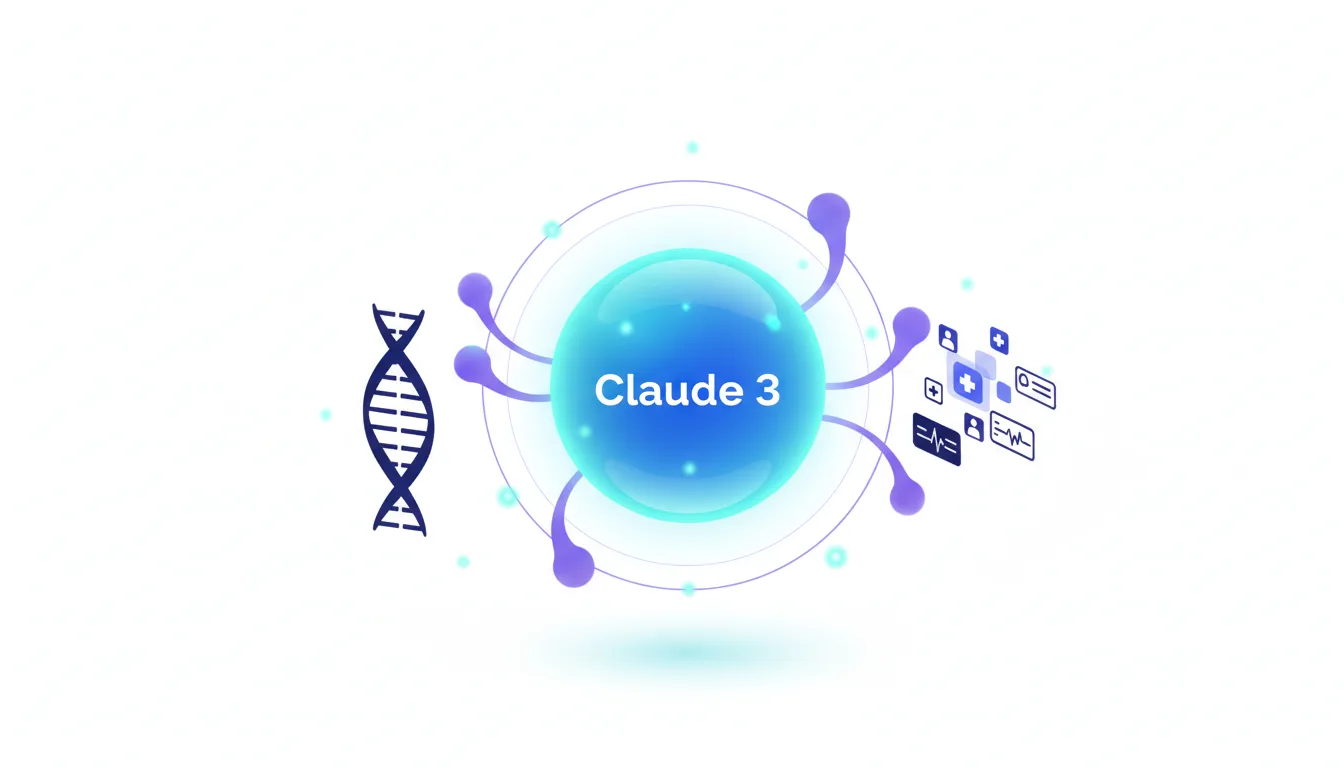
Anthropic is formally targeting the healthcare and life sciences market with its Claude 3 models. Through partnerships like the one with Pfizer and by tapping into AWS’s HIPAA-eligible services, the company is rolling out solutions aimed at speeding up drug discovery, summarizing clinical data, and easing the administrative load on physicians—things that could make a real difference in overburdened systems.
What happened
Anthropic is ramping up promotion of Claude’s healthcare applications, highlighting its expansive context window for sifting through intricate medical records and its “Constitutional AI” emphasis on safety as standout features. It’s not about unveiling a brand-new model here, but rather a deliberate go-to-market push to weave its leading LLM into one of the most tightly regulated and lucrative industries out there.
Why it matters now
From what I’ve seen in the LLM space, the market’s evolving from wide-ranging capabilities to mastery in specific verticals. To succeed in healthcare, it’s not enough to have a potent model—you need to handle compliance like HIPAA, mesh with outdated systems such as EMRs, and win over skeptical clinicians. Anthropic’s step forward underscores that the AI competition ahead will be decided in these targeted, high-value niches, rather than just leaderboard scores.
Who is most affected
Healthcare providers—think hospitals and clinics—along with life sciences firms and Health IT teams, are suddenly sizing up a fresh heavyweight contender. For clinicians, there’s real promise in cutting down administrative burnout. And for rivals like Google and Microsoft, this ramps up the fight for dominance over the entire healthcare AI ecosystem.
The under-reported angle
So much attention goes to pitting models against each other on accuracy metrics. But here’s the thing—the true contest is in that final stretch of integration. Claude’s success in healthcare will hinge less on its sheer smarts and more on slipping securely behind hospital firewalls, linking reliably to patient data through Retrieval-Augmented Generation (RAG) setups, and delivering straightforward ROI to cautious CFOs who can’t afford unnecessary risks.
🧠 Deep Dive
Ever felt the weight of how AI might finally lighten the load for overworked doctors? Anthropic’s push into healthcare feels like a smart, deliberate turn—from general AI tools to ones tailored for this demanding field. Sure, models like GPT-4 have popped up in medical trials on an ad-hoc basis, but Anthropic is crafting a structured plan around Claude as a reliable “copilot” for clinicians and researchers alike. At its heart, the pitch boils down to two big wins: easing the overwhelming paperwork that plagues physicians via ambient scribing and quick summaries, and fast-tracking biomedical research by crunching datasets too massive for any human team.
The competition? It’s packed and intense, no doubt. This positions Anthropic in a tense three-cornered face-off. Google’s got Med-PaLM 2, fine-tuned specifically for clinical use. Then there’s the Microsoft-Nuance powerhouse, blending Azure’s OpenAI muscle with Nuance’s deep roots in U.S. clinical documentation. Anthropic’s wagering that Claude’s huge context window—up to 200K tokens—and its reputation for AI safety will carve out a strong niche, letting it handle full patient histories or dense research papers in one go without missing a beat.
Technical prowess only gets you so far, though. In healthcare, trust and compliance form the real gatekeepers—not just how well the model performs. That’s why the nod to “HIPAA-eligible services” via AWS partners carries weight. It tells potential users that Anthropic gets it: the model itself won’t handle protected health information (PHI) outright. Instead, it leans on the cloud setup to foster a secure space for operations. This reliance on infrastructure is crucial—hospitals simply won’t gamble with fines in the millions over a slip-up.
And lurking beneath it all is the persistent issue of hallucinations, especially in a field with zero room for error. An AI that spins creative tales in a story? Great. One that fudges details on a patient’s allergies? That’s a recipe for disaster. It’s pushing the sector toward RAG as a must-have layer. Claude won’t rely solely on its baked-in knowledge; it’ll be anchored to live, accurate pulls from a hospital’s Electronic Medical Record (EMR) system. In the end—and this is key—the smoothness of that hookup will decide if Claude becomes an indispensable aid or just another headache.
📊 Stakeholders & Impact
| Stakeholder / Aspect | Impact | Insight |
|---|---|---|
| AI / LLM Providers | High | The battle for AI dominance is moving to regulated, high-margin verticals. Winning in healthcare establishes a powerful moat based on trust and integration, not just model performance. |
| Healthcare Providers | High | Potential to significantly reduce clinician burnout and operational costs. However, it introduces major implementation hurdles, new vendor dependencies, and significant risks around data security and model reliability. |
| Patients | Medium | Indirectly, patients could benefit from more attentive doctors who spend less time on paperwork. The primary risk involves data privacy and the potential for model errors impacting care decisions. |
| Regulators & Policy | Significant | This trend will force bodies like the FDA and HHS to accelerate the development of a clear regulatory framework for using LLMs in clinical settings, addressing issues of liability, bias, and validation. |
✍️ About the analysis
Researched and written with AI assistance under the editorial responsibility of the i10X News team. The title image is an AI-generated illustration. Read our AI Use Policy. Spotted an error? Request a correction.
This analysis draws from an independent i10x viewpoint, pulling together public announcements from AI vendors, nuggets from healthcare IT reporting, and a solid grasp of the tech underpinnings. It’s geared toward technology leaders, strategists, and enterprise decision-makers pondering how generative AI is morphing from a novelty into the backbone of business operations—plenty to unpack there, really.
🔭 i10x Perspective
Anthropic’s step into healthcare? It’s like a snapshot of AI’s coming evolution: sliding from broad smarts to specialized reliability. The contest isn’t merely about crafting the smartest model anymore—it’s about forging the most dependable, plug-and-play system for sectors where mistakes carry heavy consequences.
I’ve noticed this raises a pivotal question: Can a commitment to “safety-first” really build lasting edge in a landscape rife with institutional doubt? Looking ahead, professional AI’s trajectory might depend more on advances in handling liability, compliance tweaks, and the unglamorous grind of tying into enterprise setups than on flashy neural innovations. Keep an eye here—not on the model’s brainpower, but on whether it secures that vital permission to thrive.