Anthropic Turns Claude into an Application Security Agent
⚡ Quick Take
Have you ever wondered when AI would stop just pointing out problems and start rolling up its sleeves to fix them? Anthropic just turned its Claude large language model into a dedicated cybersecurity agent, launching a new tool designed to not only find code vulnerabilities but also automatically generate patches. This move signals a significant escalation in the AI race, shifting the focus from general-purpose chatbots to specialized, high-stakes enterprise applications that directly challenge the established DevSecOps market – or at least, that’s the sense I get from watching these developments unfold.
Summary: Anthropic is productizing its AI for a new vertical: Application Security (AppSec). Its new tool aims to accelerate the slow, manual process of fixing security flaws by using an LLM to scan code for vulnerabilities and create ready-to-review patches, moving beyond simple detection to active remediation. From what I’ve seen in similar tech shifts, this could really change how teams handle the daily grind of security updates.
What happened: Instead of just another feature for its chat interface, Anthropic has built a targeted solution aimed at the software development lifecycle (SDLC). The tool integrates into developer workflows to analyze codebases, identify weaknesses based on vulnerability taxonomies like CWE, and propose code changes to fix them, promising to reduce the time from detection to remediation. It’s a practical step forward, one that feels long overdue in an industry bogged down by repetitive tasks.
Why it matters now: This challenges the entire multi-billion dollar AppSec tooling market (Static Application Security Testing (SAST), Dynamic Application Security Testing (DAST)) by replacing passive alerts with active, AI-driven solutions. It puts pressure on competitors like Google and OpenAI to move beyond general coding assistants and release their own specialized, high-margin AI agents for enterprise functions, turning developer tooling into the next major AI battleground. But here’s the thing – this isn’t just hype; it’s a real pivot that could reshape priorities across the board.
Who is most affected: Software developers, security engineers, and platform teams are the primary users. They stand to gain efficiency but must also take on the new task of validating AI-generated security patches. Legacy AppSec vendors like Snyk, Veracode, and Checkmarx are now facing a new category of AI-native competitor, plenty of reasons for them to rethink their strategies, really.
The under-reported angle: The biggest hurdle isn’t bug detection; it’s trust and governance. The core unanswered question is how organizations can safely manage “human-in-the-loop” workflows to prevent the tool from automatically introducing new, subtle flaws. I’ve noticed how these kinds of gaps – the ones we don’t see coming – often trip up even the most promising tech, and the industry lacks benchmarks, case studies, and clear governance patterns for an AI that actively modifies production-bound code. It’s worth pondering where that leaves early adopters.
🧠 Deep Dive
Ever feel like security work is a never-ending game of whack-a-mole? Anthropic’s new security tool marks a strategic pivot from conversational AI to autonomous enterprise agents. It’s a direct assault on one of the most persistent pain points in modern software development: the ever-expanding backlog of security vulnerabilities discovered by traditional scanners. Where Static Application Security Testing (SAST) tools find problems and create tickets, Anthropic promises a workflow where Claude finds the problem and drafts the pull request to fix it. This is the “shift-left” security principle supercharged by generative AI, aiming to embed security expertise directly into the developer’s workflow before code is even committed – a concept that’s as straightforward as it sounds, yet revolutionary in practice.
The proposed solution directly targets the manual toil that defines most security remediation cycles. Today, a developer receives an alert, must context-switch to understand the vulnerability, research a fix, implement it, and then submit it for review. Anthropic’s tool attempts to short-circuit this by presenting a proposed code diff for immediate review. This promises to dramatically reduce Mean Time to Remediation (MTTR) and free up security teams from chasing developers to patch low-hanging fruit. That said, the initial announcements are thin on the technical specifics of its scanning methodology, its false-positive rates, and how its patch quality compares to human-engineered fixes; it’s like they’re showing the potential without quite baring all the details yet.
This raises the critical and largely unaddressed issue of governance. Safely automating code patches is a high-stakes endeavor. A flawed AI-generated patch could introduce subtle but catastrophic new vulnerabilities, creating a larger problem than the one it solved – and that’s no small worry. This is where the real work begins for any organization looking to adopt such a tool. They will need to engineer robust review gates, automated testing that validates the AI’s suggestions, and clear audit trails for compliance with standards like SOC 2. Without public benchmarks or red-teaming results, early adopters are effectively beta-testing the safety of AI-driven remediation on their own codebases, a trailblazing role that comes with its share of risks.
Ultimately, this move is less about a single tool and more about the future of the AI market. Anthropic is leveraging its “AI safety” brand identity and translating it into a tangible product for reducing software risk. This forces the hand of competitors and establishes a new frontier where LLMs are not just assistants but active participants in the software supply chain. The race is no longer just about who has the biggest model, but who can build the most trusted and valuable autonomous agents for the enterprise – a shift that’s exciting, if a bit daunting, to consider.
📊 Stakeholders & Impact
| Stakeholder / Aspect | Impact | Insight |
|---|---|---|
| AI / LLM Providers | High | Signals a market shift from generalist models to specialized, high-margin AI agents. This escalates the competitive pressure between Anthropic, OpenAI, and Google to productize AI for valuable enterprise workflows – it’s like the gloves are off now. |
| DevSecOps Tooling | High | Traditional SAST/DAST vendors (Snyk, Veracode) face existential threat from AI-native tools that focus on remediation, not just detection. They will be forced to integrate similar generative AI capabilities to stay relevant, or risk fading into the background. |
| Developers & Sec Engineers | High | Workflow changes from “ticket-taker” to “AI-patch reviewer.” This could eliminate tedious work but introduces the new cognitive load of validating AI-generated code for correctness and security, a non-trivial skill that teams will need to build up over time. |
| C-Suite & Compliance | Significant | Creates new questions of liability and risk. Who is responsible if an AI-generated patch causes a breach? Organizations will need new governance frameworks and audit processes to adopt these tools responsibly – plenty to unpack there, for sure. |
✍️ About the analysis
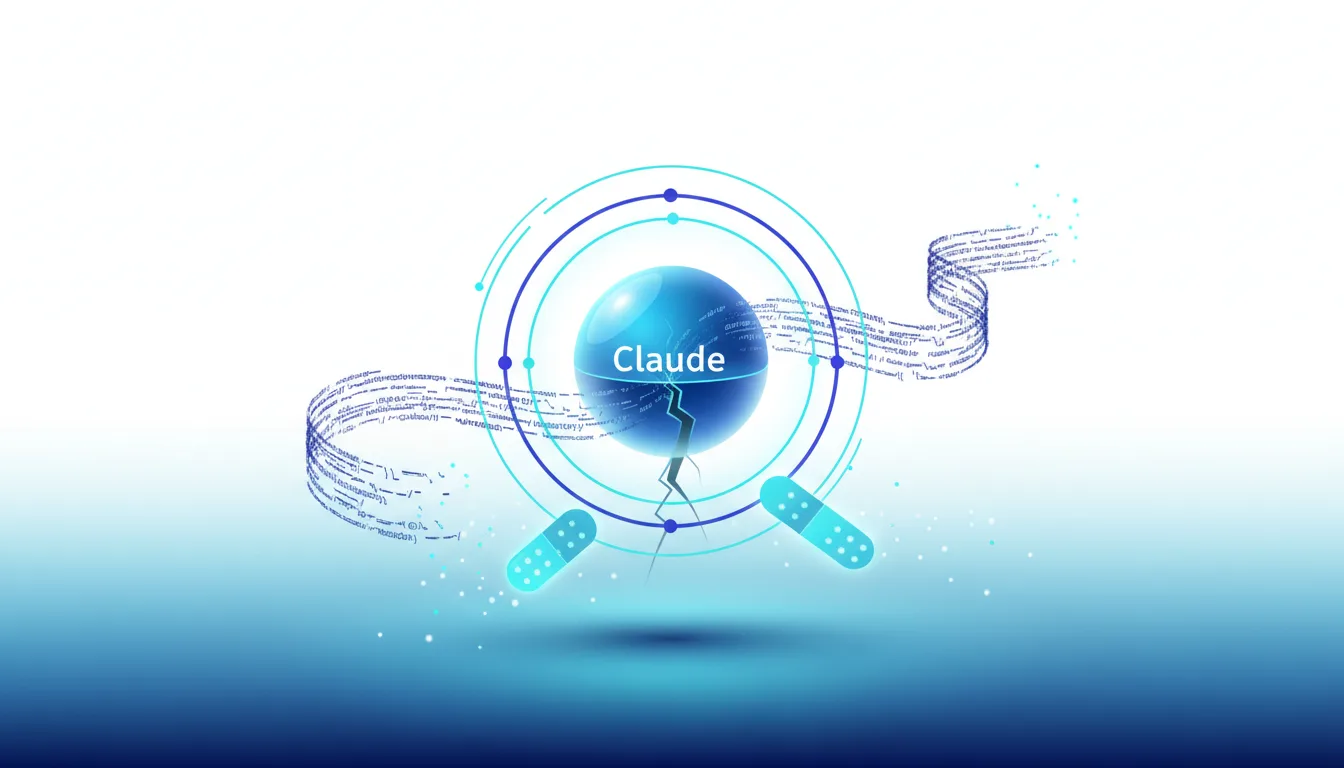
Researched and written with AI assistance under the editorial responsibility of the i10X News team. The title image is an AI-generated illustration. Read our AI Use Policy. Spotted an error? Request a correction.
This is an independent analysis by i10x, based on early product announcements and a comparative review of the existing Application Security (AppSec) market. It is written for engineering leaders, developers, and security professionals evaluating how generative AI is transforming the software development lifecycle and the DevSecOps technology landscape. Think of it as notes from the front lines, shared to help navigate these changes.
🔭 i10x Perspective
What if AI didn’t just help with code but took ownership of keeping it secure? The era of AI as a passive assistant is ending; the era of AI as an active, autonomous agent is beginning. Anthropic’s move into code security shows that the next frontier for LLMs is not just writing code but owning its lifecycle – maintaining, refactoring, and securing it at scale.
This positions “AI safety” as a commercial strategy, betting that enterprises will pay a premium for tools that promise to reduce risk, not just increase productivity. The most significant unresolved tension this creates is the “trust bottleneck.” The ultimate success of these tools will depend not on the power of the AI, but on our ability to build human-in-the-loop systems that can govern them without slowing innovation to a halt.