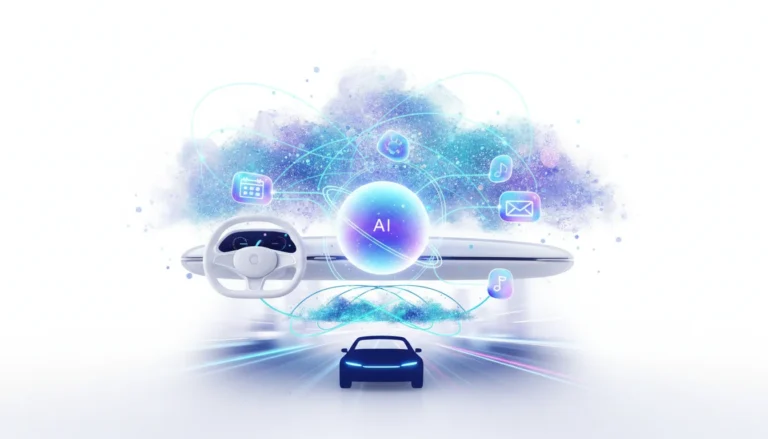
Reports of Apple developing a wearable AI pin for a 2027 launch signal a calculated move to redefine the “ambient AI” category where others have stumbled. This isn’t just about building a better Humane Pin; it’s about leveraging Apple’s unmatched hardware and developer ecosystem to create a distributed intelligence network, turning the pin into a contextual sensor for the iPhone, Watch, and AirPods.
Quick Take
- Summary: From what I’ve seen in these early whispers from the industry, Apple seems to be dipping its toes into a wearable, screenless AI device – think lapel pin style – with eyes on a 2027 rollout. The whole idea revolves around a voice-first, always-on assistant that steps outside the usual smartphone and smartwatch boundaries, you know?
- What happened: Ever wonder why some gadgets flop while others quietly reshape everything? Well, this pin exploration comes right on the heels of the Humane AI Pin’s rough landing in the market, plus the so-so vibes around other screenless wearables. Apple’s rumored tack here feels like a direct swing at those AI hardware startups and even bigger players like Meta with their Ray-Ban glasses, or OpenAI if those hardware rumors hold water.
- Why it matters now: But here’s the thing – in this AI whirlwind, Apple’s move tackles a big puzzle: what’s the next big way we’ll interact with our tech? While others chase standalone gadgets or basic smart glasses, Apple looks set to craft an accessory that amps up its whole ecosystem, drawing on its strengths in custom chips, on-device smarts, and that whole privacy angle.
- Who is most affected: Developers plugged into Apple’s world stand to gain the most, maybe snagging fresh APIs tuned for ambient, always-there interactions. It ramps up the heat on Meta, Humane, and the rest of the AI hardware crowd, and even stirs things up for Apple’s own Watch lineup – prompting a hard look at how it fits when there’s an ever-listening AI buddy in the mix.
- The under-reported angle: The real story, though? It’s not the pin standing alone, but how it slots in as a key node in a bigger network. Picture it as a sleek input-output piece for the heavy AI lifting done across your iPhone, Private Cloud Compute, and those on-device NPUs (Neural Processing Units). This is ecosystem thinking at its core, not just another product to sell.
Deep Dive
Have you caught yourself glancing at those failed AI gadgets and thinking, “What if they got it all wrong from the start?” The chatter about an “Apple AI Pin” might seem like old news, especially with the Humane AI Pin’s flop highlighting brutal hurdles like battery drain, heat issues, and scraping together a worthwhile screenless setup. That said, if we just chalk this up to past stumbles, we’re missing Apple’s angle entirely. They’re not out to replace your phone; no, it’s about layering on something sharper to what’s already there. The pin wouldn’t be the thinking part – it’d serve as the feeler, the one picking up on the world around you.
What sets this apart, really, is Apple’s tight grip on the whole stack. Startups like Humane had to cobble it all together from the ground up, ending up with laggy responses, short battery life, and software that felt tacked on. Apple? They can shunt the big AI workloads and connections over to the iPhone humming in your pocket, while tapping those beefy on-device NPUs (Neural Processing Units) for quick hits like spotting key words or grasping basic intentions. That hybrid edge-plus-cloud setup, backed by Private Cloud Compute, strikes me as the only realistic shot at an AI wearable that’s snappy, lasts the day, and doesn’t compromise on privacy – plenty of reasons to bet on it, if you ask me.
For it to click, though, it’ll need to weave right into Apple’s hardware lineup without a hitch. Just imagine: the pin’s got this sophisticated mic setup grabbing your question, its UWB (Ultra Wideband) chip figures out it’s near your AirPods for smooth audio handoff, it pulls context from your Watch’s health stats, and then the iPhone crunches the numbers to fire back a full, multi-sensory reply. This isn’t some lone wolf device scrambling for a spot; it’s the add-on that wakes up your entire Apple setup to be more intuitively there, filling that voice-first gap in your personal AI web.
Of course, none of this flies solo – Apple will lean hard on its developers to make it sing. The magic happens with a fresh API setup, something like “Shortcuts for Ambient AI”, letting apps hook in for intents and services minus any screens. A dev might code a trigger for “scan this food and track its nutrition” or “next move in this workflow?” – suddenly, the pin’s a game-changer for pros, folks needing accessibility boosts, everyday users. Apple’s got the tough spot here, and the upside, of building a platform where coding for an unseen interface feels not just doable, but downright irresistible. It’s that potential that keeps me watching closely.
Stakeholders & Impact
| Stakeholder | Impact | Insight |
|---|---|---|
| Apple’s Internal Strategy | High | Pits the AI pin concept against the future of the Apple Watch as the primary wearable. Forces a decision on whether the next interface is visual (Watch/Vision Pro) or ambient (Pin/AirPods). |
| AI Competitors (Meta, OpenAI) | High | Validates the AI wearable category but raises the competitive bar significantly. Shifts the battleground from standalone hardware performance to the depth and intelligence of the underlying ecosystem. |
| Apple Ecosystem Developers | Significant | Creates a new frontier for development beyond screen-based apps. Success depends on Apple providing a simple, powerful SDK for voice-first, context-aware “intents” and actions. |
| Consumers & End-Users | Medium–High | Promises a more hands-free, frictionless AI experience. However, it raises major questions about privacy, the social acceptability of always-on microphones, and the real-world value versus the iPhone. |
About the analysis
Researched and written with AI assistance under the editorial responsibility of the i10X News team. The title image is an AI-generated illustration. Read our AI Use Policy. Spotted an error? Request a correction.
This analysis is an independent i10x synthesis based on public reports and our deep research into AI hardware, developer ecosystems, and wearable technology constraints. It interprets these signals through a strategic lens for engineering managers, CTOs, and developers tracking the future of human-computer interaction and intelligence infrastructure.
i10x Perspective
Isn’t it fascinating how Apple’s AI pin rumblings point to the industry finally shaking off the habit of just squeezing bigger language models into whatever fits? The shift we’re seeing – it’s toward that ambient intelligence layer, one that gets your context, stays a step ahead, and blends seamlessly into daily life.
At its heart, this goes beyond launching a fresh gadget category; it’s like a vote on where personal computing heads next. Should Apple pull this off, it’ll show that victory lies not in one mighty “AI everything” box, but in a spread-out web of purpose-built pieces. The tension worth eyeing isn’t if the pin outshines a smartphone – that’s not the game – but whether its ease makes up for the deep dives into privacy worries and the broader societal ripples from a top-tier tech giant rolling out an always-on AI listener to the masses.