Apple Integrates Google’s Gemini into Siri — Quick Take & Analysis
⚡ Quick Take
Have you ever wondered what it takes for a tech giant like Apple to admit it needs a little outside help? Well, Apple has just announced it will integrate Google’s Gemini models into its next-generation Siri—a landmark partnership that signals a major strategic shift in the AI assistant race. By outsourcing its most complex AI reasoning to a direct competitor, Apple is prioritizing performance over its traditional walled-garden approach, betting that a sophisticated privacy architecture can bridge the gap just right.
Summary
Apple is revamping Siri as part of its Apple Intelligence framework by partnering with Google. The new Siri will use a hybrid model, processing simple requests on-device with Apple’s own models and routing more complex, world-knowledge queries to Google’s powerful Gemini LLMs in the cloud—it’s a practical way to level up without starting from scratch.
What happened
Instead of building a direct competitor to GPT-4 or Gemini Ultra internally, Apple has opted for a pragmatic integration. This move allows Siri to gain state-of-the-art conversational and reasoning capabilities almost overnight, addressing years of criticism that it has fallen behind competitors like Google Assistant and Alexa. From what I’ve seen in these announcements, it’s a smart pivot, really.
Why it matters now
This is Apple’s decisive answer to the generative AI wave. The company is conceding that best-in-class LLMs require a scale it currently lacks, making this partnership a necessary step to remain relevant. It reshapes the AI landscape, turning a hardware and OS rivalry into a complex co-opetition centered on AI inference—and that’s the kind of twist that keeps things interesting.
Who is most affected
Developers will need to adapt their applications to Siri’s new, more powerful App Intents—think rethinking how voice commands flow into their apps. Enterprises will face new data governance questions, plenty of them. And billions of users will get a smarter assistant, forcing them to navigate a new privacy paradigm where Apple acts as a broker for their AI queries, which could feel both empowering and a bit unsettling at first.
The under-reported angle
The real innovation isn’t just the deal with Google; it’s the underlying architecture. Apple is building a sophisticated routing system that decides when to use on-device AI versus a cloud LLM. This “model router” and Apple’s Private Cloud Compute framework are designed to act as a privacy firewall, anonymizing requests before they ever reach Google’s servers. This technical layer is Apple’s attempt to have its cake and eat it too: top-tier AI power without sacrificing its core privacy brand. It’s clever, but it’ll take some real-world testing to prove it holds up.
🧠 Deep Dive
What if the key to unlocking better AI isn’t building everything yourself, but knowing when to team up? Apple’s integration of Google’s Gemini into Siri marks the end of an era for the company’s self-contained AI strategy. For years, Siri’s capabilities were limited by Apple’s insistence on on-device processing and a cautious approach to cloud computing. This announcement, folded into the broader Apple Intelligence initiative, is a public admission that competing in the age of generative AI requires access to hyperscale models. The move is a calculated trade-off: sacrificing AI sovereignty for immediate performance gains in a bid to make Siri a true contender again. But here’s the thing—it’s that trade-off that makes this feel like a genuine step forward.
The technical brilliance of this plan lies not in the partnership itself, but in the architecture designed to protect user privacy—it’s the unsung hero here. The system will function on a tiered model. Simple, personal commands (“Set a timer for 10 minutes”) will be handled by smaller, efficient models running directly on the device’s Apple Neural Engine (ANE). For more complex queries that require vast world knowledge (“Plan a three-day hiking trip in Yosemite with vegetarian-friendly meal stops”), Siri will first ask for user permission, then route the anonymized request to Google’s Gemini. Apple insists that user data and context will not be stored or used by Google, positioning itself as a “private proxy” to the world’s most powerful AI models. I’ve noticed how this setup echoes broader trends in AI, where privacy isn’t an afterthought but the foundation.
This architecture hinges on a concept known as model routing—an intelligent system deciding the best, most efficient, and most private way to fulfill a user’s request. This router will have to weigh latency, battery impact, cost, and privacy for every query—balancing all that in real time sounds tricky, doesn’t it? This is the critical component that allows Apple to maintain control over the user experience while leveraging a third-party “brain.” The success of this entire strategy depends on this router being seamless, fast, and, most importantly, trustworthy. Failure here could result in a confusing user experience or, worse, a privacy breach that shatters Apple’s brand identity—we’ve seen how quickly trust can erode in tech.
The strategic implications are massive, no doubt about it. For Google, this partnership provides its Gemini models with an unparalleled distribution channel across a billion-plus high-value devices, generating massive inference workloads for Google Cloud. For Apple, it’s a high-stakes gamble. The company is actively inviting its biggest OS competitor deep into its ecosystem. While a similar deal with OpenAI was reportedly considered, the choice of Google likely reflects a desire for deep, OS-level integration that an independent AI lab couldn’t offer. This move transforms the AI race from a simple model-vs.-model benchmark into a complex battle over distribution, integration, and user trust—that shift alone could redefine how we think about competition.
Looking ahead, the impact extends deep into the developer and enterprise ecosystems, with ripples that might take a while to settle. The updated SiriKit and App Intents will allow developers to expose their app’s functionality to a far more intelligent and conversational Siri, creating opportunities for powerful new hands-free workflows. However, enterprises using Apple devices will immediately demand clarity on data governance, requiring robust MDM controls to audit and restrict how corporate data interacts with this new hybrid AI system, especially given potential regulatory scrutiny under frameworks like GDPR and the DSA. It’s all interconnected, and that’s what makes navigating it so vital.
📊 Stakeholders & Impact
| Stakeholder / Aspect | Impact | Insight |
|---|---|---|
| Apple | High | Gaining SOTA LLM capabilities for Siri while risking brand dilution and dependence on its biggest rival. The success hinges on its privacy architecture—it’s a delicate balance. |
| High | Secures a massive, premium distribution channel for Gemini, solidifying its position as a foundational “intelligence provider” for the entire tech industry, which feels like a big win. | |
| Developers | Medium-High | A more powerful Siri opens up new possibilities for App Intents and voice-first actions, but requires re-learning a more complex development surface—adapt or get left behind. |
| End Users | High | Finally get a competitive AI assistant, but must place their trust in Apple’s “private proxy” model and understand the on-device vs. cloud distinction; it’s a learning curve worth the effort. |
| Regulators | Significant | This deep partnership between two of the world’s largest tech companies will attract intense antitrust scrutiny, examining its effect on AI market competition—eyes will be watching closely. |
| OpenAI | Medium | Being passed over for this integration is a strategic blow, highlighting that having a top model isn’t enough; deep OS integration and distribution are key in this game. |
✍️ About the analysis
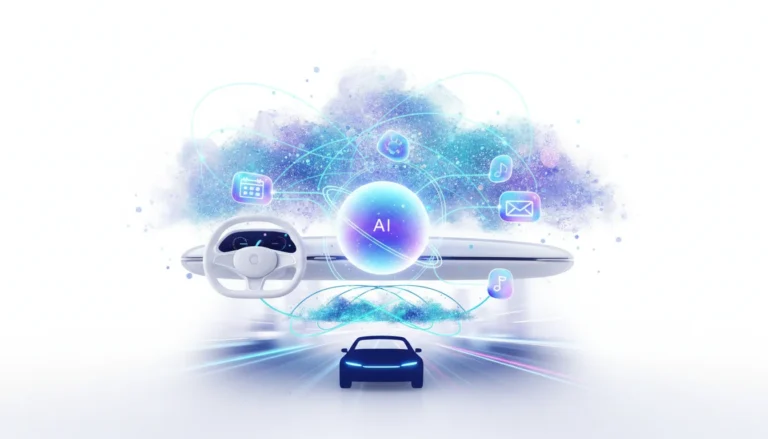
Researched and written with AI assistance under the editorial responsibility of the i10X News team. The title image is an AI-generated illustration. Read our AI Use Policy. Spotted an error? Request a correction.
Ever feel like the headlines miss the deeper mechanics at play? This is an independent i10x analysis based on public announcements and architectural principles common in modern AI systems. By deconstructing the implicit data flows and strategic incentives—piecing it all together like a puzzle—this piece is designed for developers, product leaders, and CTOs seeking to understand the deep market shifts behind the headlines and prepare their platforms for the next generation of AI assistants. It’s meant to spark those “aha” moments that inform real decisions.
🔭 i10x Perspective
Isn’t it fascinating how one partnership can redraw the lines of an entire industry? This isn’t just an update to Siri; it’s the blueprint for the future of consumer AI. The era of purely on-device or purely cloud-based assistants is over—gone, really. The new paradigm is a hybrid stack where on-device models handle privacy-sensitive tasks and seamlessly route complex reasoning to powerful, third-party cloud brains via a trusted intermediary. From my vantage point, it’s the kind of evolution that feels inevitable yet bold.
Apple is betting its entire privacy reputation that it can be that trusted broker better than anyone else—weighing the upsides against the risks every step of the way. The unresolved tension for the next decade is whether this hybrid model can truly safeguard user data at scale, or if it’s merely a temporary bridge before Apple develops its own foundational models. Watch this space: the winner of the AI assistant war won’t just have the smartest model, but the most trusted architecture. And that, in the end, might be the real game-changer.