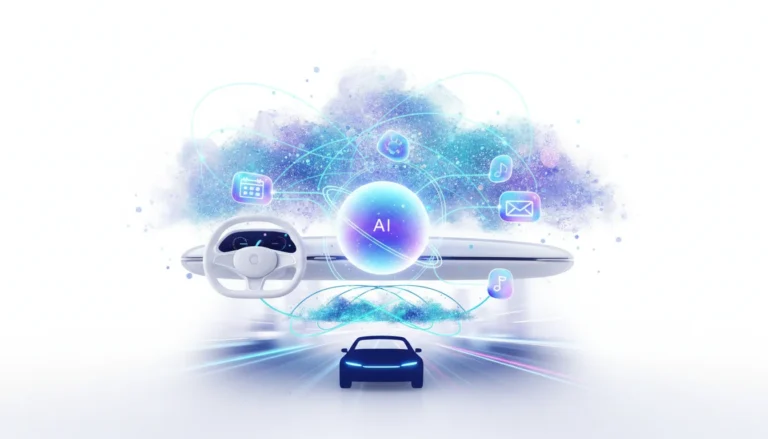
Apple’s reported integration of Google’s Gemini into Siri isn’t just a feature update; it’s a seismic shift in AI strategy. By outsourcing Siri’s “brain” for complex tasks, Apple is pragmatically admitting its own LLMs can’t compete at the highest level—yet. The real story isn’t the partnership itself, but the complex technical and privacy architecture Apple is building to manage it, creating a hybrid system that juggles on-device models, a private cloud, and a direct line to its biggest rival.
Quick Take
- Summary: Multiple reports, led by sources like Bloomberg’s Mark Gurman, indicate that Apple will integrate Google’s Gemini AI models into Siri as part of its new Apple Intelligence framework in iOS 18. This move aims to dramatically upgrade Siri’s capabilities for complex, world-knowledge queries, addressing its long-standing performance gap compared to modern AI assistants. The partnership is expected to be a key announcement at Apple’s upcoming Worldwide Developers Conference (WWDC).
- What happened: Apple has reportedly opted to leverage an external, best-in-class LLM for high-level reasoning tasks rather than relying solely on its in-house models. The plan involves a sophisticated routing system: simple, private requests will be handled by Apple’s on-device models and Private Cloud Compute infrastructure, while more complex queries will be passed to Google’s Gemini. This represents a major strategic pivot for Apple, which has historically favored vertically integrated, in-house solutions. From what I’ve seen in the industry, these kinds of shifts don’t come easy—they’re born out of necessity.
- Why it matters now: This is Apple’s entry into the serious AI arms race, years behind Google, Microsoft, and OpenAI. The move instantly reframes the competitive landscape, turning two rivals into reluctant partners and setting the stage for a new kind of platform war fought over AI model integration, privacy architecture, and developer access. It signals that even for the world’s most valuable company, building a state-of-the-art frontier model is too slow and expensive to go it alone. But here’s the thing: it could reshape how we all interact with our devices, for better or worse.
- Who is most affected: Developers building for the Apple ecosystem are on the front lines, as the capabilities of SiriKit and App Intents are set to radically expand, but also become more complex. Google gains an unprecedented distribution channel for Gemini, embedding its AI into over a billion active iPhones. Enterprises must now evaluate the data privacy and security implications of a system where user queries could be processed by a third party. Plenty of ripple effects there, really, touching everything from app design to boardroom decisions.
- The under-reported angle: Most coverage focuses on “Siri getting smarter.” The critical, under-discussed element is the model routing architecture. The intelligence isn’t just in the LLM; it’s in the system that decides which LLM to use for a given query, balancing latency, cost, capability, and privacy. This “AI switchboard” is the core innovation, and its design will define the user experience and Apple’s ability to maintain its privacy promises. It’s that layer, almost like the unseen conductor in an orchestra, that could make or break the whole effort.
Deep Dive
Ever felt like your voice assistant is stuck in the stone age while everyone else’s is leaping ahead? That’s been Siri’s story for years—adept at setting timers but failing at complex conversation or reasoning. The reported partnership with Google to embed Gemini models is Apple’s high-stakes gambit to fix that, fundamentally re-architecting its approach to AI. This isn’t a simple replacement; it’s the formalization of a hybrid intelligence system under the banner of “Apple Intelligence.” The core idea is to create a tiered system: Apple’s own, smaller models will run on-device for speed and privacy on simple tasks, while more demanding prompts get escalated to Gemini’s powerful cloud-based models. Weighing the upsides against the risks feels like treading carefully on thin ice, doesn’t it?
The decision to partner with Google, rather than OpenAI or Anthropic, is a calculated one. While OpenAI’s ChatGPT has the brand recognition, Apple and Google already share a multi-billion-dollar search deal, creating a pre-existing commercial and technical pathway. This move, however, introduces a profound strategic dependency. Apple is effectively outsourcing Siri’s advanced cognition to a direct competitor, creating a vendor lock-in risk that is antithetical to its core philosophy. This trade-off—speed-to-market in exchange for strategic vulnerability—highlights the immense pressure Apple is under to deliver a credible generative AI experience. I’ve noticed how these partnerships often start as necessities but evolve into something more intertwined over time.
The most significant innovation here is the orchestration layer. As outlined in reports and implied by Apple’s focus on “Private Cloud Compute,” the system will need to analyze each user request in real-time to determine the appropriate execution venue. Is this a private request to summarize a personal email? Keep it on-device or in Apple’s secure cloud. Is it a public request to plan a multi-stop travel itinerary? Route it to Gemini. This routing logic is where the battle for privacy will be fought. Apple’s ability to create clear user controls and transparently communicate how and when data leaves its ecosystem will be paramount to maintaining user trust—it’s a delicate balance that could either build loyalty or erode it if mishandled.
This hybrid model has massive implications for the developer ecosystem. The current SiriKit and App Intents framework will likely be supercharged, but also fractured. Will developers have to target different APIs for on-device vs. cloud-based AI capabilities? How will they manage user permissions when an app intent could trigger a call to Google’s servers? This new architecture could unlock a new generation of deeply integrated, intelligent apps, but it also introduces a new layer of complexity that Apple will need to manage carefully to avoid developer confusion. The success of “Apple Intelligence” will depend as much on the clarity of its new developer tools as on the power of Gemini itself. That said, it’s exciting to think about the apps we might see emerge from this—smarter, more intuitive ones that feel almost human.
Stakeholders & Impact
| Stakeholder / Aspect | Impact | Insight |
|---|---|---|
| Apple | High | Rapidly closes the generative AI gap but introduces a strategic dependency on Google, a primary competitor. |
| High | Gains a massive, premium distribution channel for Gemini, solidifying its position against OpenAI’s ChatGPT. | |
| iOS Developers | High | Potential for far more powerful Siri integrations via SiriKit, but with added architectural complexity and new privacy considerations. |
| End Users | Medium-High | Siri becomes significantly more capable for complex tasks, but users face new potential privacy trade-offs and data flows. |
| Regulators (EU/US) | Significant | The deal will attract immediate antitrust scrutiny under frameworks like the EU’s Digital Markets Act (DMA), potentially being viewed as anti-competitive gatekeeping. |
About the analysis
Researched and written with AI assistance under the editorial responsibility of the i10X News team. The title image is an AI-generated illustration. Read our AI Use Policy. Spotted an error? Request a correction.
This analysis is an independent synthesis produced by i10x, based on a consolidation of public reports, insider commentary, and our understanding of the AI infrastructure landscape. It triangulates information from multiple sources to provide a strategic overview for developers, product leaders, and tech strategists navigating the AI ecosystem. We aimed to cut through the noise, pulling together the threads that matter most.
i10x Perspective
What if the future of AI isn’t about building the biggest brain, but smartly connecting them all? Apple’s integration of Gemini is more than a solution for Siri; it’s a blueprint for the future of mass-market AI. It signals the end of the monolithic AI model and the rise of the orchestrated intelligence system, where a device acts as a smart router between various on-device, private cloud, and public cloud AI brains. That pivot mid-thought— from solo efforts to collaborative ones—marks a real turning point.
This move solidifies a new reality: building and maintaining a frontier model is a tax that only a handful of hyperscalers can afford. For everyone else, including Apple, the game shifts from model-building to model-brokering. The most critical unresolved tension is whether Apple can successfully “borrow” Google’s AI consciousness while ring-fencing its own soul—its unshakeable brand promise of user privacy. It’s a high-wire act, one that leaves you pondering just how far companies will go to stay ahead.