Quick Take
Quick perspective
I’ve always thought that true innovation in AI isn’t just about pushing the limits of what’s possible in a lab—it’s about making those possibilities work seamlessly in the real world where businesses actually run. Anthropic’s release of Claude Opus 4.5 feels like a smart pivot from chasing raw benchmarks to targeting the enterprise core. By launching with deep integration into AWS Bedrock and Databricks, they’re signaling that the next AI frontier isn’t just about model capabilities, but about secure, governable, and measurable deployment within the enterprise stack. This move positions Opus 4.5 not as a standalone brain, but as the engine for high-stakes coding and office automation.
Summary
Anthropic has launched Claude Opus 4.5, a new flagship AI model explicitly optimized for complex coding, agentic workflows, and office automation. The model was announced with immediate availability on major enterprise cloud platforms, including Amazon Bedrock and Databricks—highlighting a go-to-market strategy focused on governed, large-scale deployment, you know, the kind that enterprises have been waiting for.
What happened
Have you ever wondered how a big AI launch could feel less like a solo act and more like a team effort? Instead of a standalone launch, Anthropic coordinated with key infrastructure partners to release Opus 4.5. Official documentation focuses on improved multi-step reasoning, tool use, and vision capabilities, while partners like AWS and Databricks emphasize the model’s integration with enterprise-grade security controls like IAM, VPCs, and data governance frameworks—tools that make all the difference in keeping things locked down.
Why it matters now
That said, this launch directly challenges OpenAI’s GPT-4 series in the lucrative enterprise market. While previous battles were fought on leaderboards—endless charts and scores—this one is about deployment reality, the gritty stuff. By embedding Opus 4.5 within the environments where enterprise data already lives, Anthropic is trying to shorten the path from model evaluation to production ROI for complex automation tasks, which, let’s face it, could change how teams operate day to day.
Who is most affected
Enterprise developers, solution architects, and CTOs are the primary audience here—they’re the ones knee-deep in these decisions. They now have a powerful new tool for building sophisticated coding agents and automating office workflows, but they must weigh its capabilities against the operational overhead of migration, cost management, and observability, weighing those upsides carefully, really.
The under-reported angle
But here’s the thing—the true story isn’t just the model’s incremental improvements; it’s the strategic commoditization of state-of-the-art AI through managed platforms. The critical question for enterprises is shifting from “which model is smartest?” to “how can I securely deploy, manage, and measure the cost-per-task of any top-tier model within my existing infrastructure?”—a shift that’s worth pondering as we see more of these integrations roll out.
🧠 Deep Dive
Ever feel like AI announcements promise the world but leave you scratching your head on the “how” part? Anthropic’s Claude Opus 4.5 has arrived not just as an update, but as a clear statement of intent—positioned as a master of “long-horizon tasks,” advanced coding, and agentic workflows, it’s engineered to tackle the multi-step, tool-using processes that define modern knowledge work. The launch, though, was less a monolithic PR event and more a coordinated ecosystem play, the kind that builds quietly but lasts. Simultaneous announcements from Amazon Bedrock and Databricks underscore the core strategy: meet enterprise customers where they are, with the security and governance they demand—no more forcing square pegs into round holes.
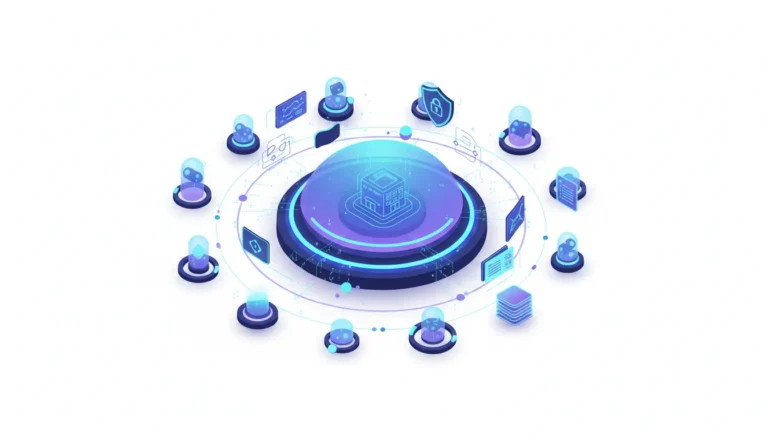
This enterprise-first approach directly addresses a major pain point in AI adoption, one I’ve noticed trips up so many teams. While developers can experiment in a playground—fun, sure—deploying a model against sensitive corporate data requires a wrapper of IAM policies, VPCs, encryption, and audit logs, layers that protect what’s valuable. The AWS and Databricks integrations are designed to provide this wrapper out of the box, framing Opus 4.5 not as a raw API but as a manageable corporate asset. This focus on platform-native security is a powerful counter-narrative to the “move fast and break things” ethos of earlier AI waves—refreshing, in a way, for those treading carefully with compliance.
Beyond the infrastructure, Opus 4.5 is being aimed squarely at the “office automation” gap that previous models have struggled to fill reliably—think about it, how often have you seen a tool that half-delivers on those promises? The promise extends beyond simple summarization to creating playbooks for email triage, meeting analysis, spreadsheet manipulation, and financial document drafting. Yet, as our analysis of market gaps shows (and from what I’ve seen in the field), the “how-to” guides and tangible ROI calculators for these workflows are still missing, plenty of reasons for that hesitation. The opportunity lies in translating the model’s raw capability into repeatable, measurable recipes for business productivity gains—recipes that could really stick if teams get them right.
For developers and SREs, the arrival of Opus 4.5 introduces new, practical challenges that can’t be ignored. The web is saturated with launch announcements but lacks critical, independent analysis—it’s like everyone’s shouting the headlines but skipping the fine print. Key missing pieces include head-to-head benchmarks against Opus 4.1 and GPT-4o on real-world coding pass rates, transparent TCO calculators for agentic workloads, and migration guides detailing potential shifts in API behavior. Without robust observability patterns for tracing, evaluation, and cost-attribution, teams risk flying blind as they attempt to operationalize these powerful new agents—the model is ready, but the enterprise SRE runbook is yet to be written, leaving room for some thoughtful experimentation ahead.
📊 Stakeholders & Impact
| Stakeholder / Aspect | Impact | Insight |
|---|---|---|
| Anthropic | High | Cements its position against OpenAI’s GPT-4 series by focusing on enterprise-grade reliability for agentic tasks—success depends on adoption within its platform partners, which could be the make-or-break. |
| Enterprise Platforms (AWS, Databricks) | High | Strengthens their “model garden” offering, allowing them to capture enterprise AI spend regardless of which foundation model wins—they become the indispensable governance layer, quietly steering the ship. |
| Developers & SREs | Medium–High | Gains a more capable tool for coding/automation, but inherits new challenges in benchmarking, cost management, and observability for complex, multi-step agents—practical hurdles that demand attention. |
| Business & Office Users | Medium | Moves AI from a novelty chatbot to a potential workflow engine for email, docs, and spreadsheets, but this requires significant integration work to realize value—it’s promising, yet not without effort. |
✍️ About the analysis
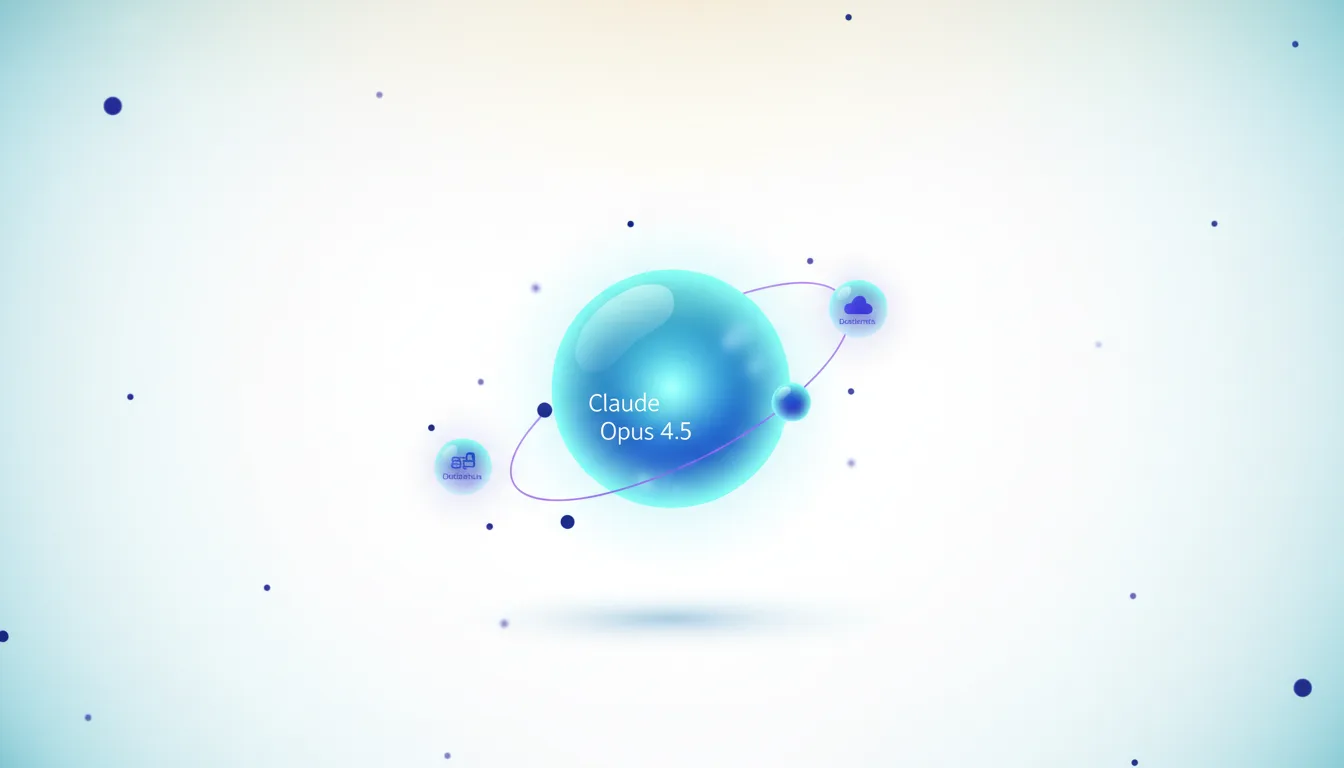
Researched and written with AI assistance under the editorial responsibility of the i10X News team. The title image is an AI-generated illustration. Read our AI Use Policy. Spotted an error? Request a correction.
What goes into piecing together these insights without the hype? This is an independent analysis by i10x, based on a review of official documentation, partner announcements, and identified gaps in current market coverage—drawing from the details that often get overlooked. The article is written for developers, enterprise architects, and product leaders who need to understand the strategic implications and practical challenges of deploying next-generation AI models, the kind of guidance that helps navigate the noise.
🔭 i10x Perspective
From what I’ve observed in these evolving AI landscapes, the Claude Opus 4.5 launch confirms the market’s shift from a battle of benchmarks to a war of integration—it’s a subtle but profound change. The most valuable model is no longer the one with the highest score, but the one most easily and securely embedded into core business workflows, the ones that keep operations humming.
This marks a potential divergence in strategy: while competitors may chase consumer-facing spectacle—flashy demos and all—Anthropic is digging a moat in the unglamorous but lucrative enterprise backbone, a smart, if understated, play. The critical unresolved tension is who will capture the most value from this shift—the model providers like Anthropic, or the infrastructure platforms like AWS that are positioning themselves as the model-agnostic layer for governance, security, and control. The platform is becoming the product, and it’s fascinating to watch how that unfolds in the months ahead.