Clawdbot: Quick Take
⚡ Quick Take
Clawdbot, a new open-source AI assistant, is challenging the cloud-first AI paradigm by turning personal devices and chat apps into powerful automation engines. By running locally, it pushes agentic AI to the edge, creating a new frontline in the battle for privacy, control, and the future of work.
Summary
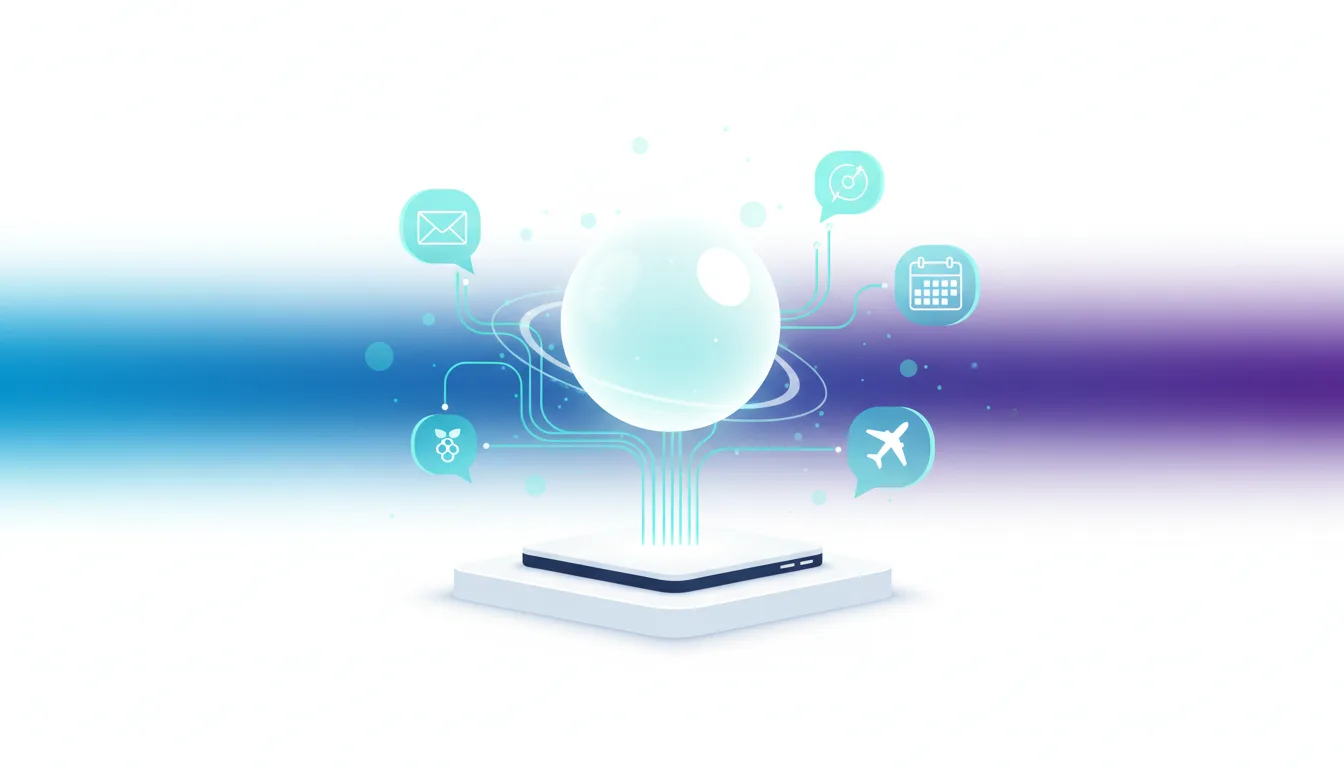
Clawdbot is an open-source, self-hosted personal AI assistant that executes real-world tasks—like clearing inboxes, managing calendars, and checking into flights—directly from commands given in chat apps like WhatsApp and Telegram. Unlike most AI assistants that live in the cloud, Clawdbot is designed to run on a user’s own hardware, from a Mac or PC to a Raspberry Pi.
What happened
The project has gained significant traction among developers, privacy advocates, and productivity enthusiasts for its practical, action-oriented capabilities. Technical documentation on its GitHub repository provides instructions for self-hosting, while positive hands-on reviews and video tutorials are driving adoption by showcasing its potential as a 24/7 “AI employee.” From what I’ve seen in these early reviews, it’s that hands-on appeal that’s really pulling people in.
Why it matters now
Ever wonder if we’re too tethered to the cloud for our daily workflows? This signals a pivotal shift from passive, cloud-based chatbots to active, locally-run AI agents. As major AI players like OpenAI and Google build centralized agent ecosystems, Clawdbot represents a grassroots, privacy-first alternative that gives users full ownership and control, challenging the subscription-based SaaS model for personal productivity.
Who is most affected
Developers and technically-savvy power users are the primary adopters, gaining a customizable assistant without privacy trade-offs. Small businesses see a path to low-cost automation. Incumbent cloud AI providers and SaaS companies face a new competitive threat from the edge, driven by open-source, user-owned infrastructure – plenty of reasons, really, for the ripples to spread wide.
The under-reported angle
Beyond the hype of a “free AI employee,” the critical conversation – sparked in forums like Hacker News – is about the unaddressed security and reliability risks. Giving an AI agent permissions across messaging apps and local files creates significant security challenges, and the project currently lacks detailed threat models, performance benchmarks, and robust deployment blueprints for 24/7 operation, gaps that define the frontier between a developer tool and a mainstream-ready product. That said, it’s these very blind spots that keep me coming back to the discussion threads.
🧠 Deep Dive
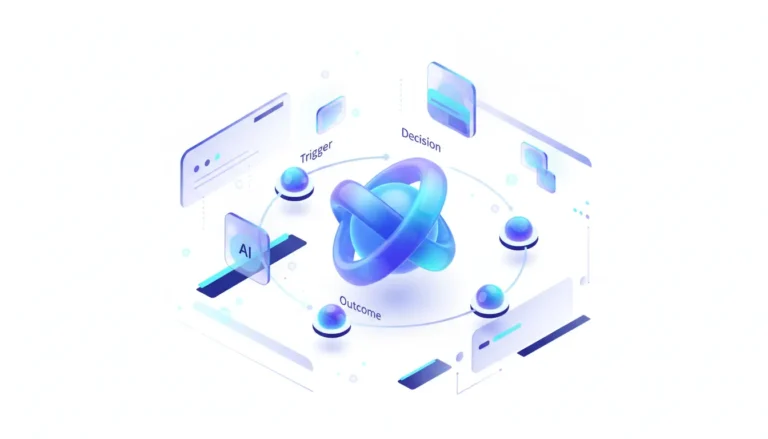
Have you ever typed a command into a chat and wished it could just handle the rest without handing your data over to some distant server? Clawdbot is emerging as a critical case study in the evolution of artificial intelligence from conversationalist to agent. Where most LLM-powered tools are confined to a chat window, Clawdbot breaks out, using LLM reasoning to operate browser automation tools, email clients, and calendar APIs. It operationalizes a concept technologists have long envisioned: turning natural language commands sent via ubiquitous platforms like WhatsApp or Slack into executed real-world actions. This “chat-as-a-command-line” interface lowers the friction for complex automation to near zero – or at least, that’s the promise weighing the upsides against the setup.
The project’s most significant strategic choice is its “local-first” architecture. By design, Clawdbot runs on user-controlled hardware – a laptop, a home server, or even a $50 Raspberry Pi. This directly counters the dominant cloud-native paradigm of Big Tech AI. For users, the benefits are clear: data privacy, no subscription fees, and infinite customizability. For the AI ecosystem, it’s a proof-of-concept for decentralized, edge-based intelligence, reducing dependence on massive, centralized data centers and giving users sovereignty over their digital lives and workflows. I’ve noticed how this setup echoes those old DIY hacker vibes, making tech feel personal again.
However, this architecture introduces a new set of high-stakes challenges that current coverage largely overlooks. The developer community’s critical feedback highlights a clear gap between promise and production-readiness. Security is paramount; connecting an AI to personal messaging accounts and giving it system-level permissions requires a rigorous security model, threat analysis, and access controls that are not yet fully documented. As one user on Hacker News pointed out, the potential for impersonation or unintended actions is a serious concern that needs to be addressed with robust guardrails and permissioning – and honestly, it’s a reminder to tread carefully in these early stages.
Ultimately, Clawdbot’s trajectory places it in direct competition with both established agentic frameworks and emerging platforms from major labs. While developer-focused stacks like AutoGen, CrewAI, and Open Interpreter offer powerful but complex toolsets, Clawdbot provides a more user-centric, pre-packaged application. Its success will depend on its community’s ability to solve the hard problems of reliability, security, and governance. If it can deliver enterprise-grade stability with consumer-grade simplicity, it could define a new category of software that empowers individuals and small businesses to build their own AI-powered operations, free from vendor lock-in – leaving us to ponder just how far this edge might push the boundaries.
📊 Stakeholders & Impact
| Stakeholder / Aspect | Impact | Insight |
|---|---|---|
| Developers & Self-Hosters | High | Empowers builders to create and run a private, powerful AI assistant. The open-source nature allows for deep customization and extension, turning concepts like “LLM tool use” into tangible local applications. |
| Cloud AI Providers (Google, OpenAI) | Medium | Represents a philosophical and architectural challenge. The rise of capable local-first agents could fragment the market and slow the growth of centralized, high-margin AI agent platforms. |
| SaaS Productivity Vendors | High | Poses a direct disruptive threat. Clawdbot combines the functions of multiple SaaS tools (email clients, schedulers, task managers) into a single, user-owned stack, potentially reducing SaaS spend. |
| Privacy-Conscious Users | Very High | Offers a compelling solution to data privacy concerns inherent in cloud AI. By processing data and executing tasks locally, it minimizes exposure of sensitive information, a key selling point for users in regulated fields. |
✍️ About the analysis
Researched and written with AI assistance under the editorial responsibility of the i10X News team. The title image is an AI-generated illustration. Read our AI Use Policy. Spotted an error? Request a correction.
This analysis is an independent i10x review based on Clawdbot’s official documentation, its open-source repository, and public discourse from technical communities and reviewers. It is written for developers, product managers, and CTOs evaluating the shift from cloud-based AI to decentralized, agentic systems and the emerging tooling landscape.
🔭 i10x Perspective
What if the next big AI breakthrough isn’t from a Silicon Valley giant, but from your own server rack? Clawdbot isn’t just a clever open-source project; it’s a barometer for a fundamental schism in the future of AI. We are witnessing a divergence between two models: the top-down, integrated, and controlled agent ecosystems from major AI labs, and the bottom-up, decentralized, and user-owned agents built on open standards.
This mirrors the historic platform battles of the past, like centralized mainframes versus distributed PCs. The unresolved question is whether open-source communities can build the necessary layers of security, reliability, and governance to make local agents viable at scale. The answer will determine whether the next generation of AI-driven work is a service we rent from a few powerful companies, or a capability we own and control ourselves. Clawdbot is the experiment to watch – one that, in my view, could quietly reshape how we think about ownership in the digital age.