Have you ever wondered if the next big leap in AI coding might ditch the cozy confines of your IDE for something more raw and powerful? Mistral AI is escalating the AI coding war by shifting the battlefield from IDE-integrated copilots to terminal-native agents with the launch of Devstral 2. This isn’t just another model release, you see; it’s a strategic push for a new software development paradigm, betting that serious engineering tasks require auditable, repository-scale agents—not just inline code suggestions.
Quick Take
- Summary: From what I’ve seen in the field, Mistral AI has released Devstral 2, a 123-billion parameter dense model with a 256K context window, engineered specifically for agentic software development. It’s paired with the Mistral Vibe CLI, an open-source tool designed to enable developers to perform complex, multi-file code operations using natural language directly in their terminal.
- What happened: Devstral 2 established strong performance on the SWE-bench Verified benchmark (72.2%), demonstrating its aptitude for real-world software engineering tasks—a benchmark that’s tough to crack. The combination of the powerful, tool-using model with a dedicated terminal interface allows for workflows like planning large-scale refactors, exploring entire codebases, and executing changes across multiple files in a single, structured operation. It’s the kind of integration that feels like it could smooth out those frustrating bottlenecks.
- Why it matters now: This launch directly challenges the dominant IDE-centric copilot model popularized by tools like GitHub Copilot. By focusing on repo-aware, terminal-native workflows, Mistral is targeting a gap in the market: developers working on large, complex codebases where simple autocompletion is insufficient and context-switching between tools creates friction—the endless back-and-forth we all know too well.
- Who is most affected: This most impacts software engineers, platform engineering teams, and enterprises. Developers gain a powerful tool that integrates into existing terminal workflows, while platform teams must now evaluate the trade-offs between self-hosting an open-weights model like Devstral 2 versus relying on proprietary, closed-box APIs. It’s a decision that weighs the upsides of control against the ease of offloading to someone else.
- The under-reported angle: Beyond the impressive benchmarks, the core innovation is the philosophical shift from “AI as a suggester” to “AI as an operator.” While most coverage focuses on “multi-file edits,” the critical element is the implicit workflow of plan-execute-verify. Devstral 2 and the Vibe CLI are built to enable structured, auditable changes at a repository scale, a crucial requirement for enterprise-grade software engineering that current copilots struggle to address. And honestly, that’s where the real promise lies—in making those changes something you can trace and trust.
Deep Dive
Ever felt like your AI coding tools are stuck in the shallow end, great for quick fixes but floundering with the bigger picture? Mistral’s introduction of Devstral 2 is a calculated move to redefine the role of AI in software development. While the specs are formidable—a 123B parameter model and a massive 256K context window—the real story is the strategic pairing with the Mistral Vibe CLI. Together, they represent a coherent vision for an agentic workflow, where the AI transitions from a passive assistant within an IDE to an active agent commanded from the developer’s native environment: the terminal. This directly targets the pain point of applying LLMs to the sprawling, multi-file reality of modern codebases, something simple code completion tools often fail to manage—and I’ve noticed how that mismatch trips up even seasoned teams.
This release signals a significant paradigm shift: the battle between the Agent and the Copilot. Where copilots excel at line-by-line assistance and function scaffolding within a GUI, Devstral 2‘s approach is architected for repository-scale operations. It’s designed for tasks like “refactor our logging library across all microservices” or “add request tracing to every API endpoint,” which require planning, repository exploration, and coordinated edits. Tech news outlets have latched onto the term “vibe coding,” but the underlying mechanism is more structured, promoting a workflow where a developer can state a high-level intent, review the AI’s proposed plan, and then supervise its execution across the entire project. That said, it’s not without its learning curve—but once you get the rhythm, it starts to feel indispensable.
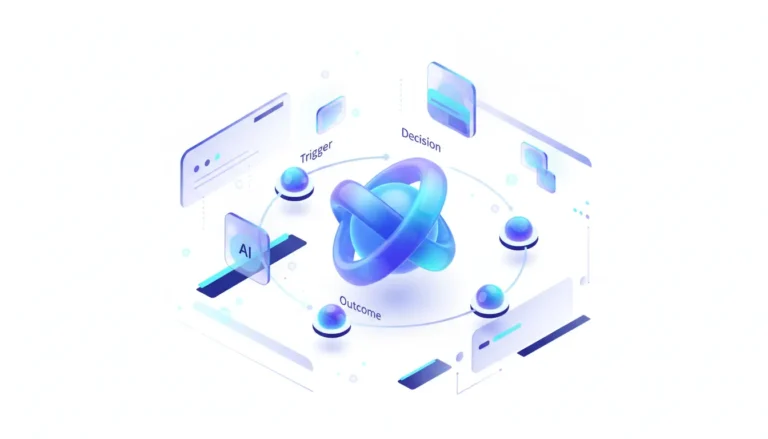
The missing piece in most AI coding tools has been safe, auditable execution of large-scale changes. Devstral 2’s design for tool-use paves the way for “repo-aware planning,” a concept previously confined to research papers. This implies a loop: the agent first uses tools to map dependencies and analyze the impact of a change, then generates a multi-step plan, and finally executes the edits. This structured approach is what separates true agentic work from naive find-and-replace operations, and it’s essential for building the trust required for enterprise adoption. It addresses the critical need for integrating AI actions with established engineering practices like automated testing and CI/CD validation—practices that keep everything from falling apart mid-stride, as it were.
Ultimately, Devstral 2 is an enterprise play disguised as a developer tool. By offering open weights, Mistral empowers organizations to self-host the model, addressing critical security, privacy, and compliance concerns. This offers control and customizability that proprietary APIs from OpenAI, Google, or Anthropic cannot match. However, this control comes at a cost—running a 123B parameter model effectively demands significant on-premise hardware, likely multiple H100 or A100-class GPUs. For teams without access to such infrastructure, Mistral also offers the smaller, more accessible Devstral Small 2, creating a tiered strategy that scales from local-first workflows to full-blown, enterprise-grade AI engineering platforms. It’s a smart way to meet developers where they are, without forcing everyone into the deep end right away.
Stakeholders & Impact
- AI / LLM Providers — Impact: High. Insight: Mistral establishes a new competitive front on “agentic development,” forcing rivals to compete on workflow integration and repository-scale reasoning, not just code generation quality. It’s pushing the industry to think bigger about how these tools fit into daily work.
- Developers & Platform Teams — Impact: High. Insight: Empowers developers with a terminal-native agent for complex tasks but requires a mental shift from IDE-based assistance. Platform teams must weigh the TCO of self-hosting open models versus proprietary API costs—a balance that’s trickier than it sounds, especially with evolving needs.
- Infrastructure & Hardware (NVIDIA, Cloud) — Impact: Significant. Insight: Drives demand for high-VRAM GPUs (H100/A100) for on-premise enterprise deployments. Cloud providers will see increased demand for bare-metal GPU instances to support self-hosting, potentially reshaping how teams budget for compute power down the line.
- Enterprise Security & Governance — Impact: Significant. Insight: Open weights offer a path to secure, auditable, and compliant on-premise AI for coding. However, it shifts the burden of implementing security guardrails, data handling policies, and audit logs onto the enterprise itself—which could spark innovation in governance practices.
About the analysis
Researched and written with AI assistance under the editorial responsibility of the i10X News team. The title image is an AI-generated illustration. Read our AI Use Policy. Spotted an error? Request a correction.
This analysis is an independent i10x synthesis based on Mistral AI’s official announcements, technical documentation, and comparative coverage. It is written for developers, engineering managers, and solution architects evaluating the next generation of AI-native software development tools and their impact on team workflows and infrastructure strategy. I’ve aimed to cut through the hype and focus on what might actually change how we build software.
i10x Perspective
What if the real game-changer in AI coding isn’t raw speed, but how seamlessly it weaves into the grunt work of engineering? The launch of Devstral 2 isn’t just about a better coding model; it’s a bet on the future ergonomics of software engineering. Mistral is wagering that for complex, high-stakes development, the precision and power of a terminal-native agent will ultimately triumph over the convenience of an IDE-bound copilot.
This move forces the market to answer a critical question: is the future of AI-driven development a more intelligent autocomplete, or is it a collaborative partnership with an autonomous agent? The key tension to watch over the next few years will be adoption patterns. Will developers abandon the comfort of their IDEs for the power of the command line, and can enterprises successfully build the governance and infrastructure to support these powerful new agents at scale? Mistral is betting they will—and from what I’ve observed, it’s a wager worth keeping an eye on, as it could redefine collaboration in code.