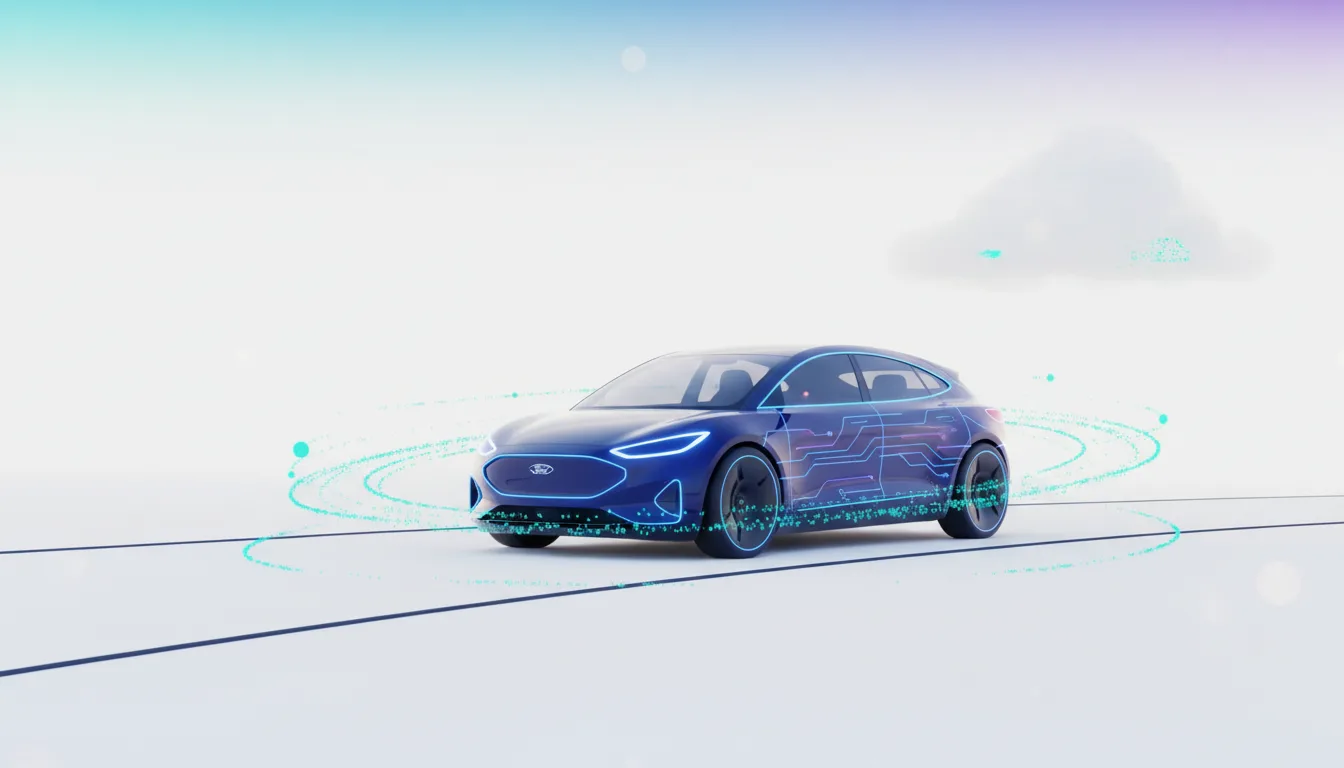
Ever wonder what it would be like if your car could actually chat back about its own quirks? Ford’s stepping up from those basic voice commands, weaving in a Google Cloud-fueled AI assistant right into the heart of its vehicle hardware and software setup. With a debut eyed for 2026-2027, this setup offers a copilot that’s tuned to the vehicle itself—ready to field questions on payload capacity, tire pressure, and the like, reshaping how drivers connect with their cars and the cloud.
Quick Take
- Summary: Ford’s rolled out news of a fresh AI assistant, driven by Google Cloud LLMs, hitting the FordPass app in 2026 and sliding into vehicles natively by 2027. It pulls in real-time vehicle data for interpretation, pushing way past today’s infotainment voice setups. All this lines up with their next-gen BlueCruise hands-free driving push, targeting eyes-off features by 2028.
- What happened: Ford’s sketching out a two-step rollout for this smart assistant. It’ll show up first in the FordPass app on your phone, then go full native in the car. Drawing from reports, they’re using “off-the-shelf LLMs” on Google Cloud—smart move that screams partnership over building from scratch.
- Why it matters now: From what I’ve seen in the industry, this points to a real pivot in the software-defined vehicle scramble. Tesla’s all about stacking their AI in-house, but Ford’s going the collab route, ecosystem style. Handing a cloud LLM the keys to onboard diagnostics and sensors? That’s crafting a genuine “intelligent asset”—though it ties their user vibe to an outside AI player, for better or worse.
- Who is most affected: Current and future Ford folks get a boost in features, sure, but it’ll spark chats on data privacy and maybe some subscription fees down the line. Google scores big here, sinking its cloud and AI roots deep into autos. Rivals like GM and Tesla? They’ve got a fresh yardstick for in-car smarts.
- The under-reported angle: Coverage’s buzzing about quizzing your truck on its payload—that’s fun, no doubt. But the meatier bit is how they’re linking cloud LLMs to that raw, onboard hardware data. It carves out fresh territory for privacy risks, security headaches, and who calls the shots on user experience. Does Ford own the smarts, or Google? And what levers do users get? Those are the questions hanging in the air, plenty of reasons to keep an eye peeled.
Deep Dive
Have you caught yourself wishing your car could just tell you what’s up under the hood, no manual required? Ford’s push to nestle this AI assistant deep inside feels like a real game-changer for old-school automakers wrestling with the AI wave. It’s not merely swapping “Hey Ford” for chattier talk; no, this rewires the car’s whole setup, letting natural language poke around its “nervous system.” Picture asking, “How many bags of mulch fits in my truck bed?” or “When’s my next oil change due?”—and getting spot-on answers pulled from the data. Suddenly, your ride shifts from a silent hunk of metal to a sharp, thinking sidekick.
The thinking behind it all hits just as hard as the tech. Teaming with Google Cloud and its LLMs, Ford’s wagering on partnerships to grab top-tier AI without sinking fortunes into custom model training—pragmatic, I’d say. I’ve noticed how this mirrors their hardware plans; the assistant drops alongside a revamped BlueCruise that’s supposedly 30% cheaper to produce, nudging hands-free driving and smart bits toward everyday folks.
That said, this collab stirs up some thorny issues we can’t ignore. Data streaming from sensors to Google’s cloud and looping back? It kicks off real talks on privacy, getting your okay, and staying secure. Might that vehicle info feed Google’s training? How’s it hold up offline? And where does Ford’s feel end and Google’s AI world begin? Bits from places like Ford Authority nod to Google Gemini specifically, showing how tangled these two will get.
In the end, Ford’s eyeing “eyes-off” driving by 2028 spells out the bigger dream. This AI’s the friendly face for a vehicle inching toward full autonomy, easing folks into trusting the car’s brain. Hitting Level 3 or beyond, though—it’s not just tech hurdles; regulations loom large. Ford’s got to nail the AI, the hardware, and thread the needle on laws and safety to pull it off, leaving us to wonder how it’ll all unfold.
Stakeholders & Impact
| Stakeholder / Aspect | Impact | Insight |
|---|---|---|
| AI / LLM Providers | High | Google Cloud’s landing a huge strategic coup, planting its LLMs as the thinking core in a top automaker. This could spark a trend for other cloud outfits and car makers to follow suit. |
| Ford & Automotive OEMs | High | Ford’s speeding up its software-defined vehicle play via partnerships, forcing competitors to rethink their AI paths—build it themselves or buy in? The depth of integration sets a tough bar. |
| Vehicle Owners / Users | High | You’ll get killer convenience from vehicle-savvy AI chats, but watch for snags like data privacy worries, possible fees, and depending on that always-on cloud link. |
| Regulators & Policy | Significant | Pushing “eyes-off” tech amps up the spotlight on safety checks, who pays if things go wrong in autonomous setups, and those automaker-big tech data pacts. |
About the analysis
Researched and written with AI assistance under the editorial responsibility of the i10X News team. The title image is an AI-generated illustration. Read our AI Use Policy. Spotted an error? Request a correction.
This comes from an independent i10x breakdown, pulling from public announcements, exec insights, and sector news. It pulls together what’s out there to offer a peek ahead—for devs, product leads, and planners eyeing AI’s role in autos and beyond.
i10x Perspective
Isn’t it fascinating how Ford’s AI play could redefine smarts in old industries? By leaning on partnerships instead of going full vertical like some, they’re banking on quicker tweaks and better payoffs by hooking into elite AI networks. It’s that age-old platform-versus-product tussle, now revving up in cars.
But here’s the rub—control. How does a car company hold onto its brand soul, the user touch, and key data when a tech behemoth supplies the main brain? It’s a tension worth tracking. Ford’s wins or stumbles here might tip the scales on whether tomorrow’s cars stay a unified maker’s dream or patchwork from rival tech worlds, and that’s something to mull over as it develops.