Gemini 3.1 Pro: Quick Take and Strategic Analysis
⚡ Quick Take
Have you ever wondered why so many promising AI projects fizzle out before hitting production? Google’s release of Gemini 3.1 Pro isn’t just another model upgrade- it’s a strategic move to tackle those production-level pain points that stall enterprise AI adoption. By zeroing in on improved reasoning, tool use, and developer experience, Google is essentially saying that the next phase of the AI race will be won on reliability and integration, not just raw benchmarks. From what I’ve seen in the field, this feels like a much-needed shift.
Summary
Google has launched Gemini 3.1 Pro, a new mid-tier AI model, available in developer preview through the Gemini API and CLI. The model is engineered for enhanced performance in complex, multi-step tasks, featuring superior reasoning, more reliable tool-calling, and better handling of large context windows compared to its predecessors. It’s the kind of refinement that could quietly change how teams approach building out their apps.
What happened
Positioned between the lightweight Gemini Flash and the top-tier models, Gemini 3.1 Pro is designed to be the workhorse for developers building sophisticated agentic workflows. It promises better structured outputs (like JSON), improved grounding for reduced hallucinations, and more efficient processing for both streaming and batch inference. That said, it’s not without its nuances- expect some tweaking to get it just right in your setup.
Why it matters now
The LLM market is maturing beyond a simple “capabilities race,” and this launch shows Google competing aggressively on developer experience (DevEx) and total cost of ownership (TCO). As enterprises move from experimentation to production, the focus is shifting from “Can the model do it?” to “Can we build a reliable, secure, and cost-effective application with it?” It’s a pivot that’s timely, really, given how many teams are weighing those exact trade-offs right now.
Who is most affected
Developers and enterprise teams are the primary audience- builders working on complex automations, RAG systems, and AI agents now have a more tailored option that balances capability with cost. CTOs and product leaders are also in the mix, as they must evaluate 3.1 Pro’s TCO and enterprise-readiness against strong alternatives like OpenAI’s GPT-4o and Anthropic’s Claude 3.7 family. I’ve noticed how these decisions often come down to not just specs, but real-world fit.
The under-reported angle
While most coverage focuses on the feature list, the real story is the acknowledgment of friction in the developer journey. The current market is flooded with models but lacks clear guidance on migration, model selection criteria, and enterprise governance- plenty of reasons why projects drag on, if you ask me. Gemini 3.1 Pro isn’t just a new tool; it’s part of a broader effort to provide the “production plumbing”- better documentation, clearer use cases, and predictable behavior- that businesses actually need. And that, in the end, might be the quiet game-changer.
🧠 Deep Dive
Ever feel like the AI hype cycle leaves you chasing shiny new features while your actual workflows stay stuck? Google’s introduction of Gemini 3.1 Pro marks a significant pivot in the AI model wars. The focus is implicitly shifting from theoretical power, measured in benchmarks and context window size, to practical utility for developers building real-world, revenue-generating applications. This release is less about a single breakthrough and more about refining the entire stack to create a more robust “intelligence engine” for complex tasks- something that’s been on my mind as I’ve followed these evolutions.
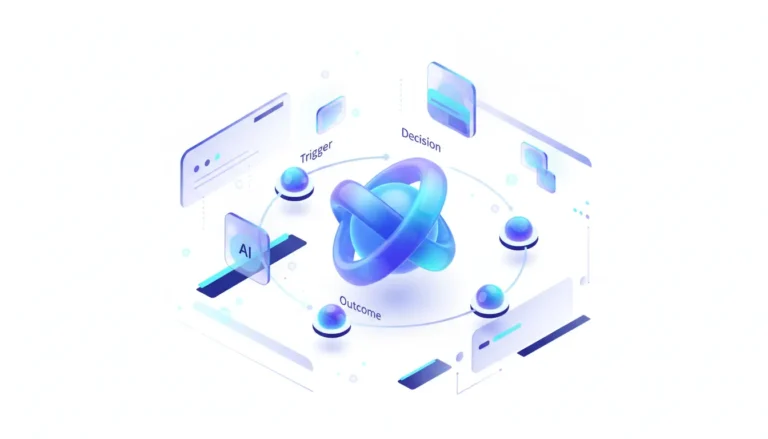
The key upgrade is in its reasoning and planning capabilities. For developers, this translates directly into more reliable agentic workflows. Where previous models might fail in multi-step processes or struggle with consistent tool use, 3.1 Pro is engineered to orchestrate functions, manage state, and produce structured JSON output more dependably. This is a direct answer to a major pain point seen across the industry: the gap between a flashy demo and a production-ready agent that doesn’t break under pressure. It’s a move to make LLM-powered automation less of a gamble, though you’ll still want to test it thoroughly in your own scenarios.
However, the proliferation of models (1.5 Pro, Flash, 3.1 Pro) introduces a new challenge: decision fatigue, plain and simple. The critical question for builders is no longer if Google has a capable model, but which one to use when. A core task for any team is now to build a decision matrix based on three factors: task complexity, latency requirements, and budget. For simple, high-volume tasks, Flash remains the go-to—quick and efficient. For maximum power on sprawling, long-context problems, 1.5 Pro may still be relevant, depending on your needs. Gemini 3.1 Pro carves out a crucial middle ground for sophisticated applications that demand high reliability without the cost or latency overhead of the absolute top-tier models. It’s that balance that could tip the scales for mid-sized projects.
This “good-better-best” strategy forces a more disciplined approach from enterprise adopters. Success hinges on building robust evaluation pipelines to benchmark cost and performance not just against Google’s own family but against an aggressive market including GPT-4.1, Claude 3.7 Sonnet, and Mistral Large. Furthermore—and this is key—enterprise readiness goes beyond model performance. The real test for Gemini 3.1 Pro will be how well Google packages it with the necessary security controls, data residency guarantees, compliance certifications (like SOC2/ISO), and transparent governance policies that are non-negotiable for regulated industries. Watching how that plays out will be telling.
📊 Stakeholders & Impact
| Stakeholder / Aspect | Impact | Insight |
|---|---|---|
| Developers & Builders | High | Provides a more specialized tool for building reliable AI agents and complex workflows, but requires careful selection to balance cost, latency, and capability against other Gemini models—it’s worth the effort if you’re knee-deep in agentic setups. |
| Enterprise AI Teams | High | Presents a new, potentially more cost-effective option for production systems. The focus now shifts to TCO analysis, security reviews, and integration effort compared to established stacks using OpenAI or Anthropic— a step that could streamline things, or add to the checklist, depending on your current setup. |
| Google Cloud | High | Strengthens the Vertex AI and Gemini API ecosystem by offering a clearer tiered offering. Success depends on making migration and model selection seamless for customers to avoid choice paralysis—something I’ve seen trip up more than a few teams. |
| The AI Model Market | Significant | The competitive battleground is clearly moving from benchmark supremacy to DevEx, reliability, and enterprise-readiness. This pressures competitors to offer not just models, but well-documented, stable, and governable platforms—and that’s where the real differentiation might emerge over time. |
✍️ About the analysis
Researched and written with AI assistance under the editorial responsibility of the i10X News team. The title image is an AI-generated illustration. Read our AI Use Policy. Spotted an error? Request a correction.
This analysis is an independent i10x perspective, based on Google’s official announcements, developer documentation, and a survey of initial market reports. It’s written for developers, engineering managers, and CTOs who are actively building and scaling applications with large language models and need to understand the strategic implications of this release—the kind of insights that help cut through the noise.
🔭 i10x Perspective
What if the future of AI isn’t about ever-bigger models, but about the infrastructure that makes them actually useful day-to-day? The launch of Gemini 3.1 Pro signals a new chapter in the commoditization of intelligence. The era of focusing solely on jaw-dropping model capabilities is giving way to the era of building dependable, cost-efficient “intelligence plumbing.” Google, OpenAI, and Anthropic are no longer just selling access to powerful brains; they are competing to provide the most reliable and developer-friendly operating system for intelligence. From my vantage, it’s a maturing market, and not a moment too soon.
The critical long-term tension to watch is the inherent conflict between rapid innovation and enterprise stability. As Google continues to iterate with new models like 3.1 Pro, it creates integration overhead for the very customers it seeks to attract—a double-edged sword, really. The ultimate winner in the AI platform war may not be the one that best resolves this tension, offering a stable, predictable, and backward-compatible foundation for building the future of software. It’s that foundation we’ll all be leaning on, sooner or later.