Quick Take
Gemini 3 marks a fundamental shift in AI-driven customer experience, moving the market from simple chatbots to sophisticated, journey-orchestrating agents. While Google’s official announcements and developer docs detail the model’s new reasoning and multimodal powers, the real story is the architectural and operational overhaul required to deploy them safely and effectively in production.
Have you ever wondered if the next big leap in AI would feel more like a revolution than just an update? That’s exactly what Gemini 3 brings to the table for customer experience—it’s not your run-of-the-mill LLM tweak, but a foundational piece for what they’re calling “AI-native CX.” From what I’ve seen in early buzz, its standout features like “Deep Think” for advanced reasoning, seamless multimodal processing, and those agentic workflows are set to push companies past basic support bots into full-on, proactive journey management.
Summary: Google’s Gemini 3 isn’t just an incremental LLM upgrade; it’s being positioned as a foundational engine for “AI-native CX.” Its advanced reasoning (“Deep Think“), multimodal processing, and capacity for agentic workflows are designed to move enterprises beyond reactive support bots toward proactive, end-to-end customer journey management.
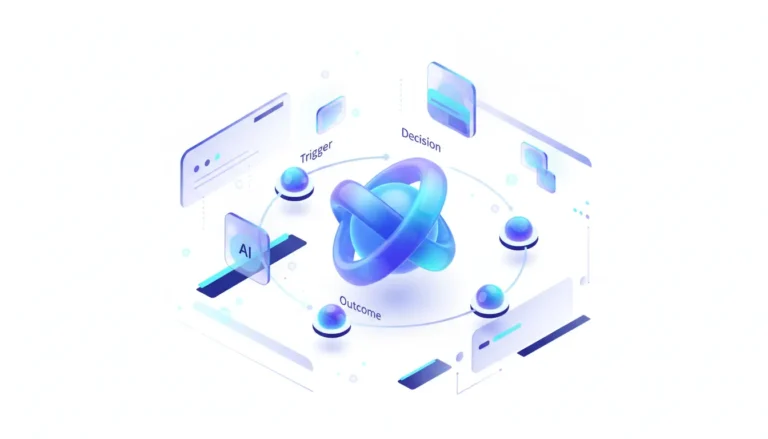
What happened: Google has released Gemini 3, emphasizing capabilities tailored for complex, multi-step tasks. Unlike previous models focused on single-turn Q&A, Gemini 3 is architected to function as an autonomous agent that can reason, plan, and execute actions across different systems to resolve customer issues or guide them toward goals. It’s like handing the reins to an AI that doesn’t just answer— it steers the whole process.
Why it matters now: The bar for “good” AI-powered CX has been reset. Mere call deflection is no longer the endgame. Gemini 3’s capabilities create market pressure to deliver hyper-personalized, context-aware, and anticipatory service. This forces a complete rethink of the CX tech stack, data strategy, and the metrics used to measure success, moving from cost-centric (like AHT) to value-centric (like LTV and CSAT). But here’s the thing: in a world where customers expect that kind of intuition, sticking to old playbooks feels like treading water in a fast-moving stream.
Who is most affected: CX leaders, solution architects, and product engineers at enterprises are directly impacted, as they must now evaluate how to integrate these powerful but complex capabilities. Equally affected are the major CX platform vendors—Salesforce, Adobe, Zendesk, Genesys, HubSpot—who face a race to embed Gemini-like agentic automation into their core offerings or risk being disintermediated. It’s a wake-up call for everyone knee-deep in these systems.
The under-reported angle: Most coverage focuses on what Gemini 3 can do. The critical missing piece is how to do it in production. The market is starved for reference architectures, latency engineering patterns for real-time interactions, PII and governance playbooks for regulated industries, and ROI models that connect API costs to measurable business outcomes like conversion rate and customer satisfaction. That gap—it’s what keeps me up at night, thinking about the real hurdles ahead.
🧠 Deep Dive
Ever feel like the hype around a new tech leaves you with more questions than answers? Gemini 3‘s debut does just that for customer experience, flipping the script from AI as a mere add-on to something that’s woven right into the fabric of how we build these systems. Sure, Google’s demos are eye-opening with their reasoning tricks and multimodal smarts, but for folks in the trenches—enterprise leaders especially—the big puzzle is rewiring everything around this beast. It’s not about slapping in an API; it’s a mindset shift toward “AI-native CX,” where the LLM isn’t fixing tickets but conducting the full customer symphony.
This whole pivot rests on three key pillars that Gemini 3 rolls out. Take “Deep Think” reasoning first – it breaks down those tangled, multi-level customer headaches that used to bounce straight to a human. Then there’s the multimodal capability baked in from the start, letting it juggle text, images, and data sets effortlessly—like when a frustrated shopper snaps a pic of a busted gadget, and the AI not only diagnoses it but lines up a replacement through some linked tool, step by step. And tying it all up? Agentic workflows, where the model plots its own course, firing off queries to your CRM, scanning stock levels, even whipping up an email—all to nail the customer’s goal without a babysitter.
That said, jumping from a slick demo to something that’s rock-solid in the wild? That’s where the sweat equity comes in. The chatter out there—part glossy press release, part tech-manual overload—skips over the nuts-and-bolts of making it work. What enterprises really crave are roadmaps for weaving Gemini 3 into setups like Salesforce or Zendesk, or Genesys stacks. Picture an agentic flow that tweaks a customer profile in the CRM while handling a return on the e-comm side; it demands tight, state-tracking connections, not some one-shot API ping. We’re talking a fresh era for solution design in CX, full stop.
On top of that, governance and performance—two non-negotiables in live CX—barely get a nod. For brands in dicey sectors like banking or health care, rolling out a Gemini 3 agent sans a solid playbook for PII safeguards, consent flows, and logging trails? Forget it; it’s off the table. And hey, that dream of fluid, real-time chats crumbles if the AI lags even a bit—think milliseconds, not seconds. Teams have to get clever with caching tricks, streaming replies, and smart tool picks to hit those unspoken service levels customers demand. All the model’s muscle means zilch if it’s sluggish or risky in the heat of the moment.
In the end, Gemini 3‘s enterprise win won’t hinge on leaderboard bragging rights, but on how well the surrounding world crafts reusable blueprints for rolling it out and tracking its wins. Forget fixating on basics like call deflection or AHT; we’re eyeing the heavy hitters now—conversion rates, average order value (AOV), net promoter score (NPS), lifetime value (LTV). Pulling that off calls for revamped A/B tests and experiment setups tuned for these twisty, AI-fueled journeys. It’s exciting, really—the potential to reshape how we connect with customers, if we get the foundations right.
📊 Stakeholders & Impact
| Stakeholder / Aspect | Impact | Insight |
|---|---|---|
| AI / LLM Providers (Google) | High | Success depends less on raw model power and more on providing the architectural blueprints, integration recipes, and governance patterns that drive enterprise adoption. – They’re the ones who’ll make or break the trust factor. |
| CX Platform Vendors | High | Companies like Salesforce, Zendesk, and Genesys must rapidly integrate or be outmaneuvered by competitors building AI-native solutions. Their value shifts to being the best orchestration layer for models like Gemini. – It’s a make-or-break sprint, no doubt. |
| Enterprises (CX/Marketing Leaders) | High | Face pressure to adopt agentic AI to remain competitive, requiring significant investment in re-architecting tech stacks, retraining teams, and establishing new governance and measurement protocols. Plenty of reasons to weigh, but the payoff could be huge. |
| Regulators & Policy Makers | Significant | The rise of autonomous CX agents that handle sensitive data will accelerate scrutiny around the EU AI Act and similar regulations, forcing a focus on explainability, audit trails, and data minimization. – This one’s brewing, and it’ll shape the rules for years. |
✍️ About the analysis
Researched and written with AI assistance under the editorial responsibility of the i10X News team. The title image is an AI-generated illustration. Read our AI Use Policy. Spotted an error? Request a correction.
This is an independent i10x analysis based on a synthesis of official Google documentation, expert commentary, and current market coverage. It is designed for CX leaders, solution architects, and engineering managers tasked with translating the potential of next-generation AI models into production-ready, business-impactful customer experiences. I’ve pulled it together to cut through the noise, offering a practical lens on what’s next.
🔭 i10x Perspective
What if the real game-changer in AI isn’t the tech itself, but how we surround it with the right tools to make it stick? Gemini 3 locks in this idea that LLMs are evolving into the backbone of customer chats—the new OS, if you will. The edge isn’t solely in model finesse anymore; it’s in the sturdiness of the dev toolkit and those crystal-clear blueprints for getting it live, safe, speedy, and above board.
Looking ahead, the AI showdown shifts from sheer scale to who nails the leap from API promise to revenue-boosting reality. Keep an eye on that push-pull: can the big CX players like Salesforce adapt quick enough, or will fresh AI startups swoop in by cracking the tough nuts of integration, rules-wrangling, and on-the-fly speed first? It’s anyone’s guess, but the stakes feel higher than ever.