I’ve been watching Google’s moves in AI closely, and it’s clear they’re aiming to weave intelligence right into the fabric of scientific and engineering work with Gemini 3 Deep Think. Billed as a focused reasoning mode, this feels like a smart play to grab hold of the lucrative R&D space – but it’ll all come down to showing it’s reliable, reproducible, and truly ready to fit into real workflows, something the first reveal doesn’t quite nail down yet.
Quick Take
- Summary: Google has rolled out Gemini 3 Deep Think, a big step up framed as a specialized reasoning mode in the Gemini 3 lineup. It’s built to handle those tricky, multi-step challenges in science, research, and engineering – shifting from basic back-and-forth questions to enabling agentic workflows, like coming up with hypotheses, mapping out experiments, or crunching data.
- What happened: Rather than dropping another broad model, Google is honing in on a high-end feature tailored for experts in the field. Deep Think is presented as the go-to for the deep, step-by-step reasoning that R&D demands these days, offering help with jobs that usually eat up heaps of human time and know-how.
- Why it matters now: This is a real turning point in the AI scramble. With everyday large language model tricks starting to level off, the real action’s in embedding AI deep into critical, high-stakes areas. By zeroing in on science and engineering, Google is trying to carve out a solid advantage – one where getting things right, repeating results, and earning trust aren’t just nice-to-haves, but everything.
- Who is most affected: Folks in labs and on engineering teams stand to gain the most, potentially speeding up their daily grind in big ways. Meanwhile, R&D heads and CTOs in spots like biotech, materials science, or aerospace? They’ll have to weigh the returns against the setup hassles, security risks, and how it all meshes with what they’ve already got running.
- The under-reported angle: Sure, the announcement paints a bold picture, but it dances around the tough stuff on actually using it. We’re short on outside tests, details about where it might trip up, and straightforward advice for weaving Deep Think into proven research setups. Really, the proof will be in whether it clears the high standards scientists hold for solid evidence and repeatable outcomes – not just the hype.
Deep Dive
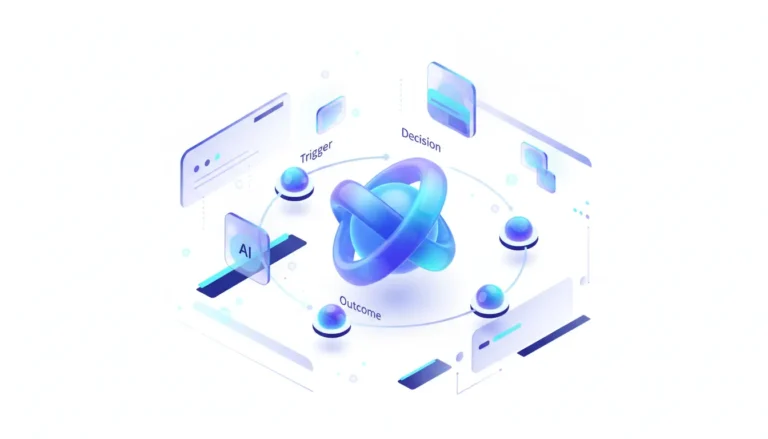
Have you ever wondered what it would take for AI to feel like a genuine teammate in the lab, rather than just a fancy search tool? Google’s launch of Gemini 3 Deep Think gets at that idea – it’s not so much about one standout model, but a broader shift toward agentic workflows tuned for niche fields. They call it a “reasoning mode” meant to mirror the layered, thoughtful planning that drives breakthroughs in science and design. From what I’ve seen in the AI space, this is Google’s wager that real worth comes from AIs acting as dependable sidekicks – ones that can juggle tools, pull together insights from papers, and even whip up intricate simulations on the fly.
At its heart, this tackles a frustration I’ve heard from researchers time and again: the endless slog of today’s R&D, where complexity just piles on and eats your hours. Deep Think steps in to streamline that, transforming vague questions into solid hypotheses, handling literature scans through something like Retrieval-Augmented Generation (RAG), and even crafting code via program synthesis for sifting through data. The aim? Cut down the wait for those aha moments, so you can zero in on the big-picture thinking instead of getting bogged down in prep work and messy datasets.
That said, there’s a wide chasm – and it’s a credibility one – between that shiny promise and an AI you can actually rely on in a lab or under strict engineering rules. The rollout skips over what science insists on most: evidence, plain and simple. No outside benchmarks here, no chat about weak spots, nothing on how they’d measure it up fairly. In fields like drug development or aircraft design, you need reasoning you can trace, results that hold up every time, and limits spelled out clearly. Without those, Deep Think’s just an impressive mystery box, full of potential but short on trust.
And integration? That’s the other big hurdle, often overlooked in these announcements. A “specialized reasoning mode” only shines if it slots neatly into the tools you already use day-to-day. R&D folks won’t be wondering about its smarts so much as, “Does this play nice with our Jupyter notebooks, our data systems, our safety nets?” We’re left hanging on basics like API hooks, how it handles lag on tough queries, the bill for heavy computing, or ways to keep data secure. In the end, it’s this whole MLOps puzzle – the practical side of making it work – that decides if Deep Think turns into a game-changer for future R&D or stays a cool concept on paper.
Stakeholders & Impact
| Stakeholder / Aspect | Impact | Insight |
|---|---|---|
| Researchers & Engineers | High | Could reshape workflows completely, taking over the grind of lit reviews and experiment setups. But it’ll only stick if the reasoning proves solid and trustworthy – no room for doubts there. |
| R&D Leadership / CTOs | Significant | Offers a strong case for faster innovation and better returns, yet it’ll demand a close look at total costs, security setups, privacy rules, and how it fits with time-tested tools before signing on. |
| AI / LLM Providers | High | Upping the ante big time, moving the fight from broad smarts to targeted reasoning pros in premium areas. Expect rivals like OpenAI or Anthropic to push harder on their own industry-tailored options. |
| Regulators & Policy | Medium | For tightly controlled sectors like pharma or aviation, AI in core design work will draw eyes. Key will be how well it tracks origins, allows audits, and builds in safety – all feeding into compliance headaches down the line. |
About the analysis
Researched and written with AI assistance under the editorial responsibility of the i10X News team. The title image is an AI-generated illustration. Read our AI Use Policy. Spotted an error? Request a correction.
This piece draws from an independent i10x review of Google’s official word on the matter. It breaks down the bigger-picture effects for AI builders, R&D decision-makers, and enterprise tech leads – lining up the company’s pitch against what the field really needs for top-tier AI in research, from reproducibility and oversight to seamless tie-ins.
i10x Perspective
What if the next big AI leap isn’t about chatting smarter, but about becoming an indispensable part of discovery itself? That’s the core idea behind Gemini 3 Deep Think – not merely a tool, but a statement on AI’s direction. Google seems to be saying the days of catch-all large language models are fading, making room for finely tuned reasoning systems that boost experts rather than just tag along. It’s a calculated climb up the ladder, from churning out text to sparking real knowledge.
Yet here’s the lingering question that keeps me up at night in this field: can an AI, built on mountains of data that’s bound to have flaws, ever earn a seat at the table in science’s unforgiving arena – where one slip-up might derail months of effort? The way Google tackles calls for openness, real-world tests, and traceable steps will show just how fast AI can weave into the heart of what drives us forward. Whether AI earns a seat at the scientific table will depend on openness, rigorous testing, and traceability.