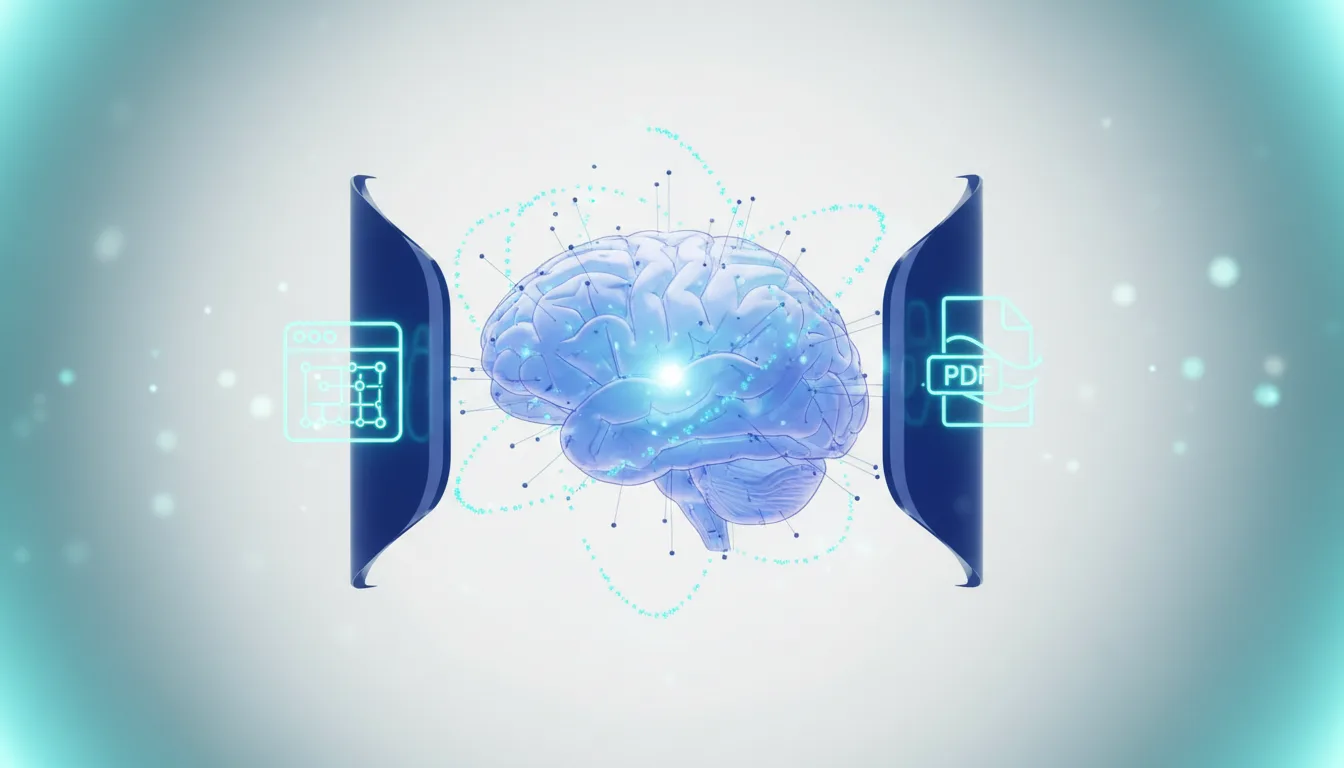
Google’s Gemini models are in a paradoxical position: they possess immense raw intelligence but are hamstrung by a lack of basic tooling in their consumer-facing app. While rivals like OpenAI and Anthropic have focused on making practical workflows like web and PDF handling seamless, Gemini’s user experience trails, forcing users into clunky workarounds and raising questions about Google’s product strategy in the AI race.
Quick Take
- Summary: Despite the power of its underlying models, the Gemini app lags significantly behind competitors like ChatGPT and Claude in its ability to perform fundamental tasks for knowledge workers, specifically the direct downloading and analysis of web pages and complex PDF documents.
- What happened: Have you ever hit a wall while trying to get an AI to dig into a specific article or report? That’s the frustration prominent AI users and everyday researchers are voicing right now—a critical workflow gap where Gemini can browse the web for answers but can’t “download” or ingest a specific URL’s content for analysis. And with PDFs, its handling feels less direct and robust than what rival platforms offer in their premium setups.
- Why it matters now: The battle for AI dominance isn’t just about raw performance on benchmarks anymore; it’s shifting to that last mile of user experience and workflow integration. An assistant that can’t fluidly interact with the two most common information formats—web pages and PDFs—creates real friction. It undermines its utility for research, analysis, and those everyday professional tasks that keep things moving.
- Who is most affected: Knowledge workers, researchers, students, and professionals whose jobs hinge on pulling together info from web sources and documents—they’re the ones feeling the pinch. They’re either jumping to competing platforms or piecing together multi-step fixes with other Google tools like Drive, which defeats the whole idea of an all-in-one AI assistant.
- The under-reported angle: This isn’t just a simple feature oversight; it’s more like a strategic divide. The file and tool limitations hit hardest in the consumer app, while the developer-focused Gemini API packs more powerful (though complex) function-calling and file-processing options. From documentation and user chatter, it points to Google’s long-term play: deep integration within the Google Workspace ecosystem, even if it means a rougher standalone experience in the short term.
Deep Dive
Ever wonder why a tool with so much brainpower can still feel like it’s dropping the ball on the basics? The frustration bubbling up in social media threads and forums tells the story of a real product disconnect. As AI expert Ethan Mollick pointed out, Gemini’s intelligence is nothing short of formidable—but its inability to handle basic web page downloads or direct PDF analysis leaves it at a practical disadvantage against ChatGPT and Claude. For everyday users, this means a workflow that’s just broken. They can prompt the model to research a topic, sure, but they can’t simply point it to a specific report or article and say, “Analyze this.” And at this point, that’s not some niche add-on; it’s table stakes for any AI aiming to be a serious research companion.
Current coverage—from Google’s help docs to those side-by-side reviews—tends to gloss over a key split: the difference between the Gemini app and the Gemini API. The consumer app acts as a deliberately simplified layer, giving access to the model’s smarts while peeling back the advanced tools that developers get to play with. The workarounds people have pieced together—uploading files to Drive, running OCR through Docs, then copying the text back into Gemini—aren’t merely inconvenient; they’re a peek into Google’s walled-garden vision. The aim seems to be less about a standalone assistant loaded with plugins and more about an intelligence layer that slots right into Drive, Docs, and Gmail, native as can be.
That said, this choice leaves users in a tough spot during this transition phase. OpenAI’s ChatGPT, with its Code Interpreter (now Advanced Data Analysis), handles files robustly, and Claude has built its reputation on that massive context window for long docs—Google’s path, by contrast, creates a usability gap that’s hard to ignore. The official docs list supported file types but stay quiet on these workflow holes, which feels like a missed beat. Sure, the developer side hints at what’s possible through the API’s programmatic access, but that’s little solace for the non-technical pro just trying to unpack a 50-page PDF over their morning coffee.
This tension—between what the model can do in theory and how the product delivers it right now—lies at the heart of Gemini’s current narrative. It underscores a market evolving fast, from “Can the AI think?” to “Can the AI actually do the work?” Competitors are pulling ahead in that “doing” part with tools for real, hands-on tasks. Google, meanwhile, is wagering on a deeper, if slower, integration strategy to build something more cohesive in the end. In this whirlwind AI world, habits form quickly—and the friction today might just mean lost ground tomorrow.
Stakeholders & Impact
| Stakeholder / Aspect | Impact | Insight |
|---|---|---|
| Knowledge Workers & Researchers | High | Workflows are fragmented and inefficient. Many will default to ChatGPT or Claude for document-heavy research tasks, eroding Gemini’s daily-use case. |
| Google (Gemini Product Team) | High | Facing intense pressure to close the UX gap. The current state cedes the narrative of “most useful assistant” to OpenAI and Anthropic, despite the model’s core power. |
| Developers & Tool Builders | Medium | An opportunity exists to build third-party solutions using the more capable Gemini API to service the consumer gap. However, they risk being made obsolete by future first-party integrations. |
| Enterprise IT | Medium | Decision-makers evaluating AI platforms must weigh Gemini’s potential future integration with Workspace against the immediate, tangible benefits and existing governance tools of its competitors. |
About the analysis
Researched and written with AI assistance under the editorial responsibility of the i10X News team. The title image is an AI-generated illustration. Read our AI Use Policy. Spotted an error? Request a correction.
This analysis is an independent i10x editorial, synthesized from a cross-section of expert commentary, official developer documentation, hands-on user reports, and comparative industry reviews. It is intended for technology leaders, product managers, and developers seeking to understand the strategic landscape of AI assistants beyond marketing claims.
i10x Perspective
What if the tooling gap in Gemini isn’t a glitch, but a deliberate piece of a bigger puzzle? I’ve noticed how, while OpenAI has unbundled its features into a flexible, app-style plugin ecosystem, Google is chasing a profound integration right into its productivity suite. The friction we’re seeing now feels like the growing pains of a massive overhaul under the hood.
The big question hanging over the AI market is which way of rolling out intelligence will come out on top: OpenAI’s nimble, all-purpose toolkit, or Google’s more embedded “ghost in the machine” that’s evolving at its own pace? Right now, the edge goes to agility. If Google doesn’t bridge that usability divide before competitors lock in those user workflows, even the strongest model might end up sidelined.