Gemini Personal Intelligence: Quick Take & Analysis
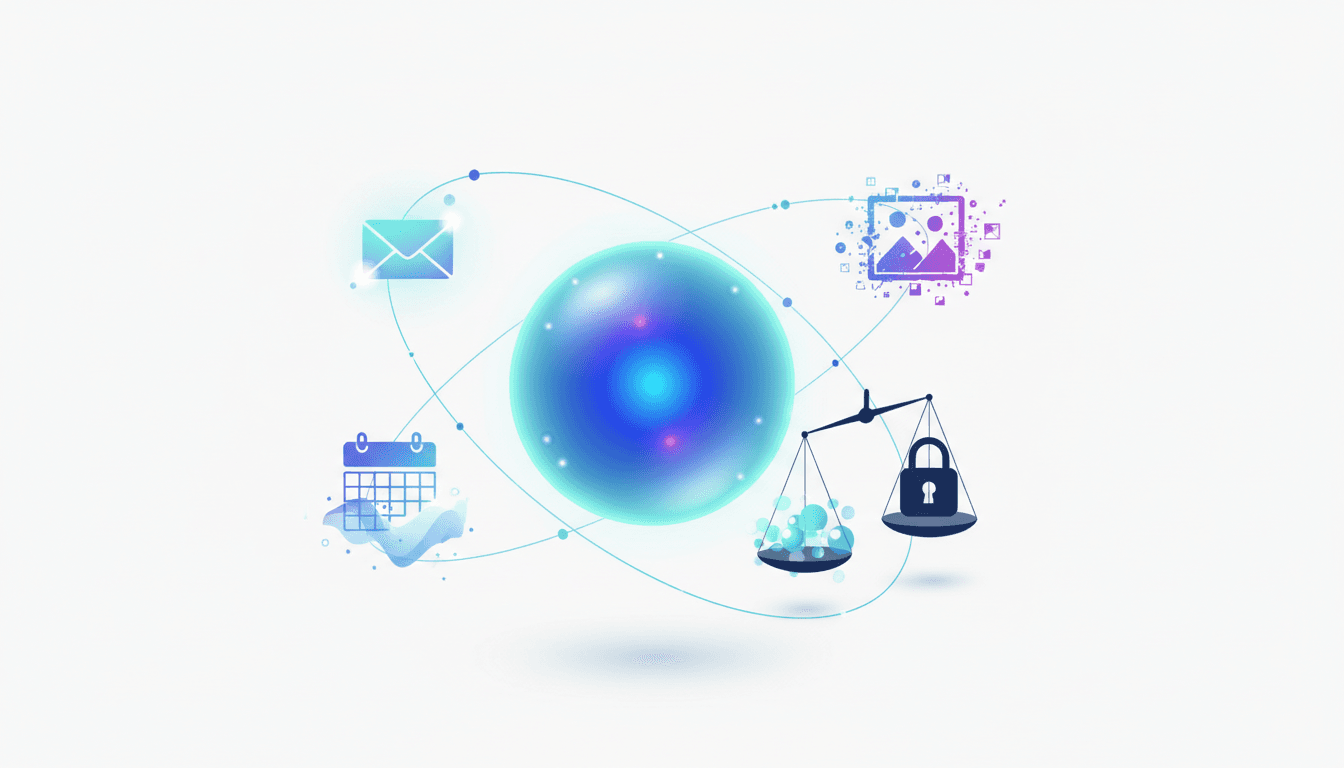
Gemini Personal Intelligence: Quick Take & Deep Dive
⚡ Quick Take
Google's Gemini Personal Intelligence is its high-stakes bet that deep, direct access to your personal data—Gmail, Calendar, Photos—is the key to winning the AI assistant race. By trading privacy for convenience, Google is attempting to create a moat of hyper-personalization that Apple and Microsoft can't easily cross, but it also exposes the core tension between utility and user trust that will define the next era of AI.
Summary
Google has launched "Personal Intelligence," a new, opt-in capability for its Gemini AI. The feature integrates directly with a user's personal Google apps—like Gmail, Calendar, and Photos—to provide highly contextual and personalized answers, summaries, and plans. It's one of those moves that feels like a natural evolution, yet it quietly shifts how we think about our digital lives.
What happened
Instead of just responding to general queries, Gemini can now access personal information to perform tasks like summarizing recent emails about a trip, creating an itinerary based on flight confirmations in Gmail, or finding photos from a specific location and time. This functionality is enabled through an explicit opt-in and is being positioned as a key feature of the Gemini experience, particularly for subscribers of the Google One AI Premium plan. From what I've seen in early demos, it's smooth on the surface—but that's where the real questions start bubbling up.
Why it matters now
This is Google's strategic countermove to Apple Intelligence's on-device privacy narrative and Microsoft Copilot's deep integration into the enterprise. Google is leveraging its greatest asset: a unified ecosystem holding decades of user data. Success would prove that a deeply integrated, cloud-based data graph creates a more powerful assistant than federated or on-device alternatives. That said, it's a gamble that could redefine convenience, or just as easily backfire if trust erodes.
Who is most affected
Consumers and productivity enthusiasts who must now weigh unprecedented convenience against significant privacy considerations. Enterprise IT admins also face a new challenge in governing how and when a consumer-grade AI can access corporate data that may exist in employee accounts. Have you paused to consider what that balance looks like for your own workflow?
The under-reported angle
Beyond Google’s polished demos of flawless trip planning, the real story is the feature's brittleness and the unanswered questions around data governance. Independent reviews and analysis show the system often struggles with complex, multi-step tasks and lacks transparent documentation on failure modes, data retention policies, and enterprise-level controls—gaps that competitors are already exploiting in their messaging. Plenty of reasons to tread carefully here, really.
🧠 Deep Dive
Ever wondered what it would be like if your AI assistant truly knew you—not just from a quick search, but from the rhythms of your daily life? Google's vision for a truly "personal" AI is taking shape with Gemini Personal Intelligence, a feature designed to dissolve the boundaries between its AI and your private data. The premise is powerful: an assistant that doesn't just answer questions, but understands the context of your life. It promises to find flight details from your inbox, cross-reference them with your calendar, and build a travel plan without you ever switching apps. This is the culmination of Google's long-standing ecosystem play, turning scattered information across Gmail, Drive, and Photos into a coherent, actionable intelligence layer. I've noticed how this kind of integration can feel almost magical at first glance, yet it demands we pay close attention to the fine print.
This move is a direct response to a diverging AI market. While Apple doubles down on privacy with its on-device "Apple Intelligence," and Microsoft solidifies its enterprise grip with Copilot, Google is charting a third path. It's betting that users will grant access to their most personal data in exchange for an unmatched level of convenience. This is Google’s moat. The official research paper, "Building Personal Intelligence," frames this as a principled, consent-driven architecture, but the strategy is clear: make Gemini so indispensable to managing your personal life that switching to a competitor feels like a downgrade. But here's the thing—indispensability cuts both ways, especially when privacy hangs in the balance.
However, this deep integration comes with a "trust tax." While Google emphasizes that all connections are opt-in and manageable, the feature immediately raises critical questions that the company’s benefit-led marketing avoids. Independent analysis and early user reviews highlight a key pain point: a lack of transparency. What are the exact data retention and deletion timelines? Is this personal data firewalled from model training in all scenarios? And for businesses using Google Workspace, where are the admin controls to prevent sensitive corporate information in an employee's inbox from being processed by a consumer AI? These aren't just nitpicks; they're the kinds of details that can make or break adoption.
The gap between promise and reality is also evident in performance. Google's demos showcase seamless, multi-step reasoning, but real-world tests reveal limitations. The system can fail on complex queries, miss context from older emails, or misinterpret ambiguous requests. This highlights a major content gap that Google has yet to fill: a catalog of limitations, workarounds, and prompt engineering best practices for personal data. Without this, users are left to discover the feature's brittleness through trial and error, undermining the very trust Google needs to make this strategy work—almost like handing someone a powerful tool without the manual. Ultimately, Personal Intelligence isn't just a feature—it's a referendum on whether users value a frictionless digital life more than data sovereignty, and that debate feels wide open right now.
📊 Stakeholders & Impact
Stakeholder / Aspect | Impact | Insight |
|---|---|---|
Google Users | High | Gain a powerful, context-aware assistant but must grant extensive data access, creating a significant privacy-for-utility trade-off—it's that classic weighing of upsides against what you're giving up. |
Google (as a company) | Critical | This feature represents Google's core moat in the AI assistant race. Success cements its ecosystem's value; a privacy misstep could be devastating, echoing past lessons in user trust. |
Competitors (Apple, Microsoft) | High | Sets a new bar for deep data integration, forcing competitors to either dismiss it as a privacy risk or find new ways to offer similar context without the same level of access—easier said than done. |
Enterprise IT & Regulators | Significant | Raises urgent questions about data governance, compliance (GDPR/HIPAA), and the scope of corporate data accessible by consumer-facing AI through employee accounts, with real ripple effects for policy and practice. |
✍️ About the analysis
This analysis is an independent i10x synthesis based on a review of Google's official announcements, technical papers, product support documentation, and independent third-party reviews. It's written for developers, product managers, and technology leaders evaluating the capabilities, risks, and strategic implications of competing personal AI ecosystems—think of it as a starting point for your own deeper explorations, since the field moves fast.
🔭 i10x Perspective
Gemini Personal Intelligence is Google's attempt to make its "ambient computing" vision a reality, betting that a unified, cloud-based data graph will ultimately triumph over Apple's privacy-first, on-device narrative. This forces the market into a crucial debate: does "personal AI" mean an AI that lives securely on your device, or one that has a god's-eye view of your entire digital life in the cloud? The unresolved tension is whether centralized personal intelligence can scale trust as fast as it scales capability—I've been pondering that one quite a bit lately. The winner will define our relationship with AI for the next decade, and it's shaping up to be a close call.
Related News

Qwen3.8-Omni-Flash: Alibaba's 1M-Token Multimodal Model
Alibaba's Qwen3.8-Omni-Flash delivers native audio-video understanding with a 1M-token context and agentic tool use. Discover how this efficient multimodal model challenges GPT-4o and Gemini for enterprise RAG and video reasoning.

Gemini 4 Pro LMSYS Arena Sighting: Implications for AI
A mysterious Gemini 4 Pro model briefly outperformed Astra and Fable on the LMSYS Chatbot Arena before vanishing. Learn what this stealth test means for developers and the AI race.
LLM Router: The Critical Layer in Enterprise AI Infrastructure
The LLM Router is now the key layer for scaling production AI. Explore the split between infrastructure routers and application gateways, plus KV-cache strategies for SREs and MLOps. Discover how to optimize latency and costs.