Gemini-Powered Fitbit Sleep Coach — Quick Take & Analysis
⚡ Quick Take
Google is embedding its Gemini AI into Fitbit to create a personal health coach, aiming to transform passive sleep-tracking data into an interactive, conversational reasoning engine on your wrist. While promising a new era of proactive wellness, the move opens a Pandora’s box of questions around data privacy, model explainability, and the real-world efficacy of AI-driven health advice.
Summary:
Google announced a new AI-powered personal health coach for Fitbit, leveraging its advanced Gemini family of models. This digital coach will function as a unified advisor for fitness, wellness, and notably, sleep – analyzing user data to provide personalized guidance and insights. Have you ever wondered what it might feel like to have a wrist-bound expert breaking down your nightly rest in plain, everyday terms?
What happened:
Through a series of official blog posts, Google and Fitbit unveiled the feature, positioning it as a 24/7 advisor that interprets complex health metrics. It’s designed to move beyond static data dashboards by offering a conversational interface where users can understand the “why” behind their sleep patterns and get actionable recommendations. From what I’ve seen in similar tech rollouts, this kind of shift from numbers to narrative could really stick with people.
Why it matters now:
This initiative marks a crucial inflection point in the wearables market. The competitive battleground is shifting from sensor accuracy to the intelligence of the AI layer on top. Google is betting that its leadership in large-scale AI can give its Fitbit hardware a decisive edge over rivals like Apple, Oura, and Whoop, who have historically led with readiness scores and sleep analysis but lack a true generative AI interface. That said, it’s not without its risks – weighing the upsides here feels a bit like treading carefully on new ground.
Who is most affected:
Current and future Fitbit users, whose data will power this new intelligence layer, are most directly impacted. Competitors like Oura, Whoop, Garmin, and Apple now face pressure to develop their own sophisticated AI reasoning engines. Enterprise wellness program leaders are also a key audience, as Google is pitching this as a scalable solution for workforce health. Plenty of reasons, really, why this ripples out so far.
The under-reported angle:
The conversation is currently dominated by Google’s optimistic PR. The critical missing pieces are the “how” and the “what if.” How, exactly, is highly sensitive sleep data (indicating stress, illness, and personal habits) being processed and protected by Gemini? And what happens when the AI’s advice is wrong, incomplete, or contradicts established clinical practices like CBT-I (Cognitive Behavioral Therapy for Insomnia)? It’s these nagging questions that keep me up at night, so to speak.
🧠 Deep Dive
Ever felt buried under a pile of sleep stats from your wearable, wondering what on earth to do with them? Google’s plan for the Gemini-powered sleep coach is a direct attempt to solve that “so what?” problem that’s plagued wearables for a decade now. Users are drowning in data – sleep stages, heart rate variability (HRV), resting heart rate – but lack a clear path to action. By integrating Gemini, Fitbit aims to become a “reasoning engine” that can translate a dip in deep sleep and elevated HRV into a conversational suggestion, like, “I noticed your sleep quality has declined after late-night workouts. Let’s try shifting your exercise 30 minutes earlier and see how it impacts your recovery.”
This move is a strategic assault on the territory currently held by specialized platforms like Oura and Whoop. For years, these companies have built their brand on “readiness” scores that synthesize sleep and activity data into a single, actionable number. Google is leapfrogging that model by replacing a static score with a dynamic, generative AI agent. The promise is hyper-personalization that adapts not just to your data, but to your questions – and yeah, that personalization could change how we think about daily habits. The enterprise angle, pitched to employers, imagines this scaling to entire workforces, providing continuous, low-cost wellness guidance.
However, this vision glosses over profound infrastructural and ethical questions. The biggest content gap in Google’s announcement is data privacy and governance. Feeding years of intimate sleep data – which can reveal patterns of stress, alcohol consumption, illness, and mental health – into a large-scale AI model creates an unprecedented concentration of personal health information. It remains unclear where this data is processed (on-device vs. cloud), how it is anonymized, and what guardrails prevent this data from being used for other purposes. This isn’t just a privacy concern; it’s a matter of digital sovereignty over one’s own health data, something I’ve noticed gets overlooked in the rush to innovate.
Furthermore, the feature’s success hinges on explainability. For users to trust the AI coach, it must move beyond being a black box. A recommendation to “adjust your chronotype” is useless without the coach explaining why based on specific data points, such as, “Your data shows you consistently get more REM sleep when you go to bed between 10:00 and 10:30 PM, which aligns with a typical ‘Lion’ chronotype.” Without this transparency, the coach risks becoming another piece of tech-driven noise rather than a trusted advisor. The comparison to evidence-based standards like CBT-I for clinical insomnia will be a critical test of its real-world value – one that leaves room for some healthy skepticism.
📊 Stakeholders & Impact
| Stakeholder / Aspect | Impact | Insight |
|---|---|---|
| AI / LLM Providers (Google) | High | A flagship application of Gemini in consumer hardware, aiming to create a powerful competitive moat via a superior AI-driven user experience. Success could define the role of LLMs in ambient computing. |
| Wearable & Health Tech | High | Puts immediate pressure on Apple, Oura, Whoop, and Garmin to integrate sophisticated generative AI, shifting competition from sensor hardware to the intelligence of the software layer. |
| Users & Consumers | High | Offers the potential for life-changing health personalization. Simultaneously introduces significant data privacy risks and the new challenge of discerning trustworthy AI advice from algorithmic noise. |
| Regulators & Clinicians | Significant | Raises urgent questions about the line between an unregulated “wellness advisor” and a regulated “medical device.” Clinicians will watch to see if AI coaching aligns with or deviates from evidence-based care. |
✍️ About the analysis
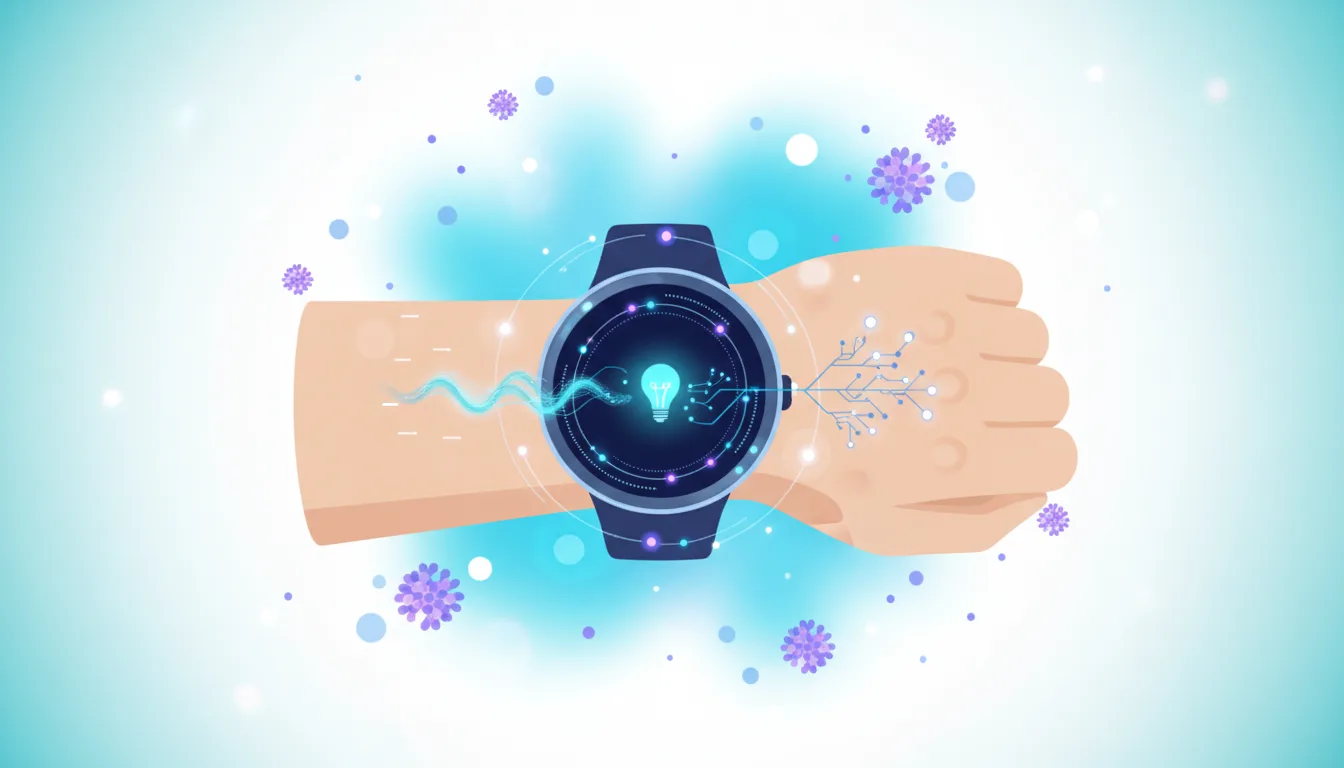
Researched and written with AI assistance under the editorial responsibility of the i10X News team. The title image is an AI-generated illustration. Read our AI Use Policy. Spotted an error? Request a correction.
This analysis is an independent i10x assessment based on a review of official product announcements and third-party evaluations. It identifies the critical gaps in the current discourse – focusing on data governance, model explainability, and competitive strategy – to provide a forward-looking perspective for technology leaders, product strategists, and enterprise decision-makers. But here’s the thing: in piecing this together, it’s clear how much these gaps shape the bigger picture.
🔭 i10x Perspective
What if the real game-changer isn’t just better sleep tracking, but AI weaving itself into our everyday routines? The Gemini Sleep Coach is less about sleep and more about the next frontier of AI: the integration of large-scale intelligence into the fabric of our personal lives. Google is making a calculated bet that its AI prowess can finally give its Fitbit hardware an identity and purpose distinct from the Apple Watch.
This signals a market shift where the value is no longer in the sensor that collects the data, but in the AI model that can reason about it. The ultimate unresolved tension is the trade-off between the undeniable allure of a hyper-personalized AI health agent and the profound risk of centralizing our most intimate biological data with a single corporate entity. The future of AI-driven wellness will be defined not by the cleverness of the algorithm, but by the transparency and trustworthiness of the system that wields it – a balance that’s tricky, but worth watching closely.