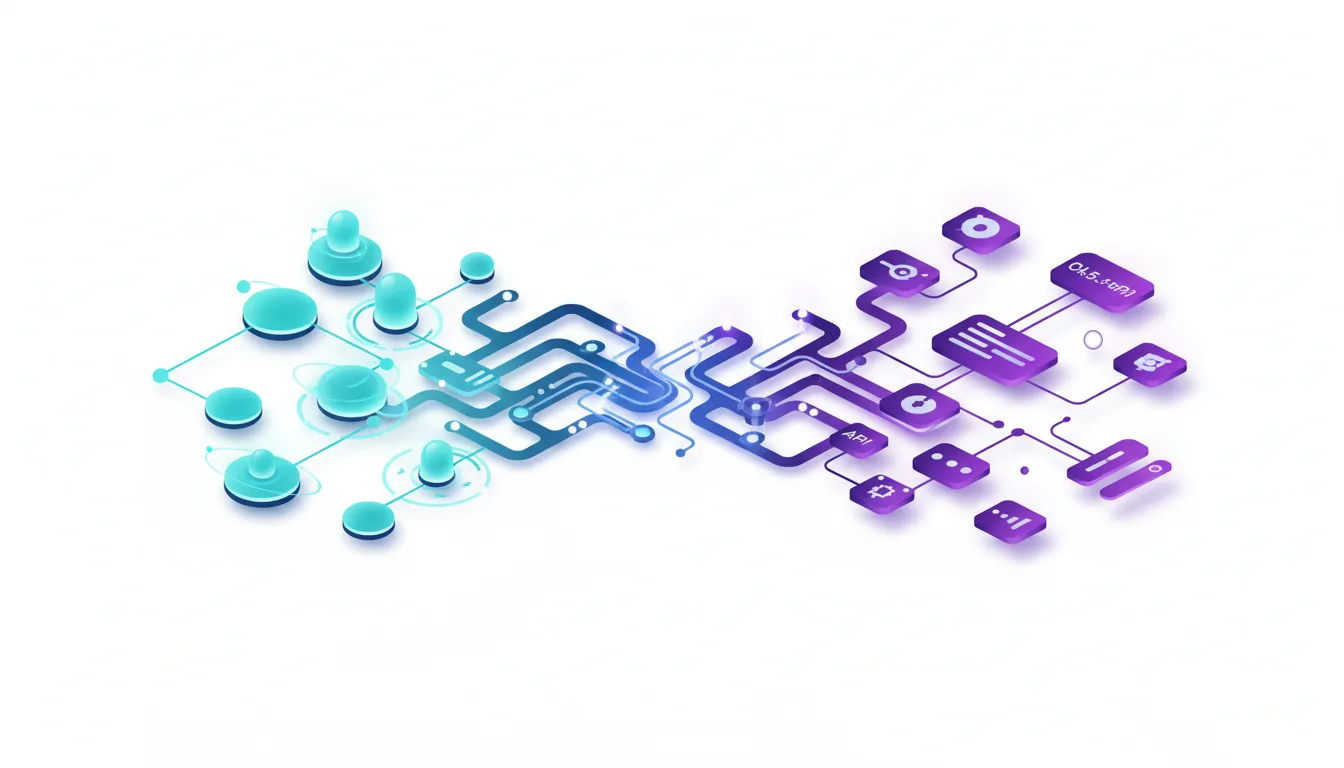
The Gemini vs. ChatGPT battle is no longer a simple contest of conversational wit. It has escalated into a strategic war for enterprise dominance, fought on the battlegrounds of ecosystem integration, data governance, and reliable automation. The winner isn’t the best chatbot—it’s the most deeply embedded intelligence infrastructure.
Quick Take
- Summary: Have you ever wondered why, amid all the hype, businesses keep circling back to the same question: which AI platform actually fits their world? While countless reviews pit Google’s Gemini against OpenAI’s ChatGPT on tasks like creative writing and coding, the real competition has shifted. From what I’ve seen in the trenches of enterprise tech, the decision for businesses now hinges less on which model is “smarter” and more on which platform offers superior integration, security, and total cost of ownership (TCO) within their existing technology stack.
- What happened: The market has matured beyond those anecdotal, hands-on tests that once dominated the chatter. Sophisticated buyers are now digging into the underlying platforms, weighing the upsides and pitfalls. Google is positioning Gemini as the native intelligence layer for its sprawling Workspace and Cloud ecosystem, promising seamless, out-of-the-box integration—almost like it’s always been there. OpenAI, backed by Microsoft, leverages ChatGPT’s first-mover developer mindshare and perceived performance edge, offering flexibility through a vast API and plugin ecosystem that lets you mix and match as needed.
- Why it matters now: But here’s the thing—this divergence forces a strategic choice, one that isn’t as straightforward as picking a favorite tool. Opting for Gemini increasingly means committing to the Google ecosystem for maximum value, with all the efficiencies that brings. Choosing ChatGPT offers more flexibility, sure, but it requires navigating a more fragmented landscape of third-party integrations and managing compliance across the OpenAI/Microsoft Azure stack. The “best” choice is now a function of a company’s existing infrastructure and risk tolerance, really—plenty of reasons to tread carefully there.
- Who is most affected: The pressure is on enterprise CTOs, CISOs, and developer teams, no doubt about it. They must now evaluate these models not as standalone tools, but as foundational components of their company’s future automation and data strategy. The choice has long-term implications for vendor lock-in, data governance, and development velocity—choices that could shape things for years to come.
- The under-reported angle: Most comparisons overlook the true enterprise pain points, the ones that keep leaders up at night: reproducible performance, transparent cost modeling at scale, and verifiable data compliance (e.g., GDPR, HIPAA). The debate must move beyond prompt-offs to rigorous testing of API reliability for agentic workflows, data residency controls, and the true cost-per-successful-transaction in automated business processes. It’s a shift that’s overdue, if you ask me.
Deep Dive
Ever feel like the flood of “Gemini vs. ChatGPT” articles is missing the bigger picture, treating AI like just another gadget showdown? The endless stream of those pieces has created a market perception of a two-horse race for the title of “best AI.” But this framing is becoming obsolete, fading fast. The real narrative is one of two fundamentally different strategies for embedding generative intelligence into the global economy. It’s a classic platform war: the integrated suite vs. the best-of-breed component, each pulling in its own direction.
Google’s strategy with Gemini is one of deep, native integration—think of it as embedding smarts right into the fabric of what you already use. By weaving Gemini directly into Gmail, Docs, Sheets, and the Google Cloud Platform (GCP), the value proposition is seamlessness, pure and simple. For the millions of businesses already running on Google Workspace, Gemini isn’t just another tool to adopt; it’s an intelligence upgrade to the tools they already use, day in and day out. The primary advantage is reduced friction—no more clunky add-ons. The implicit trade-off, however, is a powerful gravitational pull towards deeper ecosystem lock-in, something I’ve noticed pulls teams in deeper than they might expect.
OpenAI and Microsoft are executing a different playbook, one that’s more about standing out in a crowd. Riding ChatGPT’s first-mover advantage and strong developer loyalty, their strategy is centered on performance and flexibility. ChatGPT often remains the benchmark for raw capability in creative and complex reasoning tasks—it’s got that edge that keeps developers coming back. Its power is unlocked via APIs and a sprawling ecosystem of GPTs and plugins, giving developers a rich toolkit to build custom solutions, tailored just so. This approach caters to organizations that prioritize performance and customizability, even if it means shouldering a greater integration and governance burden across the OpenAI and Azure platforms. That said, it’s not without its headaches.
This strategic divergence is forcing the market to mature, like it’s finally growing up. Early adopters focused on features, chasing the shiny new thing, but institutional buyers are now asking the hard questions that current reviews fail to answer. Where is the transparent TCO calculator that models API latency and token costs for real-world automation? Where is the definitive compliance matrix mapping Gemini’s and ChatGPT’s enterprise tiers against GDPR, SOC 2, and HIPAA controls? As noted in our research analysis, these content gaps highlight a critical need for decision-making tools that go beyond anecdotal benchmarks—tools that actually help bridge the gap to practical use.
Ultimately, the new frontier of competition lies in reliability for automated, agentic workflows. For developers, the critical question isn’t “Which model writes better emails?” but “Which model’s function-calling and JSON mode is more reliable under pressure?” As AI moves from a conversational partner to a core engine for business process automation, the metrics that matter are shifting from conversational flair to industrial-grade dependability, security, and auditable governance. It’s a pivot that’s reshaping how we think about AI altogether.
Stakeholders & Impact
| Stakeholder / Aspect | Impact | Insight |
|---|---|---|
| AI / LLM Providers | High | The battle shifts from winning individual users to securing multi-year enterprise contracts—it’s all about the long game now. Ecosystem lock-in becomes the primary goal, fueled by integration and governance features that keep customers close. |
| Enterprise Buyers (CTOs/CISOs) | High | The decision evolves from a simple tool comparison to a strategic platform choice, one with real weight. TCO, data residency, API reliability, and vendor risk now outweigh surface-level features, demanding a closer look. |
| Developers & ML Engineers | High | Focus moves to the reliability of advanced features like function calling, structured data output (JSON mode), and RAG performance for building robust AI agents and workflows—essentials that can make or break a project. |
| End Users / Employees | Medium | The user experience will become increasingly defined by their company’s chosen ecosystem (Google vs. Microsoft/OpenAI), potentially limiting tool choice but simplifying workflows in ways that feel almost seamless. |
About the analysis
Researched and written with AI assistance under the editorial responsibility of the i10X News team. The title image is an AI-generated illustration. Read our AI Use Policy. Spotted an error? Request a correction.
What if the real value in comparing AIs comes not from who’s “better” in a head-to-head, but from spotting what’s overlooked? This analysis is an independent meta-review produced by i10x. It synthesizes findings from over a dozen top-ranking comparisons of Gemini and ChatGPT, focusing on identifying the critical gaps in existing coverage. Our perspective is shaped by what’s missing: enterprise-grade benchmarks, transparent cost modeling, and deep dives into data governance—the factors that matter most for developers, enterprise architects, and technology leaders building the next generation of AI-powered systems. It’s our way of filling in those blanks, drawn from patterns we’ve observed across the board.
i10x Perspective
Isn’t it fascinating how rivalries like Gemini vs. ChatGPT hint at bigger shifts, the kind that redefine entire industries? The Gemini vs. ChatGPT rivalry is a precursor to the next phase of the AI revolution: the “invisibilization” of intelligence, where the tech fades into the background. The debate will soon seem as quaint as comparing browsers in the early 2000s—charming, but dated. The long-term winner won’t be the model with the most personable chatbot, but the one that becomes the most reliable, secure, and cost-effective intelligence utility—the boring but essential plumbing for global business automation. As AI models commoditize, the ultimate competitive moats will be built not on conversational skill, but on enterprise trust and ingrained workflows.
The future of AI is infrastructure, plain and simple, and that’s where the real story unfolds.