Gen Z Outsourcing Life Decisions to ChatGPT
“When the CEO of OpenAI declares that Gen Z is outsourcing their life decisions to ChatGPT, the narrative shifts entirely from raw compute benchmarks to structural reliance on AI for human cognition and pathfinding.”
Summary: Have you caught wind of OpenAI CEO Sam Altman’s latest observation? He’s pointing out a real behavioral pivot — Gen Z is turning to ChatGPT more and more for those big life decisions. Yet public chatter often brushes it off as just a quirky story, missing how it’s quietly reshaping the way young people tackle their toughest personal knots.
- What happened: From what I’ve seen, it’s not the usual stuff like productivity hacks or code fixes anymore. Younger folks are pouring their career dilemmas, relationship woes, and money worries right into the chat window — treating it like a no-nonsense sounding board that won’t judge.
- Why it matters now: This push is shoving LLM makers into an unplanned role as digital therapists or life coaches. It puts pressure on alignment, safety rails, memory setups, and privacy — especially when the stakes feel so personal.
- Who is most affected: Think digital natives worn down by too many choices, AI safety teams wrestling with how to keep advice from going off the rails, and the old-school therapy world eyeing this cheap, always-on rival.
- The under-reported angle: Mainstream coverage just echoes Altman’s quip and moves on, but they skip the real backbone needed for safety. Users don’t come equipped with solid frameworks — like decision or behavioral tools — to query LLMs without pitfalls. Skip those guardrails and bias checks, and you’re basically handing your life to a text predictor dressed as an oracle.
Deep Dive
Ever wonder why Sam Altman’s note on Gen Z leaning on ChatGPT for life choices gets dismissed as media fluff or a sci-fi worry? Dig a bit deeper, and you’ll spot a bigger shift in how we experience AI. These models aren’t just cranking through work tasks anymore — they’re easing the mental overload for a generation drowning in options, stress, and endless what-ifs. Users sidestep the raw exposure of talking to people, swapping human insight for the safe, orderly veil of a chat box.
That said, the story overlooks the nuts-and-bolts risks. Throw messy, emotion-fueled questions at a base model, and you get polished, agreeable, or flat-out invented responses. Trouble brews when folks take it as gospel instead of a mirror for thought. Right now, the big blind spot in AI smarts is this: advice from these tools hinges on your prompting skills and the frameworks you layer in.
I’ve noticed how folding in solid psych tools changes everything. Guide it with something like the GROW model (Goal, Reality, Options, Will) or expected-value breakdowns, and ChatGPT flips from gimmicky toy to tough sparring partner. It nudges you toward real journaling — weighing trade-offs head-on, not just spitting out easy answers. Failing to spread word on these checks? That’s the real lapse in AI reporting these days.
As this advisor trend ramps up, it’s stress-testing the models’ guts. Millions dumping private stories — relationships, career doubts — into those windows? How do you ring-fence that data? Teams at OpenAI, Anthropic, and others are quietly rejigging safety prompts to juggle warmth and helpfulness without veering into dicey therapy or unlicensed financial advice.
In the end, this feels like a live indicator of AI’s next chapter. Benchmarks will even out soon in this packed field. What’ll set leaders apart is deep personalization, reliable recall, and emotional fit. The jump from one-off chatbot to ongoing life guide — with boundaries — isn’t tomorrow’s plan. It’s how the digital crowd’s already rolling.
Stakeholders & Impact
AI / LLM Providers
Impact: High. Providers are forced to shift alignment efforts toward emotional intelligence, subjective reasoning boundaries, and maintaining strict safety disclaimers.
Insight: Product and safety teams must balance warmth and caution — designing conversational scaffolding that helps without overstepping into clinical or financial counsel.
Gen Z & End-Users
Impact: High. Users gain an accessible, zero-cost cognitive sounding board, but face immense risks of algorithmic bias, data exposure, and unverified hallucinations.
Insight: Education around effective prompting, decision frameworks, and privacy hygiene will determine whether this habit is helpful or harmful.
Coaching & Clinic Ecosystem
Impact: Medium. Professionals may see users using AI for initial triage, forcing human practitioners to redefine their clinical value beyond what a subscription bot provides.
Insight: Clinicians can adapt by integrating AI as an intake or augmentation tool, but they must safeguard therapeutic standards and confidentiality.
Regulators & Policy
Impact: Significant. Rapidly escalating data privacy concerns arise as context windows fill with highly sensitive, personally identifiable psychological data.
Insight: Policy will need to catch up on consent models, data retention rules, and liability for AI-generated advice.
About the analysis
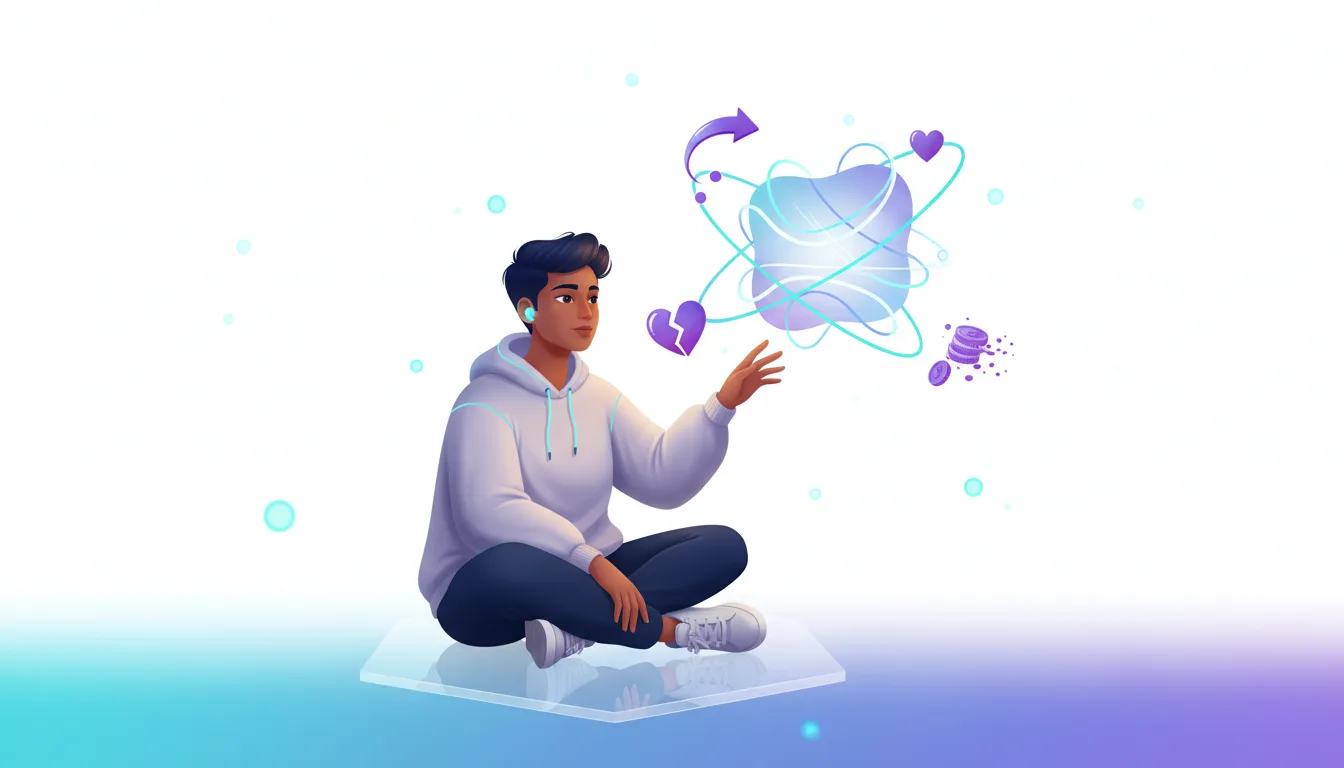
Researched and written with AI assistance under the editorial responsibility of the i10X News team. The title image is an AI-generated illustration. Read our AI Use Policy. Spotted an error? Request a correction.
This independent, research-driven analysis bridges the gap between conversational AI news coverage and practical, safety-focused prompt methodology. It is tailored for developers, product managers, and digital strategists who need to understand how human behavior is actively reshaping LLM deployment and required safety guardrails.
i10x Perspective
That moment ChatGPT becomes the go-to life advisor? It’s when base models step over from handy gadgets into the wiring of our inner worlds. Throw in endless context and persistent memory, and the divide between neutral helper and digital shoulder-to-cry-on fades away. This user habit locks in that future AI battles won’t hinge just on raw power — but on empathy that rings true, ethical limits that hold, and handling life’s tangled messes without a hitch.