Ever wonder how AI could peek into an image and not just guess what’s there, but actually build a step-by-step map of it? Google is upgrading its Gemini models with “Agentic Vision,” a technique that uses code generation to analyze images-boosting performance on key vision benchmarks by 5-10%. This architectural shift moves beyond simple image perception and toward creating programmatic, auditable AI agents that can reason about visual data, a crucial step for enterprise reliability.
Quick Take
- Summary: Google has introduced Agentic Vision, a new capability for its Gemini 3 Flash model. Instead of relying solely on a monolithic neural network to interpret images, the model now generates and executes code to perform analysis, yielding more structured, verifiable results and a claimed 5-10% improvement on complex vision benchmarks. From what I’ve seen in these announcements, it’s a nudge toward making AI feel less like magic and more like a reliable colleague.
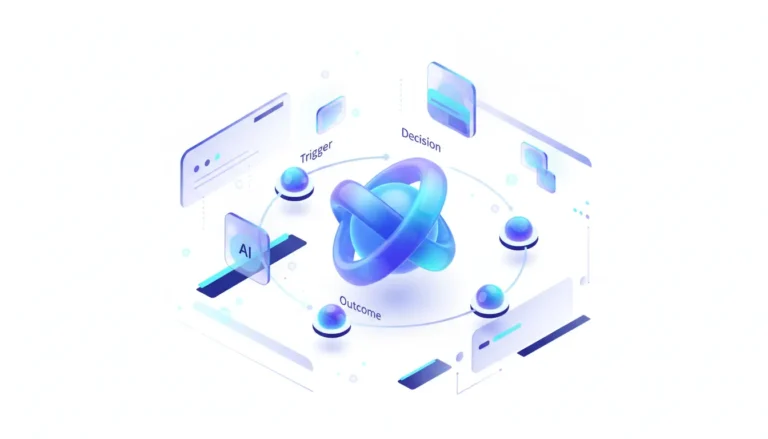
- What happened: Agentic Vision transforms how Gemini “sees.” When presented with a complex visual task like analyzing a chart or a document, the model writes a small, task-specific program (conceptually similar to a Python script) to break down the problem. It programmatically identifies elements, extracts data, and performs calculations, making its reasoning process transparent and reproducible-unlike the black-box nature of traditional vision models. That said, it’s the kind of transparency that could save hours of head-scratching down the line.
- Why it matters now: In a market dominated by the powerful multimodal capabilities of OpenAI’s GPT-4o and Anthropic’s new Claude 3.7, Google is competing on a different axis: reliability. By making the AI’s visual reasoning process explicit through code, Google is targeting high-stakes enterprise workflows where accuracy and auditability are non-negotiable. The race is shifting from who has the best “eyes” to who has the most dependable visual “brain.” Here’s the thing-it’s weighing the upsides of speed against the quiet assurance of something you can actually trace back.
- Who is most affected: Developers building applications in document intelligence, UI/UX analysis, and data visualization will be the first to leverage this. Enterprises scarred by the unpredictability of AI “hallucinations” in their document processing and quality assurance pipelines now have a path toward more trustworthy visual automation. Plenty of reasons to keep an eye on this, really, especially if you’ve dealt with those frustrating glitches yourself.
- The under-reported angle: While news headlines focus on the 5-10% performance gain, the real story is the architectural pivot from “AI as an oracle” to “AI as a programmable tool.” Agentic Vision isn’t just looking at pixels; it’s generating a logical, inspectable code-based workflow to understand them. This is a foundational move toward building vision agents that can be debugged, validated, and ultimately trusted with critical tasks. I can’t help but think this sets the stage for AI that’s less about spectacle and more about substance.
Deep Dive
Have you ever handed a complex image to an AI and crossed your fingers, hoping it wouldn’t veer off into nonsense? Google’s announcement of Agentic Vision for Gemini isn’t just another incremental model update; it’s a strategic reframing of how AI interacts with the visual world. The core innovation is moving image analysis from a purely intuitive, black-box process to a structured, programmatic one. This code-based image analysis allows the AI to decompose a complex visual problem into logical steps, write code to execute those steps, and present a result that is grounded in a verifiable process. It’s the difference between an AI saying “this chart trends upwards” and it showing you the code it wrote to extract the data points and calculate the slope-short, punchy insights backed by something solid.
This approach directly targets a key pain point for developers and enterprises: the inherent brittleness and opacity of multimodal AI. Traditional vision models can be easily confused by novel layouts or subtle visual noise, and when they make a mistake, it’s nearly impossible to diagnose why. By using code as an intermediate reasoning layer, Agentic Vision creates an auditable trail. For a developer, this means they can inspect the generated code to understand the AI’s logic, debug failures, and build more robust error-handling-maybe even tweak it on the fly. For an enterprise, it means a higher degree of trust in automated workflows, from processing invoices with complex tables (DocVQA benchmarks) to interpreting financial charts (ChartQA benchmarks). That trust, I’ve noticed, is what keeps the wheels turning in high-pressure environments.
This move firmly positions Google in the AI race with a unique selling proposition: verifiability. While competitors like OpenAI and Anthropic are pushing the boundaries of latency and conversational fluidity with models like GPT-4o and Claude 3.7, Google is betting that the AIs that win the enterprise market will be the ones you can trust, not just the ones that respond fastest. This new capability is explicitly designed for agentic workflows where the AI is not just a chatbot but an autonomous worker. By giving the vision system the ability to use tools (i.e., generate and run code), Google is laying the infrastructure for more sophisticated, reliable AI agents. But tread carefully here-the promise is exciting, yet it leaves room for how this plays out in real-world messes.
However, the practicalities are not yet fully transparent. Key details on latency, throughput, and cost remain unaddressed. Does this code-generation loop add significant response time? How are the tokens used for code generation and execution billed? More importantly, what are the failure modes? An AI that can write code can also write buggy code. Google is stepping into a new paradigm that promises greater reliability but also introduces a new class of potential errors that developers will need to learn to manage. The success of Agentic Vision will depend not just on its benchmark scores, but on how effectively the developer community can harness its power while mitigating these new risks-and that’s where the real test begins, isn’t it?
Stakeholders & Impact
| Stakeholder / Aspect | Impact | Insight |
|---|---|---|
| AI / LLM Developers | High | Provides a new, more reliable primitive for building vision-based applications. Requires learning new patterns for prompting and parsing code-based outputs, but enables more robust, debuggable systems-y’know, the kind that save headaches in the long run. |
| Enterprise Users | High | Unlocks more reliable automation for critical document processing, data analysis, and UI/UX testing. Reduces risk of costly “hallucinations” in production workflows, paving the way for smoother operations. |
| OpenAI / Anthropic | Medium | Increases competitive pressure to move beyond black-box vision models and provide more transparent or verifiable reasoning mechanisms. The new battleground is shifting toward auditable AI, forcing some fresh thinking. |
| Regulators & Policy | Low (Immediate) | While not an immediate focus, the concept of auditable, code-based AI reasoning could set a future precedent for compliance and explainability standards in regulated industries like finance and healthcare-something to watch as it evolves. |
About the analysis
Researched and written with AI assistance under the editorial responsibility of the i10X News team. The title image is an AI-generated illustration. Read our AI Use Policy. Spotted an error? Request a correction.
This analysis is based on Google’s technical announcements and a comparative assessment of the current AI model landscape. By identifying the gaps in initial news reports, this piece is designed for developers, product managers, and technical leaders evaluating the shift from purely perceptual AI to structured, agentic AI systems. It’s meant to cut through the hype, offering a grounded view that might spark some useful discussions in your next planning session.
i10x Perspective
What if the future of AI isn’t about getting bigger and faster, but about becoming something you can actually take apart and fix? Agentic Vision signals that the next frontier of AI is not just about scale, but about structure. Google is wagering that for AI to graduate from a novelty to a utility, its reasoning must become as inspectable as a developer’s own code. This is a fundamental shift from building “oracles” to building “programmatic reasoners.”
This move forces a choice upon the market: is speed and conversational flair more valuable than auditable reliability? For consumer-facing assistants, perhaps-yes, that quick wit has its place. But for the high-value enterprise workflows that represent the next trillion-dollar AI market, Google’s bet on verifiability may prove decisive. The unresolved tension is whether the added complexity of this code-based approach can be managed effectively, or if it will simply trade one set of problems for another. How the ecosystem answers that question will define the architecture of trusted AI for the next decade, and honestly, I’m curious to see where it lands.