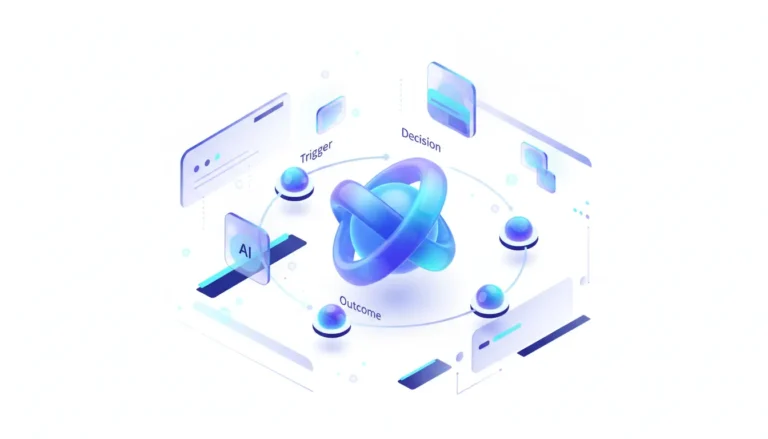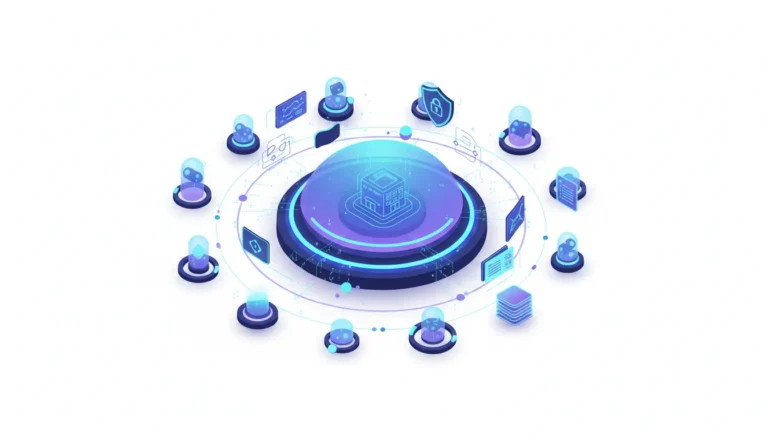
Google Cloud has launched its Gemini Enterprise Agent Platform, a new, fully-managed suite designed to move AI agents from risky prototypes to governed, production-ready systems. By bundling orchestration, grounding, and evaluation tools, Google is betting that the next wave of AI adoption depends less on raw model capability and more on enterprise-grade control, security, and cost management.
Quick Take
- Summary: The Gemini Enterprise Agent Platform is an end-to-end toolkit for building, scaling, and managing custom AI agents. It integrates capabilities for tool use, retrieval-augmented generation (RAG) over enterprise data, and continuous evaluation, all wrapped in a layer of enterprise governance and security. From what I’ve seen in enterprise setups, this kind of integration could really smooth out the rough edges that often trip up AI projects.
- What happened: Google has productized the complex, often fragmented process of building reliable AI agents. Instead of developers stitching together open-source libraries and cloud services – you know, that endless patchwork that never quite holds – this platform provides a managed “scaffolding” that promises to enforce safety, grounding, and compliance by default. It’s like giving teams a sturdy framework to build on, rather than starting from scratch every time.
- Why it matters now: Have you ever watched a flashy AI demo light up a room, only to see it fizzle out when it hits real-world enterprise walls? The AI market is saturated with impressive agent demos that fail to clear enterprise hurdles for security, reliability, and predictable cost. Google is aiming to solve these “Day 2” operational problems, positioning itself as the vendor that can turn risky AI experiments into auditable business processes and capture the lucrative production workload. That said, it’s a timely push in a space that’s evolving faster than most can keep up with.
- Who is most affected: Enterprise architects, AI platform teams, and CIOs are the primary audience. They are tasked with deploying generative AI safely and demonstrating clear ROI, a task the fragmented tooling market has made difficult – plenty of reasons for that frustration, really. This platform offers them a potential “golden path” but also requires commitment to the Google Cloud ecosystem, which might feel like a double-edged sword depending on where you stand.
- The under-reported angle: While Google’s marketing emphasizes an “end-to-end” solution for governance, it fails to address the most critical questions for commercial investigation: transparent pricing and performance benchmarks. Without clear cost models, TCO calculators, or competitive metrics, the platform’s promise of optimization remains purely theoretical, leaving potential buyers unable to evaluate its true business impact. I’ve noticed this gap in similar launches before – it leaves you weighing the upsides against too many unknowns.
Deep Dive
Ever wonder why so many AI agent projects start strong but crash against the rocks of enterprise demands? The era of impressive but untethered AI agent demos is facing an enterprise reality check. Hallucinations, security leaks with private data, and unpredictable operational costs have stalled countless proof-of-concepts – and that’s before you even get to scaling them up. With the launch of the Gemini Enterprise Agent Platform, Google Cloud is making a direct play to solve this chaos, arguing that the future isn’t about building more agents, but about building and managing them reliably at scale.
At its core, the platform is a managed control plane that integrates three critical functions, each tackling a piece of the puzzle. First is agent orchestration and tool use, allowing agents to reliably call internal APIs and external services (like Salesforce or BigQuery) to execute tasks – think of it as giving your AI a reliable set of hands for the heavy lifting. Second is grounding via retrieval-augmented generation (RAG), which connects agents to verified enterprise knowledge bases to deliver factual, attributable answers and mitigate hallucinations; it’s that grounding wire that keeps things from sparking out of control. Finally, and perhaps most importantly, is a built-in evaluation and monitoring framework to track accuracy, latency, and cost-per-resolution, moving agent performance from an academic exercise to a core business metric you can actually measure and trust.
This bundle is wrapped in the enterprise-grade security and governance that Google Cloud hopes will be its trump card – or at least, a strong hand in a crowded game. The platform heavily emphasizes features like IAM-based access controls, data residency guarantees, audit logging, and safety guardrails. This directly targets the pain points of leaders in regulated industries like finance and healthcare, who cannot deploy AI that operates as a black box; they need visibility, not just promises. Google is framing the platform not just as a developer tool, but as a risk management solution that gives compliance officers the visibility they need – something that’s often the make-or-break factor in these decisions.
However, for a product geared toward commercial investigation, critical pieces are conspicuously missing, and that gives me pause. The official documentation lacks transparent pricing tiers, usage quotas, or even a sample Total Cost of Ownership (TCO) calculator. It promises “cost and performance optimization” without providing the benchmark data or FinOps tooling needed to prove it – all talk, no numbers, you might say. Furthermore, the platform’s relationship with existing Google Cloud AI services like Vertex AI and Dialogflow is unclear, creating potential confusion for existing customers trying to navigate a complex and evolving product landscape. Without a clear migration path or positioning, enterprises are left to wonder if this is a true consolidation or just another silo in the AI stack, adding to the mix rather than simplifying it.
Stakeholders & Impact
| Stakeholder / Aspect | Impact | Insight |
|---|---|---|
| Enterprise Architects & Platform Teams | High | Provides a potential “golden path” to production-ready AI agents, but introduces a new, complex platform with risks of vendor lock-in. The focus on governance is a major draw – it’s that reliability factor that can make all the difference in tight timelines. |
| Enterprise Buyers (CIOs, CTOs) | High | Offers a potential solution to the most significant AI adoption risks (security, compliance, ROI). However, the current lack of transparent pricing and benchmarks makes procurement and evaluation difficult; without those details, it’s hard to build a solid case. |
| Google Cloud | High | This is a strategic move to own the “AI agent operating system” within the enterprise, shifting the competitive focus from model prowess to platform reliability and governance. Success hinges on proving tangible cost and safety benefits – easier said than done in this market. |
| Open-Source Agent Developers | Medium | While open-source frameworks like LangChain and LlamaIndex offer more flexibility, this platform will appeal to enterprises that prioritize stability, support, and managed infrastructure over customizability. It raises the bar for what a “production-ready” stack requires, nudging everyone toward more structured approaches. |
About the analysis
Researched and written with AI assistance under the editorial responsibility of the i10X News team. The title image is an AI-generated illustration. Read our AI Use Policy. Spotted an error? Request a correction.
This is an independent analysis based on Google’s published product information, benchmarked against common enterprise adoption criteria and market-wide challenges in deploying AI agents. This article is written for technology leaders, enterprise architects, and product managers evaluating the next generation of AI platforms – folks like you, navigating these waters day in and day out.
i10x Perspective
What if the real shift in AI isn’t about chasing the next big model breakthrough, but about taming the wild side of deployment? The launch of the Gemini Enterprise Agent Platform signals a crucial maturation of the AI market, moving the narrative from “Can we build a clever agent?” to “How do we run thousands of agents safely and efficiently?” The real battle for enterprise AI dominance won’t be won by the model with the highest benchmark score, but by the platform that best solves the messy operational realities of security, cost management, and regulatory compliance – those gritty details that keep projects alive long-term.
Google is betting that a governed, all-in-one ecosystem is the answer, and it’s a bold wager in a field full of uncertainties. The unresolved tension is whether enterprises will embrace this vision of a centralized “agent factory” or if its opacity on cost and performance will push them to continue building their own auditable, open-source stacks. This platform is a test: can the promise of managed simplicity outweigh the high price of vendor lock-in? From where I sit, how Google fills in those blanks – and soon.