Quick Take
Google has unveiled Deep Research Max, an autonomous research agent powered by a new Gemini 3.1 Pro model. While presented as a tool to automate complex research, the more significant story is the introduction of the Model Context Protocol (MCP)—Google’s strategic bid to standardize how AI agents connect to tools, data, and workflows across the enterprise.
Summary
Google announced Deep Research Max, its next-generation autonomous research agent. It leverages a previously unmentioned Gemini 3.1 Pro model and introduces the Model Context Protocol (MCP) to enable standardized integrations with external tools, alongside new features for visualizing and citing sources to build trust. From what I’ve seen in these early announcements, it’s a smart nod to the trust issues that still linger in AI outputs.
What happened
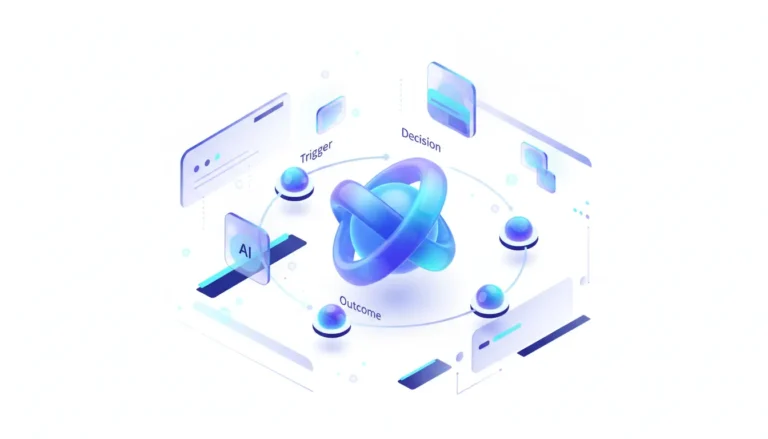
Ever wonder what it would take for an AI to handle research end-to-end without constant hand-holding? Google is rolling out an advanced AI agent that can autonomously conduct research by browsing the web, using tools, and synthesizing findings into structured, citable outputs. The agent is built on the Gemini 3.1 Pro model and uses MCP to orchestrate its connections to various data sources and services, including Google Workspace. It’s like giving the AI a reliable toolkit – one that pulls everything together seamlessly.
Why it matters now
As the AI market shifts from raw model capabilities to practical, agentic workflows, the infrastructure for connecting agents to the real world becomes the critical battleground. Deep Research Max is Google’s showcase for MCP, its attempt to own the “API layer” for autonomous agents, making them more reliable and easier to integrate into enterprise stacks. Plenty of reasons to keep an eye on this, especially if you’re weighing the upsides against the usual integration headaches.
Who is most affected
Enterprise decision-makers, knowledge workers, and data analysts will be the primary users, evaluating if it can replace time-consuming manual research. Developers and AI platform architects will be watching MCP closely to see if it becomes a viable standard for building their own interoperable agents. That said, the ripple effects could touch anyone building AI into daily operations.
The under-reported angle
Most coverage focuses on the agent’s research capabilities. The core strategic move is the Model Context Protocol (MCP). MCP is Google’s play to create a universal, standardized “plug-and-play” ecosystem for AI agents, aiming to solve the brittle, custom-coded integrations that currently plague agent development and create a defensible moat against competitors. I’ve noticed how these kinds of protocols often fly under the radar at first – but they end up shaping the whole field.
Deep Dive
What if research didn’t feel like pulling teeth anymore? Google’s launch of Deep Research Max marks a significant step beyond conversational chatbots toward truly autonomous AI agents. Positioned as a solution to the fragmented and time-consuming nature of manual research, the tool promises to orchestrate complex queries, browse sources, and deliver synthesized reports complete with visual source maps and inline citations. This directly addresses the critical enterprise pain point of trusting and verifying AI-generated outputs, moving from a “black box” to a more transparent glass box. Short on time? That’s the appeal – it cuts through the noise.
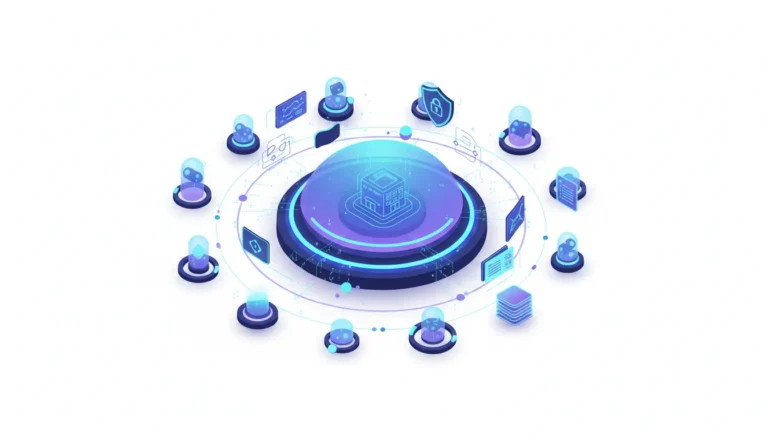
The real story, however, unfolds beneath the surface. The agent is powered by an unannounced Gemini 3.1 Pro model, signaling an ongoing acceleration in Google’s model development. More importantly, it’s the first major product built on the new Model Context Protocol (MCP). While the official announcement frames MCP as an enabler for tool integrations, its ambition is far greater. MCP is Google’s answer to the chaotic, non-standardized world of agent-tooling. By creating a formal protocol, Google aims to replace the bespoke, fragile function-calling APIs of today with a robust, universal standard – much like how USB standardized peripheral connections, remember those early days?
This move reframes the competitive landscape. The race is no longer just about having the most powerful LLM; it’s about owning the ecosystem where that LLM operates. OpenAI has its function-calling framework, and open-source stacks like LangChain have become de-facto standards for developers. With MCP, Google is making a direct play to control the enterprise integration layer, proposing a future where connecting an internal database, a SaaS application, or a proprietary tool to an AI agent is a standardized, low-friction process governed by a Google-defined protocol. Tread carefully here, though – standards like this can lock things in or open them up, depending on how they’re played.
Despite the powerful vision, critical questions for enterprise adoption remain unanswered, highlighting the gaps in current public information. There is a notable lack of detail on pricing, usage quotas, and rate limits, making Total Cost of Ownership (TCO) impossible to calculate. Furthermore, while “safety guardrails” are mentioned, a deep dive into enterprise-grade governance – such as integration with Single Sign-On (SSO), granular admin controls, data residency guarantees, and audit logs – is missing. For Deep Research Max to move from a promising productivity tool to a trusted, production-ready enterprise knowledge engine, these practical deployment and security concerns must be addressed. It’s the kind of oversight that makes you pause and think about the road ahead.
Stakeholders & Impact
| Stakeholder / Aspect | Impact | Insight |
|---|---|---|
| AI / LLM Providers | High | Deep Research Max is Google’s flagship application for both its new Gemini 3.1 Pro model and the strategic Model Context Protocol (MCP). It sets a new bar for what a first-party AI agent should deliver, putting pressure on competitors to offer similarly integrated and verifiable research solutions. |
| Enterprise Users | High | For knowledge workers and analysts, this promises a massive productivity boost by automating tedious research. However, its real value depends on the quality of its outputs and the ease of integrating it into existing workflows like Google Drive, Docs, and third-party knowledge bases. |
| Developers & Builders | Significant | MCP is the main story. If it gains traction, it could simplify building and deploying interoperable AI agents. Developers will need to evaluate whether to adopt Google’s standard or stick with open-source frameworks and competing proprietary solutions. |
| Regulators & Governance Teams | Medium | The emphasis on citations and source visualization is a direct response to concerns about AI-generated misinformation. However, the autonomous nature of the agent will attract scrutiny around data privacy, security, and the potential for misuse, requiring robust internal governance from adopting companies. |
About the analysis
Researched and written with AI assistance under the editorial responsibility of the i10X News team. The title image is an AI-generated illustration. Read our AI Use Policy. Spotted an error? Request a correction.
This analysis is an independent i10x work product, based on a comprehensive review of official announcements, early media coverage, and identified gaps in the public discourse. It is written for AI developers, product leaders, and enterprise CTOs seeking to understand the strategic implications of Google’s new agent architecture beyond the surface-level features. You know, piecing this together reminded me how much gets lost in the initial hype – but that’s where the real insights hide.
i10x Perspective
Deep Research Max is more than a product launch; it’s a declaration of strategy. Google is betting that the future of AI is not just about smarter models but about smarter, standardized plumbing. The Model Context Protocol (MCP) is a direct attempt to build the central nervous system for enterprise AI agents, turning a chaotic landscape of custom integrations into an orderly ecosystem under its direction. From my vantage point, it’s a bold swing – one that could either streamline everything or stir up more debates on control.
The key unresolved tension is whether a proprietary, vendor-driven standard like MCP can win against the gravitational pull of open-source frameworks and the flexibility of competitor APIs. Watch this space: the battle for the “HTTP for AI agents” has officially begun, and its outcome will define how autonomous intelligence is deployed and governed for the next decade. Exciting times, really, with so much still up in the air.