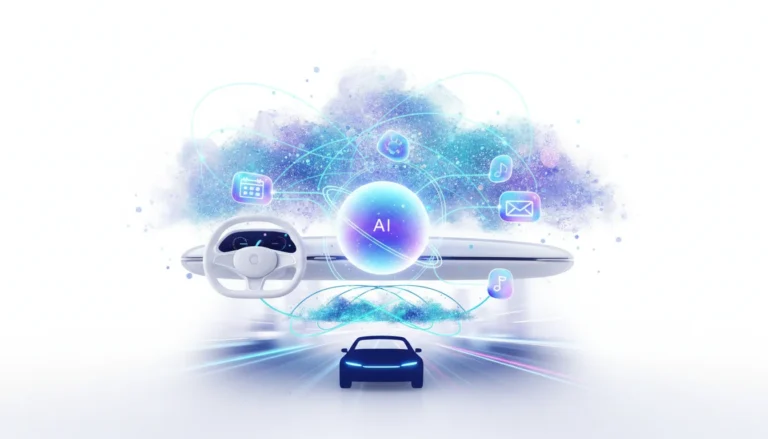
Have you ever wondered if the next big AI shift isn’t about smarter chatbots, but about something far more seamless? Google’s Gemini is quietly being re-architected from a standalone chatbot into a full-stack, multimodal intelligence layer. From what I’ve seen in their recent moves, they’re integrating advanced video generation, on-device processing, and deep enterprise controls—it’s like they’re laying the groundwork for an AI that hums along in the background of your day. This isn’t just an update; it’s a platform play for workflow dominance, signaling a strategic shift from chasing chatbot features to building an end-to-end OS for AI-native productivity and creation.
Quick Take
- Summary: While the public sees Gemini as Google’s answer to ChatGPT, the real story—trust me, it’s worth paying attention here—is its rapid evolution into a connected ecosystem. The platform now combines its core large language models (Pro/Ultra) with specialized tools like the Veo video engine, on-device Gemini Nano, and deep integrations into the Google Workspace environment, complete with enterprise-grade administrative controls. Plenty of reasons, really, to see this as more than just another AI tool.
- What happened: Google is systematically layering new, powerful capabilities onto the Gemini brand. This includes the fusion with its text-to-video model Veo to create production workflows, the deployment of Gemini Nano for low-latency, offline tasks on mobile devices, and the rollout of granular security and governance tools for corporate customers using Gemini in Workspace. It’s methodical, almost like they’re building it brick by brick.
- Why it matters now: The AI race is moving beyond a war of benchmarks and into a battle for ecosystem control—but here’s the thing, it’s happening faster than most realize. This move positions Gemini as Google’s strategic counter to the OpenAI/Microsoft partnership, leveraging its vast distribution network (Android, Chrome, Workspace) to embed its intelligence fabric directly into user and business workflows. It’s a shift from “which model is smarter?” to “which platform owns the entire process from idea to execution?” And that, I think, changes everything for how we work.
- Who is most affected: Creative professionals, enterprise IT leaders, and developers are the primary groups impacted. Creatives face a new paradigm of AI-assisted video production—it’s exciting, but it’ll upend some workflows. IT leaders must evaluate Gemini as a governable enterprise intelligence layer, weighing the upsides against integration hassles. Developers gain a tiered toolkit (Nano, Pro, Ultra) to build applications with varying performance, cost, and privacy requirements, which opens up all sorts of possibilities.
- The under-reported angle: Most coverage treats Gemini’s new features—Veo, Gems, advanced search—as isolated product updates. But the critical insight, the one that gets overlooked amid the buzz, is the strategic consolidation. Google is building a unified, multimodal platform where the AI is not just a destination you visit (like a chatbot website) but a persistent, context-aware layer that follows you across devices and applications to assist in every stage of work and creation. It’s subtle, yet profoundly integrated.
Deep Dive
Ever feel like AI tools are starting to blur into the fabric of your daily routine, rather than just popping up when you need them? Google’s Gemini has moved far beyond its origins as the successor to Bard. While the conversational interface remains the front door for most users, it now functions as the nexus for a much broader and more ambitious strategy: embedding a tiered, multimodal intelligence system across its entire product stack. This evolution re-frames Gemini not as a single product, but as Google’s core AI platform for creativity, productivity, and on-device assistance. From my perspective as someone tracking these developments, it’s a smart pivot.
The most futuristic leap is the integration with Veo, Google’s text-to-video model – and that’s where things get really interesting. Current articles miss the bigger picture, focusing on “what is Gemini” rather than what it can do. The emerging workflow allows users to move from a text prompt to a creative brief, generate storyboards, and then produce video clips directly within the Gemini environment. This transforms the AI from a simple information retriever into a collaborative creative director – a bit like having a brainstorming partner who never sleeps. It’s a direct challenge to established creative toolchains and marks a significant step toward AI-native media production, a clear content gap the market is not yet explaining. One can’t help but wonder how this will reshape creative industries down the line.
This strategy is powered by a deliberate hierarchy of models—a point of confusion that current explainers fail to clarify, though it makes perfect sense once you break it down. Gemini isn’t one monolithic brain; it’s a distributed nervous system. Gemini Ultra handles the most complex, multi-domain reasoning in the cloud. Gemini Pro serves as the versatile workhorse for the majority of mainstream applications. Critically, Gemini Nano runs directly on-device, enabling low-latency, privacy-centric features like smart replies and summarization without needing a network connection (which, let’s face it, is a game-changer for spotty Wi‑Fi days). This tiered approach is Google’s solution to the AI trilemma of performance, cost, and privacy, allowing developers to choose the right tool for the right job – flexible, practical, and forward-thinking.
For Gemini to succeed, however, it must win over the enterprise – and that’s no small feat. Here, Google is leveraging its home-turf advantage by deeply weaving Gemini into Workspace. Beyond simply adding “Help me write” buttons in Docs and Gmail, Google has built out the administrative controls that IT leaders demand. Competitor analysis shows official help docs for admins, but no one is connecting this to the broader strategy – it’s like the dots are there, waiting to be joined. The ability to set granular permissions, control data access, and implement security policies via the Google Admin Console makes Gemini a more governable and therefore more viable option for corporate adoption than many standalone competitors. This isn’t just about productivity; it’s about making AI safe for work, easing those nagging concerns about compliance.
Finally, advanced features like Deep Research, Canvas, and custom Gems are the connective tissue holding this ecosystem together – they tie it all up nicely. Deep Research structures complex query results into organized outputs, moving beyond a simple list of links (which can feel overwhelming at times). Canvas offers a freeform space for brainstorming and prototyping ideas with the AI. These tools signal a clear product vision: to evolve Gemini from a generator of raw text into a partner that helps users structure, refine, and execute complex projects. It’s evolving, step by step, into something truly collaborative.
Stakeholders & Impact
| Stakeholder / Aspect | Impact | Insight |
|---|---|---|
| AI / LLM Providers | High | Gemini’s ecosystem play shifts the competitive battleground from model-centric benchmarks to platform-level workflow integration. Google is using its distribution channels (Android, Workspace) as a key strategic moat against OpenAI and others – it’s a clever way to stay ahead. |
| Creative & Knowledge Workers | High | The integration of Veo (video) and Deep Research transforms Gemini from a passive assistant into an active co-pilot for production. This will directly disrupt roles and toolchains in content creation, marketing, and research – exciting times, but a bit disruptive too. |
| Enterprise IT & Security | Significant | The focus on Workspace integration and granular admin controls makes Gemini a more governable and compliant choice for enterprise rollout. The central challenge shifts from “Can we use AI?” to “How do we manage it at scale?” – practical concerns that can’t be ignored. |
| Developers & Builders | High | The tiered model architecture (Nano, Pro, Ultra) provides a flexible toolkit for building AI applications with different performance, cost, and privacy profiles. Gemini Nano, in particular, unlocks new potential for mobile and on-device AI experiences – possibilities that feel just within reach now. |
About the analysis
Researched and written with AI assistance under the editorial responsibility of the i10X News team. The title image is an AI-generated illustration. Read our AI Use Policy. Spotted an error? Request a correction.
This article is an independent i10x analysis based on a synthesis of public documentation, competitor positioning, and identified gaps in current market commentary. It’s written for developers, enterprise CTOs, and product leaders who need to understand the strategic direction of Google’s AI ecosystem beyond surface-level feature announcements – because, really, the headlines only scratch the surface.
i10x Perspective
What if the future of AI isn’t a single powerhouse tool, but a web of intelligence that anticipates your needs? Google is not just building a better chatbot; it is assembling an intelligence fabric designed to weave through every aspect of its digital empire. From on-device processing with Nano to enterprise workflows in Workspace and creative production with Veo, Gemini represents a fundamental bet on ambient, integrated AI over a centralized, destination-based model. I’ve noticed how this approach feels more intuitive, almost like it’s designed with real workflows in mind.
This strategy poses a direct challenge to the OpenAI/Microsoft paradigm. While OpenAI builds a powerful, concentrated AI brain, Google is architecting a distributed AI nervous system – two paths diverging, each with its strengths. The unresolved tension for the next decade will be market acceptance. Will users and enterprises embrace the deep integration of a single vendor’s AI stack for its convenience, or will they resist the ecosystem lock-in in favor of best-of-breed, interoperable tools? Gemini’s ultimate success hinges on proving its all-in-one platform is more valuable than the sum of its independent parts – a question that keeps things intriguingly open-ended.