Google Gemini Wins “App of the Year”: Why the AI Assistant War Moved to Home Screens
Quick Take
Google Gemini being named ‘App of the Year’ by a consumer tech outlet isn’t about the trophy—it’s a critical signal that the AI assistant war has moved from benchmark leaderboards to the home screens of everyday users. This recognition validates Google’s strategy of wrapping its powerful models into a practical, multi-platform utility that directly challenges the dominance of native assistants like Siri on their own turf.
Summary: Google Gemini has been recognized as ‘App of the Year’ by the consumer technology program “What The Tech?”. The award highlights Gemini’s real-world utility for tasks like email management and hands-free control, marking its successful transition from a backend model to a mainstream consumer application.
What happened: A local news tech segment chose Gemini based on its practical impact on daily mobile use. Unlike typical awards focused on benchmarks, this selection was rooted in consumer-benefit demonstrations, such as dictating emails and managing schedules conversationally on both iPhone and Android devices.
Why it matters now: This moment crystalizes the current phase of the AI race: the battle for the default assistant. While Google promotes Gemini 2.5 Pro‘s technical prowess, this award shows the market values accessibility and integration more. It demonstrates that a well-designed app can successfully make a complex LLM a daily utility, a crucial step for mass adoption.
Who is most affected: General consumers, particularly iPhone users looking for a Siri alternative, are the biggest winners. It also puts immense pressure on Apple to innovate with its own AI, and forces competitors like Microsoft Copilot and Perplexity to refine their mobile strategies.
The under-reported angle: Most coverage focuses on what Gemini can do. The real story is where it can do it. By creating a compelling app with smart widget access on iOS, Google has engineered a Trojan horse into Apple’s walled garden. This isn’t just another AI app; it’s a direct, user-installed replacement for Siri, winning the AI assistant battle one download at a time.
Deep Dive
Have you ever wondered why some tech breakthroughs feel distant, like they’re meant for labs rather than your pocket? While Google’s official “Gemini Drops” trumpet the technical achievements of its latest models, boasting superior reasoning and coding benchmarks, its anointment as ‘App of the Year’ by a consumer tech review tells a more significant story – one that’s closer to home. The award wasn’t for Gemini’s raw power but for its packaging, really. It recognizes the app’s success in solving those mundane, everyday pain points: turning a spoken thought into a polished email, organizing a chaotic schedule, or getting information without fumbling through apps. From what I’ve seen in how people use their phones, this practical utility is where the AI war is being won – far from the rarefied air of academic evaluations, and right in the thick of daily routines.
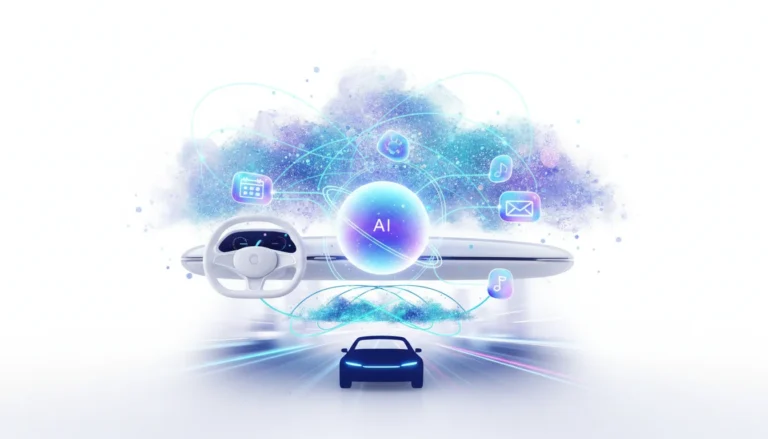
The strategic brilliance of the Gemini app lies in its platform-agnostic assault on the mobile assistant market. On Android, it’s positioned to become the default assistant, deeply integrated into the OS. But on iOS – that’s where things get even more interesting, a bit daring, you might say. Using home screen widgets and system permissions, Gemini effectively flanks Siri, offering a more capable conversational AI that’s just a tap away. This creates a compelling “switcher” narrative for millions of iPhone users frustrated with Siri’s limitations, turning Apple’s own hardware into a beachhead for Google’s AI ecosystem. It’s like weighing the upsides of familiarity against the pull of something sharper – and for many, that switch is starting to make sense.
This consumer-friendly push masks a complex technical reality, though. The seamless experience is powered by a hybrid model approach, likely leveraging the nimble on-device Gemini Nano for quick tasks and the powerful Gemini 2.5 Pro in the cloud for complex queries. That said, it raises critical questions that most reviews gloss over: privacy, data handling, and user trust. Google’s business model is built on data, a stark contrast to Apple’s long-standing (if recently challenged) privacy-first stance. While Gemini may be more capable, users are implicitly trading data for functionality – a trade-off that’s not yet fully understood by the mainstream audience now embracing the app, and one we ought to tread carefully around.
Ultimately, this moment signifies a market shift from “what can AI do?” to “how can AI help me now?” – and it’s happening faster than we might think. The competitors are clear: Microsoft is embedding Copilot across Windows and its software suite, Perplexity is redefining AI-native search, and Apple is preparing its own Apple Intelligence overhaul. Gemini’s award, though small in stature, is a powerful proof point that the winner may not be the model with the highest benchmark score, but the assistant that best disappears into the fabric of our daily lives, almost without us noticing.
Stakeholders & Impact
| Stakeholder | Impact | Insight |
|---|---|---|
| Google (Gemini) | High | Validates the strategy of building a consumer-first app, accelerating adoption beyond the tech-savvy crowd – and I’ve noticed how that’s pulling in everyday folks too. This puts immense pressure on the Workspace integration roadmap to deliver even deeper value, step by step. |
| Apple (Siri) | High | The success of the Gemini app on iOS is a direct threat, increasing pressure on Apple to deliver a revolutionary “Apple Intelligence” experience. Gemini’s existence proves users are willing to install a third-party replacement for a core OS feature – it’s like chipping away at the foundations, one user at a time. |
| Microsoft (Copilot) | Medium | Reinforces the importance of a strong mobile play. While Copilot’s integration with Windows is a key advantage, Gemini’s deep hooks into the Google app ecosystem (Maps, Calendar) on mobile create a powerful, unified experience that Microsoft must now counter – easier said than done, really. |
| General Consumers | High | Gain access to a powerful, free, and increasingly integrated AI assistant. However, this comes with the implicit need to navigate Google’s data privacy settings and understand the value exchange of personal data for advanced features – a balance that’s worth pausing over, don’t you think? |
About the analysis
Researched and written with AI assistance under the editorial responsibility of the i10X News team. The title image is an AI-generated illustration. Read our AI Use Policy. Spotted an error? Request a correction.
This i10x analysis is based on a synthesis of official Google product updates, consumer-facing tech reviews, and identified gaps in current market coverage. It is written for product managers, developers, and strategists seeking to understand the shifting competitive dynamics in the consumer AI assistant landscape and the underlying infrastructure that enables it – insights drawn from piecing together the bigger picture, as it were.
i10x Perspective
Ever catch yourself thinking how awards can feel like just another checkbox? Gemini’s “App of the Year” nod is a footnote in the history of awards but a headline in the story of ambient intelligence. It signals the AI war’s pivot from a battle of model capabilities to a contest for user habits. The most powerful LLM is useless if it’s not seamlessly accessible in the moments a user needs it – plain and simple.
Google has demonstrated that a well-designed application layer can decouple AI assistants from their native operating systems, creating a new competitive front. But here’s the thing: the unresolved tension is whether convenience will continue to trump privacy concerns as these systems become more deeply embedded in our lives. The long-term winner won’t just be the smartest assistant, but the one that earns the right to be perpetually “on” – quietly shaping how we go about our days.