Google Gemini Integrates with Cameyo for Legacy Apps
⚡ Quick Take
Google is retrofitting Gemini onto the enterprise's past. By integrating its AI with Cameyo's virtual app platform, Google is creating a powerful, and potentially risky, bridge between modern AI and the legacy Windows applications that still run the world. This is less about user convenience and more about a strategic play to control the last mile of enterprise data, shifting the battleground from the cloud to the browser tab.
Summary: Google has officially launched "Cameyo by Google," deeply integrating the Virtual App Delivery (VAD) service into Chrome Enterprise. The key development is that Gemini in Chrome can now be context-aware of these virtualized legacy Windows apps, allowing the AI to "see" and assist users with software that was never designed for AI interaction.
What happened
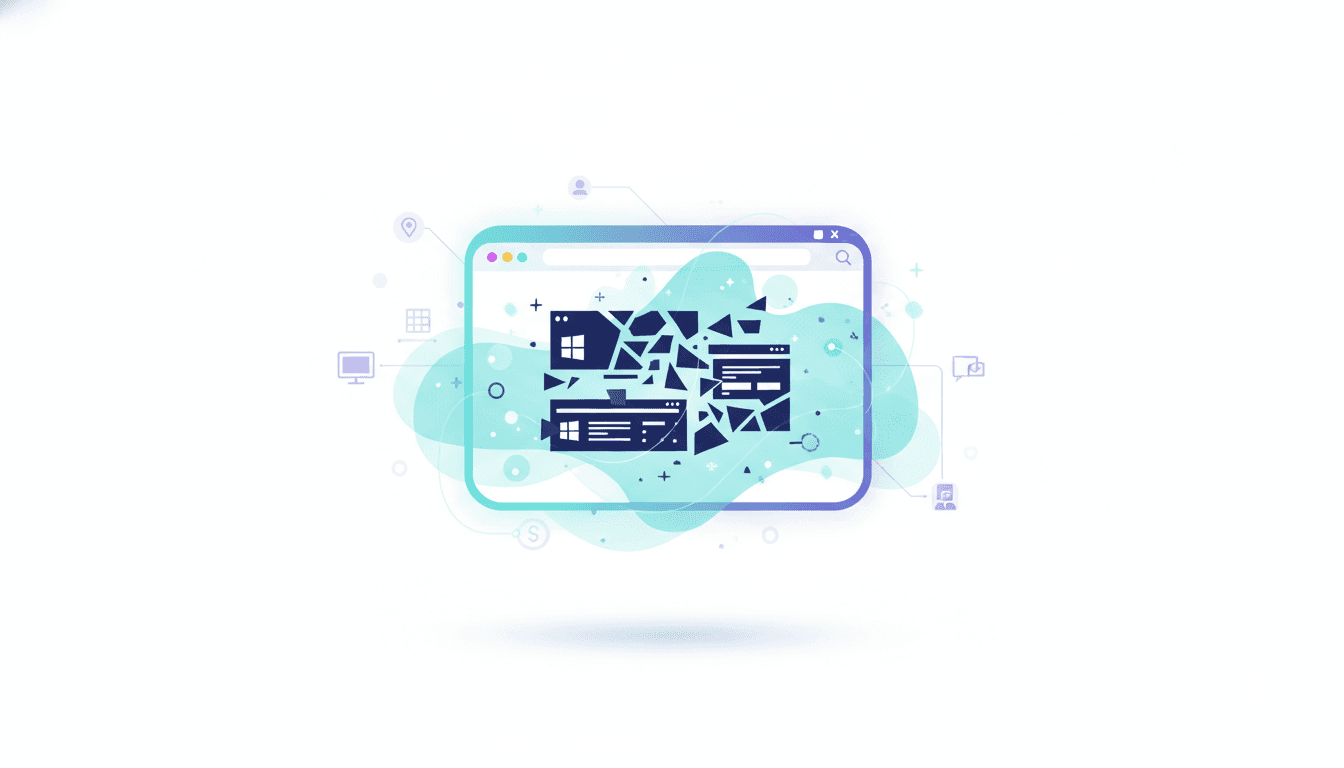
Through an enhanced integration, Chrome Enterprise users can now stream legacy Windows applications as PWAs directly in their browser. Crucially, Gemini, Google's flagship AI, can now analyze the content within the virtual app's tab to provide summaries, generate content, or answer questions—effectively layering an AI co-pilot over any Windows application. From what I've seen in similar tech rollouts, this kind of seamless overlay could change daily workflows in ways we haven't fully grasped yet.
Why it matters now
This move is a direct assault on the traditional Virtual Desktop Infrastructure (VDI) market dominated by Citrix and Microsoft (Azure Virtual Desktop). By offering a lighter, browser-native alternative, Google aims to eliminate the final barrier for enterprises wanting to adopt ChromeOS. It makes AI a Trojan horse for modernizing infrastructure without rewriting a single line of legacy code—but here's the thing, it's not without its trade-offs in terms of oversight and control.
Who is most affected
IT administrators, CIOs, and security teams are the primary audience. They gain a new tool to extend the life of critical apps but face a new frontier of AI governance. VDI vendors like Citrix and cloud providers like Microsoft will feel the competitive pressure as Google reframes the app delivery conversation around AI-native workflows. Have you ever wondered how much of your org's budget still goes to propping up those old systems? This could be the nudge toward something lighter.
The under-reported angle
While most coverage focuses on the end-user benefits, the critical story is the architectural shift in data flow and security. For the first time, a mainstream AI model is being officially sanctioned to "read" the user interface of sandboxed, virtualized legacy apps. This blurs the lines between the browser, the virtual session, and the AI model, creating urgent questions around data privacy, governance, and auditability that go far beyond typical browser security—plenty of reasons to tread carefully here, really.
🧠 Deep Dive
Ever dealt with a legacy app that just won't die, no matter how much you try to drag your team into the cloud? Google's integration of Gemini with Cameyo is a calculated move to solve one of the most stubborn problems in enterprise IT: the persistence of legacy Windows applications. For years, these apps—from aging ERP clients to custom-built financial tools—have shackled organizations to Windows desktops and complex, expensive VDI solutions. By embedding Cameyo’s VAD technology directly into Chrome Enterprise, Google isn't just offering another way to run old software; it's fundamentally changing the interaction model by injecting Gemini as an intelligent overlay. I've noticed how these kinds of bridges often start small but end up reshaping entire departments.
The core innovation lies in giving Gemini "context awareness" of the content running inside a Cameyo-powered browser tab. Unlike a deep API integration, this functions more like a highly advanced screen-reading capability for the AI. Gemini can parse the visual information and text displayed by the virtualized app—be it a customer record in a 20-year-old CRM or a data table in a legacy finance app—and act on it. This creates novel use cases, such as "Summarize the open support tickets in this legacy app," but it also opens a Pandora's box for security and compliance teams who now must govern what their AI can "see." Short and sweet: it's powerful. But that power comes with strings attached, you know?
For IT administrators, this presents a compelling but challenging proposition. On one hand, it promises escape from the "VDI tax" of complex infrastructure and licensing associated with Citrix or Azure Virtual Desktop. It’s a faster path to a cloud-first, browser-centric world—weighing the upsides, it feels like a breath of fresh air for stretched budgets. On the other hand, it introduces a new governance layer. Google is providing controls through the Admin Console, including Data Loss Prevention (DLP) and URL filtering policies, but the responsibility to define and enforce what data is "AI-readable" falls squarely on the admin. Auditing an AI's interaction with a temporary, pixel-streamed application session is a new and unsolved challenge for most compliance frameworks—one that could keep teams up at night, pondering the what-ifs.
Ultimately, this is a strategic play for the future of enterprise data. While competitors are focused on building AI into new, modern applications, Google is using Gemini as a lever to pry open the vast, siloed world of legacy systems. By turning the Chrome browser into an intelligent terminal that can not only run but also understand any application, Google positions itself to become the default intelligence layer for the entire enterprise stack—past, present, and future. The immediate question for CIOs is no longer just about TCO and performance, but about whether they are comfortable routing the data from their most critical legacy systems through a third-party AI, even one that promises enterprise-grade security. It's a pivot worth mulling over, especially as these tools evolve.
📊 Stakeholders & Impact
Stakeholder / Aspect | Impact | Insight |
|---|---|---|
Google (AI/Cloud) | High | Cements Chrome as a viable enterprise OS and uses Gemini to wedge into legacy data flows, creating a powerful moat against competitors. |
IT Admins & CIOs | High | Offers a potential VDI off-ramp and a way to "AI-enable" legacy apps, but introduces significant new AI governance and data security challenges. |
VDI Competitors | High | Directly threatens the value proposition of Citrix and Microsoft AVD by offering a lower-complexity, browser-native alternative with built-in AI. |
Security & Compliance | Significant | Forces a re-evaluation of data boundaries. The "air gap" of a virtual session is now bridged by AI, requiring new policies for data residency, logging, and privacy. |
End Users | Medium | Provides a productivity boost by adding AI assistance to previously "dumb" applications, streamlining workflows without requiring new software. |
✍️ About the analysis
This analysis is based on Google's official launch announcements, technical support documentation, and a comparative review of existing VDI and app virtualization solutions. It is written for IT leaders, enterprise architects, and security professionals tasked with evaluating the strategic impact of AI on their existing application infrastructure and governance models.
🔭 i10x Perspective
What if the key to unlocking AI's potential in the enterprise isn't in flashy new builds, but in quietly upgrading the old guard? The Gemini-Cameyo integration isn't just a feature; it's a statement about the future of AI infrastructure. It signals a shift from building AI-native ecosystems from scratch to retrofitting intelligence onto the digital bedrock of the global economy. Google is betting that the path to AI dominance in the enterprise runs through the browser and that the most effective strategy is to wrap AI around existing workflows rather than replacing them—a smart, if sneaky, approach when you think about it.
This move weaponizes the browser as the universal client for both legacy and modern systems, with AI as the unifying intelligence layer. The unresolved tension is one of control. As AI models begin to interpret and interact with our most sensitive, closed-off legacy applications, the line between assistance and surveillance will be defined not by product roadmaps, but by the rigor of enterprise governance. The next decade will be a battle over who controls the interpretation of this legacy data, and Google just fired a major shot—leaving us all to watch how the ripples spread.
Related News
LLM Medical Prognosis Limits: Why Models Fail Survival Forecasts
Benchmarks show LLMs excel at extracting data from records but struggle with calibrated long-term risk estimates. Discover why prediction drift blocks clinical use and how hybrid pipelines are emerging. Explore the guide.
Shadow AI Risks: Securing Developer Endpoints in LLM Workflows
Enterprises secure production AI but overlook Shadow AI risks from unvetted developer tools and personal LLM keys. Discover how AI Bills of Materials and full-lifecycle controls close the gap.
Grok for Startups: xAI Credit Program for Founders
xAI launches Grok for Startups with 6-12 months of unified credits for Grok, API, Build and Bot. Discover the 20/80 staged release to cut early burn rates and secure ecosystem access.