Have you ever wondered how a tech giant like Google could turn its everyday tools into an unbeatable edge in the AI race? Google’s Gemini is rapidly gaining ground on ChatGPT, not just through model improvements, but by weaponizing its greatest asset: its unparalleled distribution network. As the AI market shifts from a novelty destination to an integrated utility, Google is proving that controlling the operating system, the browser, and the productivity suite may be the ultimate competitive moat. The race is no longer just about the smartest model; it’s about owning the user’s workflow – or at least, that’s the shift I’ve noticed lately in these early days of widespread AI adoption.
Quick Take
- Summary: Recent market analyses show Google Gemini’s market share is surging, with some reports indicating it has tripled over the past year to capture between 18-20% of web-based AI chat traffic. This growth comes directly at the expense of OpenAI’s ChatGPT, which has seen its once-unassailable lead of over 70% begin to erode – a reminder that no lead lasts forever in tech.
- What happened: Multiple third-party data sources, though using different methodologies, point to the same trend: Gemini‘s user base and traffic are growing at a significantly faster rate than ChatGPT’s. While specific figures vary – from a modest 3-4% global share to a more impressive 18%+ in web traffic segments – the trajectory is consistently upward, plenty of reasons to keep an eye on it.
- Why it matters now: This signals a pivotal maturation of the AI market. The initial land grab, won by OpenAI’s first-mover advantage, is evolving into a platform war defined by ecosystem integration. Google is leveraging its deep entrenchment in Android, Google Workspace, and Search to make Gemini an omnipresent, frictionless utility, fundamentally changing the competitive landscape – and weighing the upsides, it’s hard not to see why.
- Who is most affected: Enterprises and developers must now evaluate AI platforms not just on raw model performance, but on the strategic value of deep workflow integration. For OpenAI, this is a clear warning that product superiority alone may not be enough to fend off a competitor with near-infinite distribution channels, especially as users start expecting AI to just… work seamlessly in their daily grind.
- The under-reported angle: The wide variance in Gemini‘s reported market share (from 3% to 20%) isn’t a contradiction; it’s a symptom of a market that’s difficult to measure. The key insight isn’t a single number, but the underlying driver: Google is embedding Gemini into billions of user workflows, a strategy whose impact is better measured by growth velocity and user activation than by simple web traffic share – something that’s easy to overlook amid the numbers.
Deep Dive
What if the real winner in AI isn’t the flashiest new model, but the one that’s simply everywhere you look? The era of ChatGPT’s uncontested dominance in the consumer AI space is officially over. While OpenAI captivated the world by building a must-visit destination for generative AI, Google is executing a classic ecosystem play, turning Gemini into an ambient utility woven into the fabric of its digital empire. This strategic pivot from “destination” to “distribution” is the primary force behind Gemini‘s rapid market share gains – and from what I’ve seen in market reports, it’s working like a charm.
The data landscape is messy, a clear sign of a market in flux. One analysis might report a 14% share for Gemini, while another claims 18.2%, and a third points to a more conservative global figure. This isn’t poor measurement; it reflects the fragmented nature of AI interaction. The ~18-20% figures largely track web traffic share, a metric where Google can easily drive users. Lower figures often attempt to capture a more holistic view, including dedicated app usage where ChatGPT remains strong. The crucial takeaway isn’t to fixate on one number, but to recognize the momentum that Google’s integration strategy is creating across all segments – it’s that steady build-up that’s got me thinking about long-term shifts.
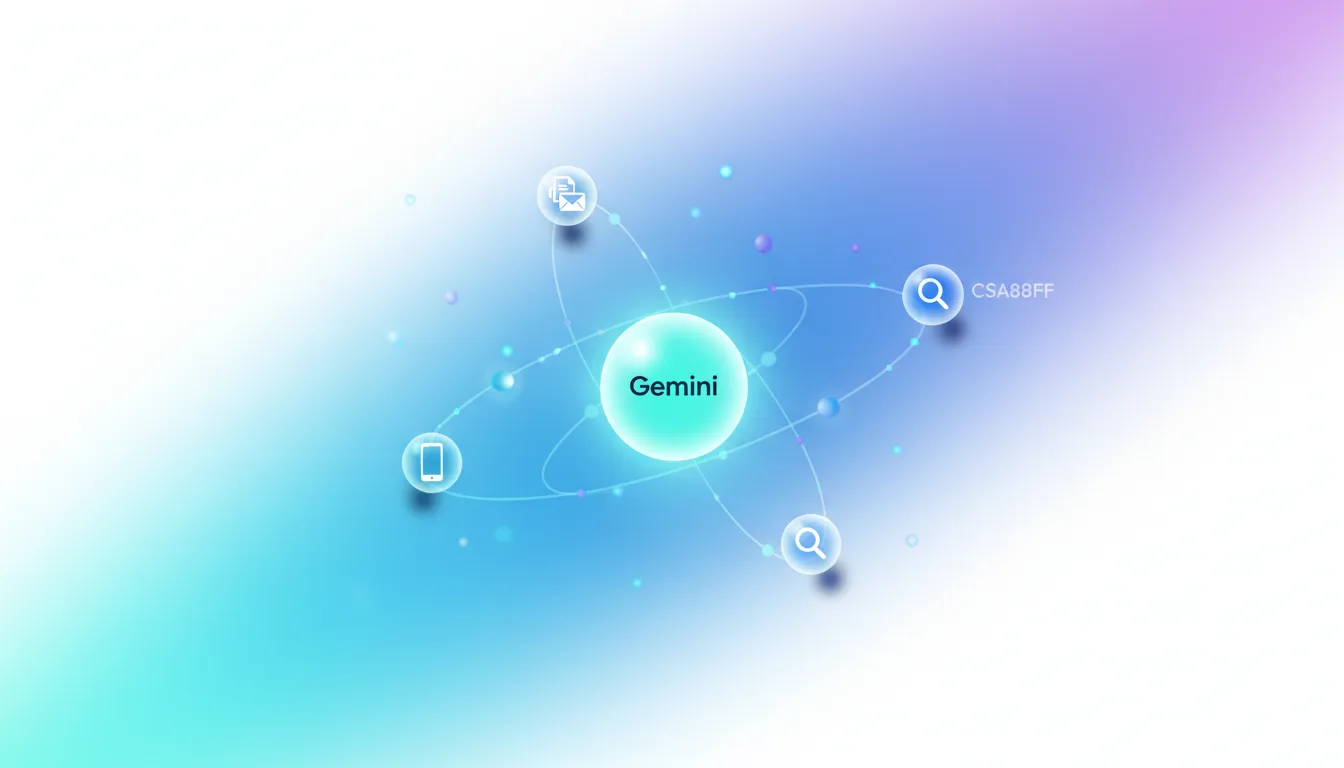
Investor and strategic analyses highlight the core driver: distribution is the new moat. Where OpenAI requires users to consciously open an app or website, Google is embedding Gemini at points of zero friction. It’s the AI assistant in Android, the writing partner in Gmail and Docs, and an emerging component of the world’s dominant search engine. This “workflow integration” means Gemini is winning by being the default, most convenient option, even if its models aren’t always perceived as the absolute state-of-the-art – but here’s the thing, convenience often trumps perfection in user habits.
This forces a critical re-evaluation for the entire AI industry. The competitive battlefield is expanding from model leaderboards and API performance to the harsh realities of user acquisition and retention. Google’s strategy suggests that future AI dominance may belong not to the company that builds the first AGI, but to the one that most successfully integrates powerful AI into the tools people already use every day. For rivals like OpenAI, Anthropic, and others, the challenge is no longer just building a better model – it’s building a distribution network that can compete with one of the most powerful in history, a tall order when you think about it.
Stakeholders & Impact
- Google (Alphabet): Impact — High. Insight — Validates the strategy of leveraging its existing ecosystem (Android, Workspace) as a distribution channel for AI, turning a product into a core platform feature – a smart move that’s paying off.
- OpenAI: Impact — High. Insight — Faces its first significant, sustained competitive pressure. Must now accelerate its own distribution strategy beyond a standalone app, possibly through deeper ties with partners like Microsoft, or risk falling behind.
- Enterprise Users: Impact — Medium–High. Insight — Gain more negotiating power and choice. The decision is no longer just “which model is best?” but “which ecosystem offers the most productivity gains?” – and that opens up real possibilities.
- Developers & Startups: Impact — Medium. Insight — The bar for standalone AI apps just got higher. Success will require either hyper-specialized use cases or finding a unique distribution channel that tech giants don’t already own, which isn’t easy these days.
About the analysis
Researched and written with AI assistance under the editorial responsibility of the i10X News team. The title image is an AI-generated illustration. Read our AI Use Policy. Spotted an error? Request a correction.
This is an independent i10x analysis based on a synthesis of publicly available market share reports, third-party traffic data, and strategic commentary from industry and financial analysts. It is designed to provide developers, product leaders, and strategists with a clear view of the competitive dynamics shaping the AI platform landscape – nothing more, nothing less, just the patterns as they stand.
i10x Perspective
Ever catch yourself pondering if the giants of tech are rewriting the rules of innovation right under our noses? Gemini‘s ascent isn’t just a story about Google catching up; it’s a preview of the next chapter in the AI platform wars. Big Tech will increasingly leverage its legacy moats – operating systems, social graphs, and enterprise software – to create gravitational pull for its AI models. We are witnessing the shift from an application-centric AI market to an OS-centric one, and it’s fascinating to watch unfold.
The unresolved tension for the next decade is whether a truly disruptive, standalone AI model can ever overcome the brute-force distribution advantage of an integrated incumbent. The battle between Gemini and ChatGPT is a modern-day reenactment of classic platform wars, and the outcome will define whether the future of intelligence is concentrated within existing ecosystems or distributed across a new generation of specialized players – either way, it’ll shape how we all interact with AI down the line.