Google is giving select researchers and developers early API access to Gemini “Deep Think,” a new advanced reasoning mode. This isn’t just another model update; it’s a fundamental shift towards specialized, high-intensity computation for complex problem-solving, creating a new tier of AI capability that trades speed for depth.
Quick Take
- Summary: : Google has extended early API access for “Deep Think,” an advanced reasoning mode within its Gemini model family. This mode is designed to handle complex, multi-step tasks that go beyond the capabilities of standard, faster inference modes, signaling a strategic move to court developers building sophisticated AI agents and research tools.
- What happened: : Instead of releasing a new model, Google is exposing a specialized operational mode. Deep Think is engineered for deliberate, step-by-step reasoning, likely leveraging internal techniques like planning, self-reflection, and advanced tool-use. This access is currently limited to a pilot program for researchers and developers.
- Why it matters now: : The AI market is maturing beyond a singular focus on chatbot performance. Success now depends on an AI’s ability to reliably perform complex, agentic work. Deep Think is Google’s direct play to capture this high-value segment, competing with OpenAI’s perceived strengths in code interpretation and multi-step task execution.
- Who is most affected: : AI developers, machine learning engineers, and research scientists are the primary audience. They now have a new, powerful tool for building applications in science, code generation, and complex data analysis, but they also face a new learning curve in prompt engineering, cost management, and system evaluation.
- The under-reported angle: : While news outlets are covering the announcement, they are missing the critical operational trade-offs. Deep Think will inevitably come with higher latency and cost per call. The real story is how developers will navigate this new cost-for-quality dynamic and what new patterns for prompting, governance, and evaluation are required to productionize such a powerful – and potentially unpredictable – capability.
Deep Dive
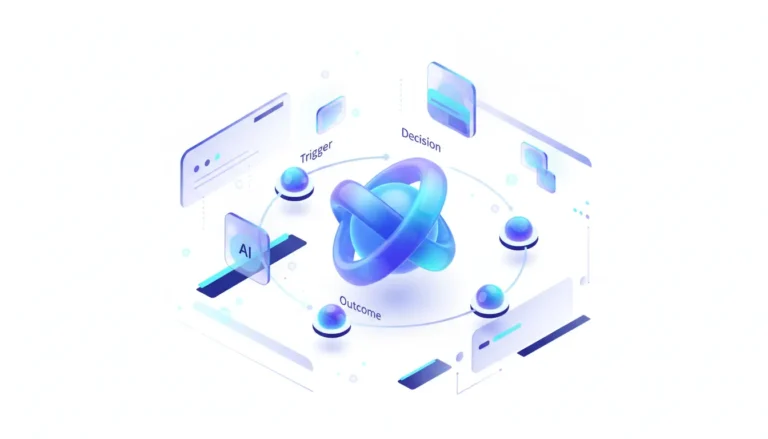
Have you ever wondered what happens when an AI pauses to really think things through, rather than just firing off quick responses? Google’s introduction of Gemini Deep Think via an early access API isn’t a simple feature toggle; it represents the formal segmentation of AI reasoning into distinct tiers of performance and cost. Where standard Gemini modes are optimized for speed and conversational fluency, Deep Think is the AI equivalent of a system switching into a “slow, deliberate thought” process. This mode is likely a software-defined layer that orchestrates more advanced techniques like chain-of-thought, tree-of-thought, or self-consistency checks, allowing the model to plan, execute, and reflect on complex instructions without requiring the end-user to engineer massive, intricate prompts.
For developers, this creates a crucial new decision point: when is the computational overhead of Deep Think justified? From what I’ve seen in similar evolutions, the current web coverage, focused on the “what” of the announcement, entirely misses this practical dilemma. Using Deep Think won’t be a simple substitution. It will be a strategic choice for specific tasks – like generating a complex software component, analyzing a dense scientific paper, or planning a multi-stage business process – where the cost of failure is high and the need for reliable, deep reasoning outweighs the demand for low-latency responses. The challenge for engineering teams will be to build systems that can dynamically route queries to the right mode, optimizing for a blend of cost, speed, and accuracy – plenty of reasons to tread carefully there, really.
This move also signals a necessary evolution in the developer ecosystem. Unlocking Deep Think’s potential will demand more than clever prompting. Success will require a new “developer playbook” for advanced reasoning that is currently a major content gap. This includes mastering prompting patterns for tool-use and planning, but more importantly, establishing rigorous evaluation frameworks. Teams will need reproducible benchmarks and regression tests specifically for reasoning tasks to ensure that an agent’s enhanced capabilities don’t introduce subtle, high-impact failure modes. Without this discipline, the power of Deep Think could easily be undermined by its complexity – a point worth lingering on as we push these boundaries.
Ultimately, by offering Deep Think as a distinct API mode, Google is placing a bet on the future of AI agents and sophisticated workflows. It’s a direct challenge to the perception that other models, particularly from OpenAI, hold an edge in complex reasoning and tool integration. This framing also opens the door for new governance and safety patterns. As models become more capable of autonomous reasoning, the need for robust human-in-the-loop oversight, strict data handling policies for research use, and transparent logging becomes paramount. Deep Think is not just a more powerful engine; it’s a test case for how the industry will manage the risks that come with it, leaving us to ponder the bigger picture.
Stakeholders & Impact
| Stakeholder / Aspect | Impact | Insight |
|---|---|---|
| AI Developers & Builders | High | Provides a powerful new tool for complex tasks but requires new skills in prompting, evaluation, and cost management. The learning curve will be significant. |
| Google (Gemini Team) | High | Strategically segments their API offering, creating a “premium” reasoning tier to compete directly with rivals on high-value agentic tasks, not just chat. |
| Enterprises & End-Users | Medium | Enables a new class of more reliable and sophisticated AI applications in fields like R&D, legal analysis, and software engineering. Could lead to higher software costs. |
| AI Infrastructure | Medium | Deep Think’s compute-intensive nature will drive higher GPU utilization per query. An increase in its adoption will place further demand on cloud data centers. |
| The AI Market | Significant | Pushes the competitive narrative beyond model-vs-model leaderboards towards the programmability and reliability of different reasoning modes. |
About the analysis
Researched and written with AI assistance under the editorial responsibility of the i10X News team. The title image is an AI-generated illustration. Read our AI Use Policy. Spotted an error? Request a correction.
This is an independent i10x analysis based on a structured review of official announcements and competitor news coverage. Its insights are derived from identifying critical gaps in the current discussion – specifically around developer implementation, cost/latency trade-offs, and production governance – to provide a forward-looking perspective for developers, engineering managers, and CTOs building with advanced AI.
i10x Perspective
Ever feel like the AI world is splitting into fast lanes and thoughtful detours? The launch of Gemini Deep Think isn’t about one model getting smarter; it’s the market formalizing a split between “fast AI” and “slow AI.” We are moving from a world where we use one-size-fits-all models to one where we deploy specialized reasoning engines for specific tasks. This commoditizes deliberate thought as a programmable API feature.
That said, the critical long-term tension to watch isn’t whether Deep Think is “better” than a competitor, but how the ecosystem balances its immense power against its inherent costs and risks. The next five years will be defined by the race to build the tools, guardrails, and economic models to manage this new, powerful – and expensive – tier of machine intelligence, a shift that’s bound to keep us on our toes.