Gemini Training Data: Google's Consumer vs Enterprise Policies
⚡ Quick Take
Have you ever wondered why the story around Gemini's training data feels so off-kilter? Google's intricate, product-by-product data policies have carved out a real divide between what folks think is happening and the actual setup in the enterprise world—where privacy promises are solid, but the messaging just hasn't landed right. It's not one blanket policy here; it's a deliberate split in the AI landscape, separating everyday users from business heavyweights.
Summary: Google runs a two-pronged strategy for how data feeds into its Gemini models. On the consumer side, with Gemini Apps, your chats might get looked over and used to sharpen the AI (and yes, you can opt out). But flip to the enterprise side—in Google Cloud or Workspace—and Google straight-up commits that your prompts, replies, and private data won't touch the core model training.
What happened: There's this growing rift between Google's detailed, compartmentalized docs on data handling and the widespread worry that stuff like your Gmail is getting sucked into Gemini's black box. It all boils down to those isolated policy pages for each product, which leaves the door wide open for rumors and mix-ups to take hold.
Why it matters now: Trust isn't optional if AI's going to shift from cool experiment to essential backbone for businesses. Especially as companies in tight industries eye Gemini, they need crystal-clear info on data rules, where it lives, and those privacy barriers. For Google, the tech's fine—it's the storytelling that's the real hurdle.
Who is most affected: Think enterprise CTOs, CISOs, and compliance pros—they're on the hook for checking AI tools and demanding ironclad guarantees on data treatment. Even developers leaning on Gemini Code Assist want to be sure their code stays under wraps, no questions.
The under-reported angle: It's not so much that Google's being vague; the market's just not quite wrapping its head around these tailored AI policies per product. The bigger tale is how they've built this "privacy moat" on purpose for enterprise AI. That's no slip-up in comms—it's smart segmentation, tailoring AI to match different levels of risk tolerance.
🧠 Deep Dive
What keeps nagging at Google's AI push—"Is my data fueling Gemini's training?"—boils down to a straightforward yet tricky answer: it all hinges on which version of Gemini you're dealing with. Public chatter, driven by that lingering wariness of Big Tech's data habits, tends to lump the chatty consumer Gemini in with the robust enterprise tools tucked into Google Cloud and Workspace. Google's docs—spread out over dev sites, help pages, and trust hubs—do tackle this head-on, but they haven't woven it into one clear, suspicion-busting story that sticks.
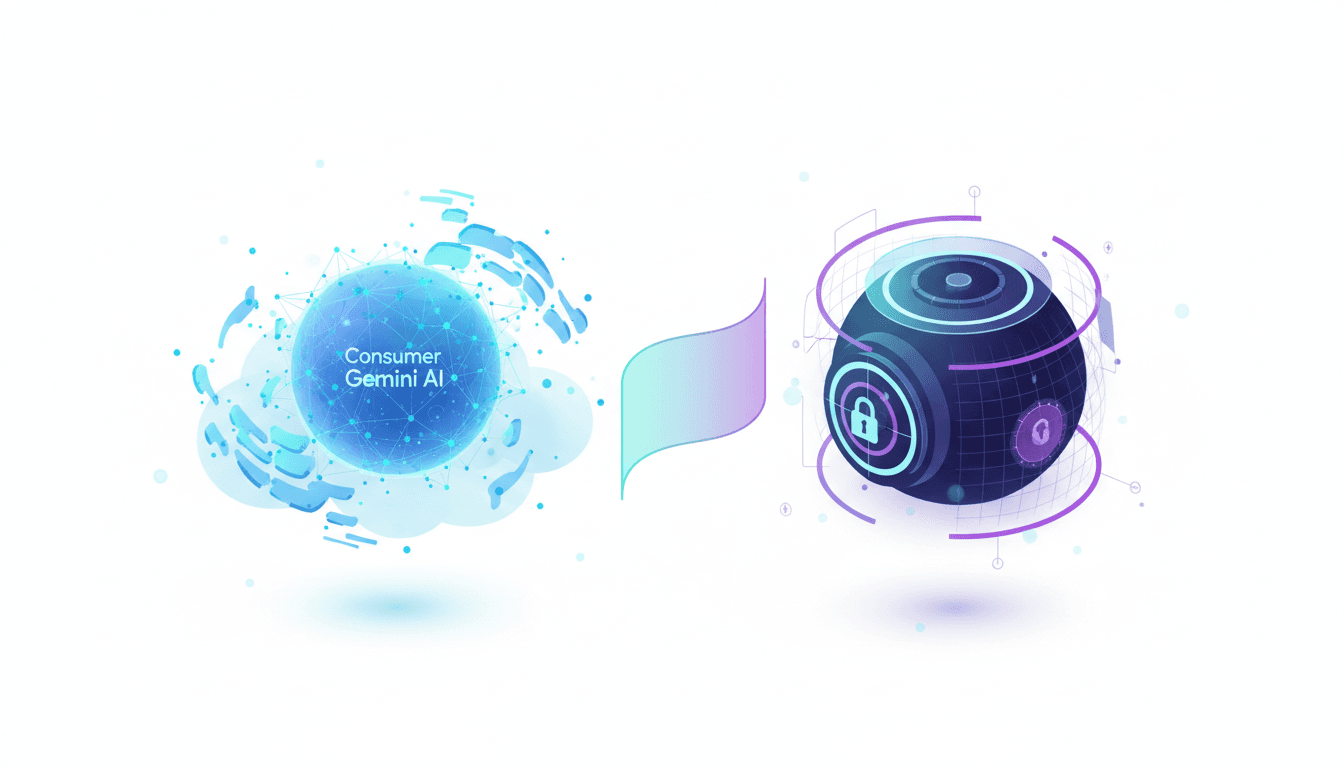
The split is pretty clear-cut. Take the free Gemini web app at gemini.google.com: the privacy notice there says your talks get processed to make things better, and while you can wipe your history, they might hang onto a backup for a bit. That's the consumer deal—you get it gratis, and your anonymized inputs, sometimes eyed by humans, feed into tweaks like Reinforcement Learning from Human Feedback (RLHF). It's the usual bargain for most free AI generators out there, plenty of reasons for it, really.
That said, Gemini for Google Cloud and Gemini for Workspace? They come with a whole different level of privacy assurance, the kind enterprises count on. For these paid setups, Google pledges outright that your prompts, the AI's outputs, your code, and any other inputs stay off-limits for training the base Gemini models. Treated as your own content, it's wrapped in the same strong protections and location rules as everything else in Cloud or Workspace. From what I've seen in these setups, that's the key barrier businesses insist on—their secrets don't bleed into some worldwide model.
The mix-up? It comes from not teasing apart the AI's life stages. Foundational Training pulls from a huge, fixed pile of public web stuff, licensed sets, and code libs to build out models like Gemini 1.0 or 1.5— all with a hard cutoff date. Then there's Fine-tuning and Product Improvement (think RLHF), where user interactions help make it safer, more useful—that's where opting in or out counts for consumers. And Inference? That's just the model spitting back a response to your prompt on the spot, no learning involved, which is par for enterprise use. Miss those differences, and the whole debate stays stuck in doubt, doesn't it?
📊 Stakeholders & Impact
These varied "Geminis" shake out with real differences in fallout and duties. But here's the thing—the table below lays out the data training rules across Google's key offerings, to cut through the noise.
Gemini Product Line | Training on User Data? | Insight for Enterprise |
|---|---|---|
Gemini Apps (Consumer) | Yes, with opt-outs. Human reviewers may see conversations to improve the service. | Establishes the baseline consumer model. Not suitable for sensitive business data. |
Gemini for Workspace | No. Customer data (Docs, Gmail, etc.) is not used for training foundational models. | Provides the core assurance for businesses using Google's productivity suite. Admin controls offer further oversight. |
Gemini for Google Cloud | No. Prompts, responses, and customer code are not used for training. Governed by Cloud data processing terms. | The highest level of data isolation, designed for regulated industries and developers building on the Google Cloud Platform. |
✍️ About the analysis
I've put this together as an independent take from i10x, drawing from a careful sift through Google's open docs—like the Cloud Trust Center, dev guides, and those product-tailored privacy notices. It's meant to shed light for tech execs, security leads, and coders facing those tough calls on bringing AI into the fold.
🔭 i10x Perspective
Google's not peddling just an AI brain; they're offering layers of trust you can buy into. That line between consumer and enterprise data rules for Gemini? It points to where AI's headed—a clean break between the wide-open, data-thirsty public space and the locked-down, promise-backed business realm. Players like Google and Microsoft, with their grip on consumer floods and deep enterprise ties, hold a real edge over AI newcomers focused on one side. The coming wave in AI rules won't be vague "transparency" talk— it'll be about those solid, checkable data deals that shore up the divides between these spaces, shaping what comes next.
Related News

LLM Medical Prognosis Limits: Why Models Fail Survival Forecasts
Benchmarks show LLMs excel at extracting data from records but struggle with calibrated long-term risk estimates. Discover why prediction drift blocks clinical use and how hybrid pipelines are emerging. Explore the guide.

Shadow AI Risks: Securing Developer Endpoints in LLM Workflows
Enterprises secure production AI but overlook Shadow AI risks from unvetted developer tools and personal LLM keys. Discover how AI Bills of Materials and full-lifecycle controls close the gap.
Grok for Startups: xAI Credit Program for Founders
xAI launches Grok for Startups with 6-12 months of unified credits for Grok, API, Build and Bot. Discover the 20/80 staged release to cut early burn rates and secure ecosystem access.