Google Research has unveiled a framework for designing and simulating complex human-AI group conversations, signaling a strategic pivot from single-user chatbots to multi-agent AI systems capable of orchestrating social dynamics. This move lays the groundwork for the next generation of AI-native collaboration tools, but also surfaces profound new challenges in ethics and governance.
Quick Take
- Summary: Ever wonder how AI might step into a crowded room and actually keep things moving smoothly? Google has developed and detailed a research pipeline for authoring, simulating, and visualizing conversations involving multiple humans and AIs. Instead of a simple 1:1 chat, this system models the chaotic, multi-threaded nature of group discussions—allowing designers to define roles, goals, and turn-taking policies to test how an AI might facilitate a meeting or classroom debate before it’s ever deployed. From what I’ve seen in similar tech evolutions, this kind of foresight could change the game.
- What happened: Researchers built an integrated toolchain that moves beyond ad-hoc design. It includes an authoring component for creating scenarios, a simulation engine to run humans and AI agents through them, and a visualization dashboard to analyze conversational patterns like participation balance, topic shifts, and interruptions. This transforms the art of designing group interactions into a reproducible science—practical steps, really, that bridge the gap between idea and implementation.
- Why it matters now: The LLM industry is reaching the functional limits of dyadic (one-on-one) assistants. The real value for enterprises and education lies in augmenting group collaboration. This framework is a direct blueprint for building socially-aware AI, from meeting co-pilots that can ensure all voices are heard to AI tutors that can manage breakout group discussions. But here’s the thing: we’re at a tipping point where ignoring group dynamics just won’t cut it anymore.
- Who is most affected: Developers at enterprise collaboration platforms like Microsoft (Teams), Slack, and Zoom, who now have a model for building next-gen AI facilitators. It also puts AI ethicists and UX researchers on high alert, as they must now grapple with designing systems that actively shape human social dynamics, not just respond to individual queries. Plenty of reasons to pay attention there, especially as these tools scale up.
- The under-reported angle: While Google’s research demonstrates a powerful simulation capability, the real story is the chasm between the lab and the real world. The framework currently exists as a research concept, not an open-source tool. The lack of concrete ethical guidelines for AI-led social moderation, integration paths for platforms like Google Meet, or standards for accessible and cross-cultural communication reveals the next major set of hurdles for productizing socially intelligent AI. It’s a reminder—we’re building fast, but thoughtfully, or risk stumbling.
Deep Dive
Have you ever sat in a meeting where one voice drowns out the rest, and thought, “There has to be a better way”? For years, the dominant paradigm for conversational AI has been the dyad: one human, one bot. This 1:1 model, from customer service chatbots to personal assistants, has defined the user experience. But this simple structure fails to capture the complexity of real-world collaboration, which happens in groups—messy, overlapping, full of interruptions. Google’s new research directly confronts this limitation, proposing a systematic framework to move AI from a mere respondent to a social orchestrator.
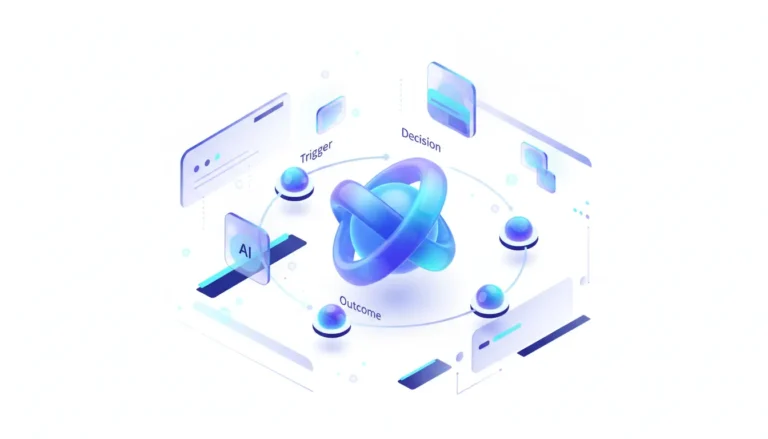
The core innovation is an integrated pipeline that replaces guesswork with engineering—tread carefully here, as it’s not magic, just smart design. First, an authoring tool allows designers to explicitly define a conversation’s architecture: who are the participants (human and AI), what are their roles (e.g., “skeptic,” “facilitator,” “expert” for an AI agent), and what are the rules of engagement (“turn-taking policies”). Second, a simulation engine runs these scenarios, orchestrating interactions and logging key events. This allows researchers to stress-test how an AI facilitator might handle a heated debate or ensure a shy team member contributes, all within a controlled environment—safe space to experiment, you know? Finally, visualization dashboards provide analytical views of the chaos, using graphs and timelines to reveal who dominated the conversation, whether key topics were covered, and where conflicts arose. I’ve noticed how these kinds of visuals can uncover patterns we’d otherwise miss.
This isn’t just an academic exercise; it’s the technical foundation for the next wave of enterprise and educational AI. Imagine a Microsoft Teams or Google Meet co-pilot that does more than just transcribe—powered by this logic, it could actively moderate a discussion to prevent interruptions, prompt quieter participants for input, or dynamically create subgroups to tackle specific problems. The research provides a blueprint for turning passive AI “assistants” into active “facilitators,” a shift that could fundamentally reshape knowledge work and online learning, weighing the upsides against the unknowns.
However, the research also illuminates the steep climb ahead. By presenting a tool to design social dynamics, Google surfaces a new ethical minefield. What constitutes a “good” or “fair” conversation, and who gets to decide? An AI programmed to maximize “participation balance” could inadvertently stifle expert opinion or create an artificial sense of consensus—these are the tricky bits that linger. The current research focuses on the “how” but leaves the critical “what” and “why” unanswered. Without robust, open frameworks for ethical governance, accessibility, and cross-cultural norms, these powerful orchestration tools risk becoming invisible manipulators of human interaction, enforcing a single, corporate-defined version of effective collaboration. That said, it’s a conversation worth having now, before it escalates.
Stakeholders & Impact
| Stakeholder / Aspect | Impact | Insight |
|---|---|---|
| AI / LLM Providers | High | This forces model development beyond just responding to queries toward tracking multi-party conversational state, intent, and social cues. It raises the bar for what a “state-of-the-art” model must be capable of—demanding more nuance, really. |
| Enterprise Collaboration Platforms (Slack, Microsoft, Zoom) | High | Provides a clear R&D roadmap for moving beyond transcription/summarization into active AI facilitation. The ability to simulate AI-led meeting moderation offers a significant competitive advantage, one that could tip the scales in crowded markets. |
| UX & HCI Researchers | Significant | Offers a powerful new toolkit for studying complex human-computer interaction in a controlled, reproducible manner. It enables empirical testing of theories about group dynamics and AI influence—tools like this make the abstract feel tangible. |
| Ethicists & Regulators | Significant | Opens a pandora’s box of governance challenges. Questions of power, bias, manipulation, and consent become paramount when an AI is not just a participant but the referee of human discussion, steering outcomes in ways we can’t ignore. |
About the analysis
Researched and written with AI assistance under the editorial responsibility of the i10X News team. The title image is an AI-generated illustration. Read our AI Use Policy. Spotted an error? Request a correction.
This is an independent i10x analysis based on Google Research’s recent publication on human-AI group conversations. It connects the research findings to the broader market trends in AI, enterprise software, and infrastructure, and is written for product leaders, AI engineers, and strategists mapping the future of collaborative intelligence—sharing insights as they unfold, in a way.
i10x Perspective
What if AI didn’t just answer questions, but helped steer the whole discussion? Google’s framework marks the beginning of AI’s transition from an information tool to a social agent. The next five years will see a competitive race not just to build bigger models, but to imbue them with social intelligence capable of orchestrating human collaboration. The winners won’t be those with the best benchmarks on text generation, but those who can successfully deploy AI as a facilitator, moderator, and creative partner in complex group settings—it’s about the human element, after all.
The critical unresolved tension is one of governance. As AI becomes the invisible hand guiding our meetings, brainstorms, and online communities, who writes its rules of conduct? The greatest risk is not that these systems will fail, but that they will succeed too well—silently optimizing human interaction according to corporate-defined metrics of “efficiency” and “fairness,” and in doing so, subtly shaping what is discussed, who is heard, and what conclusions are reached. The next frontier of AI safety isn’t about preventing rogue agents; it’s about ensuring transparency and control in AI-mediated social spaces, a balance we need to strike thoughtfully.