Google is integrating its source-grounding AI, NotebookLM, directly into Gemini notebooks, transforming the general-purpose chatbot into a specialized research assistant. The move is a direct assault on the LLM trust problem and a strategic play to own the high-value knowledge worker desktop, putting pressure on competitors like Notion, Microsoft, and Perplexity.
Quick Take
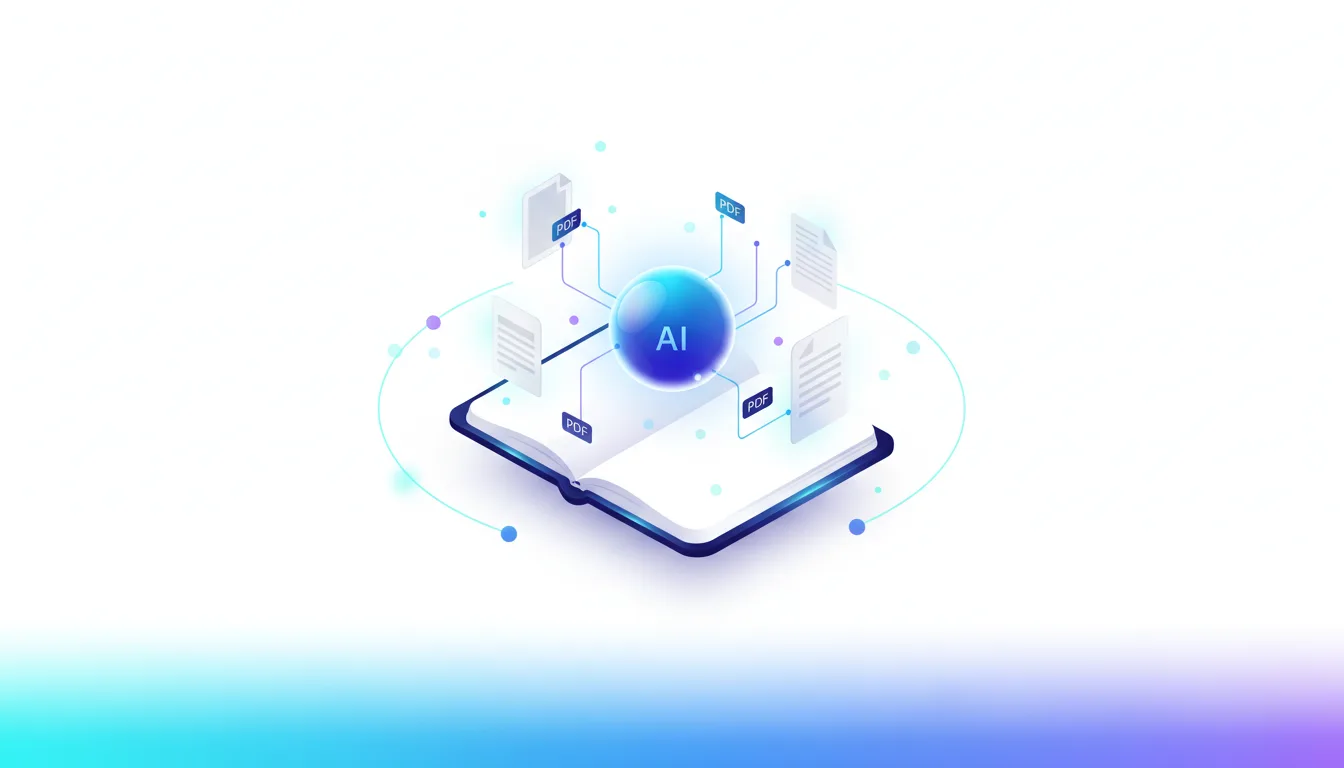
- Summary: Google has announced the integration of NotebookLM capabilities within its Gemini notebooks. This allows users to add their own source materials—like Google Docs and uploaded PDFs—directly to a notebook, ensuring the AI’s responses are grounded in and cited from that specific context.
- What happened: Instead of having a separate NotebookLM app and a separate Gemini chat, the two are merging. Users can now load up a Gemini notebook with their research, and any questions, summaries, or outlines they generate with the AI will be directly tied to those documents, complete with citations.
- Why it matters now: Ever wonder why AI tools sometimes feel like they’re guessing in the dark? This is Google’s answer to the pervasive AI “hallucination” and trust deficit. By tethering Gemini to a user’s own knowledge base, it pivots the tool from a creative-but-unreliable chatbot into a verifiable research partner. It’s a critical step in the race to build AI that is genuinely useful for high-stakes academic and professional work – you know, the kind where accuracy isn’t optional.
- Who is most affected: Knowledge workers, students, and researchers will see an immediate change in their workflows. Productivity tool vendors like Notion (with Notion Q&A) and Microsoft (with Copilot Notebook) now face a more directly comparable competitor within the core Google ecosystem. From what I’ve seen in similar shifts, this could shake up daily routines in ways that stick around.
- The under-reported angle: This integration blurs the lines between a chatbot, a document editor, and a personal knowledge base. Google isn’t just adding a feature; it’s creating a new, hybrid product category – the “Source-Aware AI Notebook” – and escalating the battle for the default environment where thinking and research happen, plenty of reasons to watch closely.
Deep Dive
Have you ever juggled tabs and apps just to double-check an AI’s output, feeling like you’re doing half the work yourself? Google’s decision to embed NotebookLM within Gemini notebooks is more than a simple feature update; it’s a fundamental shift in product strategy, one that tackles that frustration head-on. For months, the AI industry has wrestled with the “last mile” problem of LLM reliability – the gap between flashy demos and everyday trust. By making Gemini “source-aware,” Google is positioning trust, not just raw power, as the next competitive frontier. And really, that’s where the magic – or the frustration – has always been.
The core pain point this solves is the constant context-switching and verification burden placed on users, who previously had to juggle their documents in one window and a generic chatbot in another, always skeptical of the AI’s output. I’ve noticed how that skepticism builds up over time, turning what should be a helper into a headache.
The new workflow directly addresses this gap, smoothly and without the usual fuss. A user can create a Gemini notebook for a specific project – say, a literature review or market analysis – and “feed” it a curated set of Google Docs or PDFs. From that point on, the AI’s world is limited to that information. When asked to summarize key arguments or find specific data points, Gemini won’t just provide an answer; it will generate citations that link back to the exact passages in the user’s source material. This transforms the AI from a black box into a transparent research accelerator – straightforward, reliable, and tied right to what matters.
This move lights a fire under the evolving market for AI-native productivity tools, that’s for sure. While standalone apps like Perplexity have built a brand on citable, web-sourced answers, Google is bringing that capability directly into its own ecosystem. More pointedly, it creates a direct competitor to Notion Q&A and Microsoft’s Copilot Notebook, which aim to perform similar “chat with your docs” functions. Google’s advantage is its deep integration with Google Drive and the rest of its Workspace suite, potentially creating a stickier, lower-friction environment for its millions of existing users – the kind that keeps you coming back without even thinking about it.
However, this tight integration of personal data and AI raises critical questions that go beyond productivity, questions that linger a bit. As users begin grounding Gemini in proprietary research, sensitive corporate documents, or personal notes, data privacy and governance become paramount. Where is this “context” stored? How is it sandboxed between different notebooks or users? And what happens in collaborative environments? While Google’s help documents provide initial guidance, the real-world implications of using AI this intimately with sensitive information are a field that both enterprise IT and individual users will need to navigate carefully. The shift is from a public-facing AI to a deeply personal one, and the rules of engagement are still being written – or at least, they’re evolving as we go.
Stakeholders & Impact
| Stakeholder / Aspect | Impact | Insight |
|---|---|---|
| Google (AI / LLM Provider) | High | It strengthens the Gemini ecosystem against competitors by solving the trust/citation problem – a smart way to build loyalty. Creates a stickier, more defensible product for knowledge work, the sort that feels essential once you start using it. |
| Productivity Tool Vendors (Notion, Microsoft) | High | Intensifies competition right where it hurts. The bar for “AI-assisted notebooks” is now set by a native Google feature, forcing competitors to differentiate on workflow, UI, or deeper integrations – or risk getting left behind. |
| Knowledge Workers & Students | Medium–High | Offers a significant workflow improvement by unifying research and AI assistance. Reduces the risk of using AI for serious work and lowers the barrier to entry for creating grounded summaries and outlines – finally, something that just works without the second-guessing. |
| Enterprise IT & Security | Significant | Creates new data governance challenges that can’t be ignored. They must now develop policies for how employees can use proprietary company data as a source context for a cloud-based AI, weighing the upsides against the risks every step. |
About the analysis
Researched and written with AI assistance under the editorial responsibility of the i10X News team. The title image is an AI-generated illustration. Read our AI Use Policy. Spotted an error? Request a correction.
This analysis is an independent i10x product based on Google’s official announcements, competitor feature sets, and a synthesis of initial media coverage. It is designed to provide product managers, developers, and enterprise decision-makers with a strategic view of the evolving AI-native productivity landscape – sharing what stands out, without the fluff.
i10x Perspective
Isn’t it telling how AI keeps evolving from hype to something you can actually rely on? The fusion of NotebookLM and Gemini signals the end of the “generic chatbot” era, bold as that sounds. The next wave of value in applied AI won’t come from building ever-larger models, but from creating tools that can reliably and transparently operate on specialized, private datasets – tools that fit your world, not some abstract one.
This move reframes the AI race from a contest of raw intelligence to one of contextual awareness and trust. As Google, Microsoft, and others vie to become the default “reasoning layer” for personal and corporate knowledge, the key battle will be fought not in model benchmarks, but in the seamless, secure, and verifiable workflows they enable. The unresolved tension is clear: can these systems deliver radical productivity gains without creating opaque data silos and new privacy vulnerabilities? It’s a question worth pondering as we tread into this territory.