Google's 2026 AI Strategy: CapEx Surge and Gemini Push
⚡ Quick Take
Google is telegraphing a massive strategic convergence for 2026, where a "significant" jump in capital expenditure will directly fuel a three-front AI offensive. This isn't just about more data centers; it's the financial blueprint for deploying next-generation Gemini models across a new class of consumer hardware, including its anticipated "Android XR" platform, while simultaneously scaling its enterprise AI agent business to challenge Microsoft's dominance.
Summary
Google has confirmed plans for a major capital expenditure increase in 2026, moving beyond its already record-breaking spending. From what I've pieced together in their parallel roadmaps, this investment lays the groundwork for a unified push—tying next-gen Gemini models, AI-native hardware (Pixel, Android XR), and enterprise cloud services (AI Agents) into one cohesive strategy.
What happened
Public chatter about Google's 2026 plans pops up in bits and pieces—financial calls here, consumer tech whispers there, enterprise blogs scattered about—but the through line is clear: a huge infrastructure ramp-up. The company laid it out plainly, guiding for that "significant" CapEx leap in 2026, which anchors all those otherwise pie-in-the-sky product and AI timelines.
Why it matters now
Ever wonder what it takes to shift from tinkering with AI to owning the field? This move marks Google's pivot to all-out deployment and platform takeover. The sheer size of the spend aims to carve out a real edge in AI infrastructure—think moats built from custom chips right through to worldwide data centers—that rivals without that full-stack control will find tough to bridge. It's Google's big wager: the tech battles of the next ten years hinge on who masters the smarts underneath it all.
Who is most affected
Developers, you'll want to gear up for AI-first worlds like Android XR. Enterprises? Get ready for a beefed-up Google Cloud rolling out these potent AI agents. And for the big players—Meta, Apple, Microsoft/OpenAI—here comes a foe whose hardware dreams, software plays, and infrastructure muscle are locking into a seamless whole.
The under-reported angle
Coverage often silos Google's 2026 CapEx hike, those consumer hardware murmurs, and enterprise AI visions as standalone tales. But here's the thing: they're woven together. That capital pour isn't some dry ledger entry; it's the raw necessity fueling Gemini 4, an XR world humming along, and those self-running AI agents transforming enterprise ops.
🧠 Deep Dive
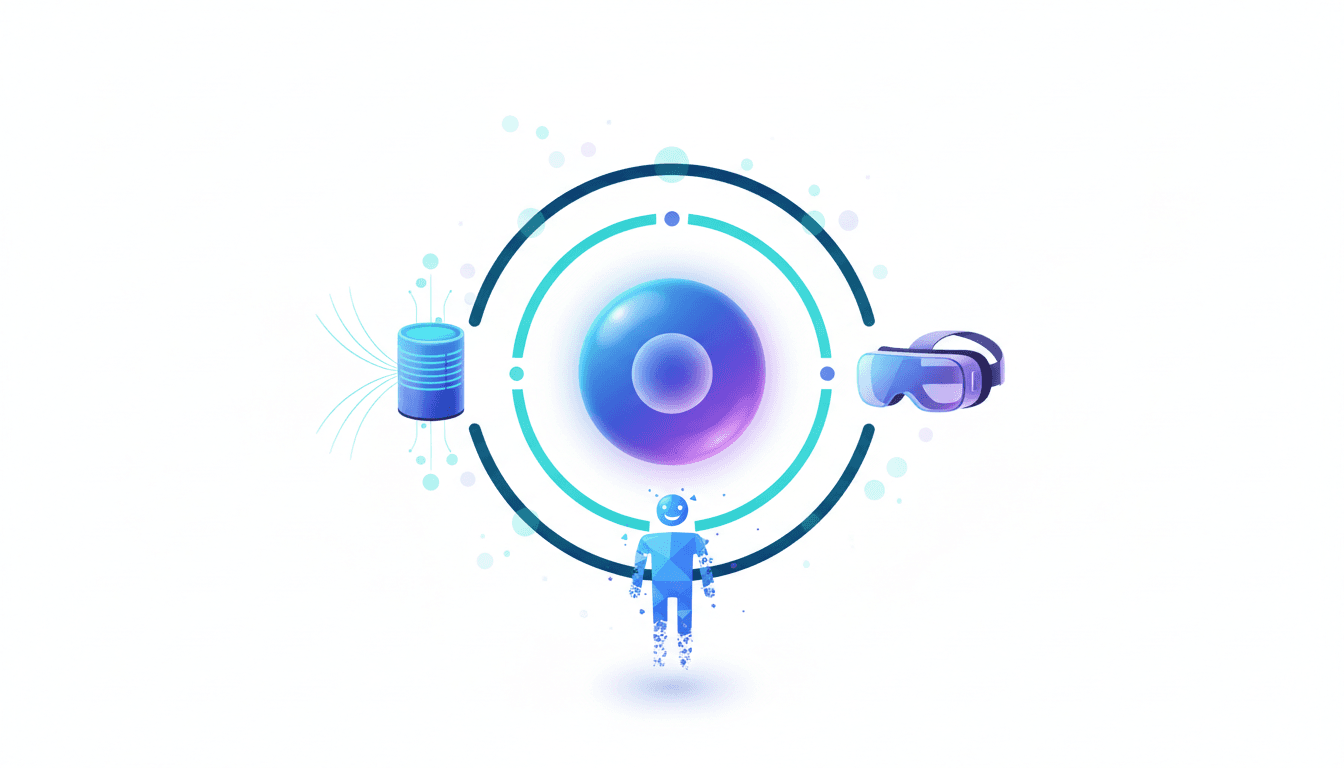
Have you caught yourself puzzling over Google's next moves, sifting through earnings chatter and gadget hype? Their 2026 strategy feels like that—fragments from calls, roadmaps, and marketing glossies—but the real connector is unmistakable: that "significant" capital expenditure surge. It's the powerhouse linking Google's wide-ranging goals into a three-tier AI framework that's set to upend the whole operation.
Infrastructure layer
Start with the infrastructure layer, the bedrock. This CapEx boom means rolling out more data centers worldwide and snapping up silicon like it's going out of style—think NVIDIA's bleeding-edge GPUs alongside Google's upgraded Tensor Processing Units (TPUs). Sure, it keeps Search humming, but that's not the half of it. No, this is about stockpiling the raw compute to train and run tomorrow's foundation models—the heavy lifting to outpace everyone on the AI growth path.
Intelligence layer
And that setup feeds straight into the intelligence layer. All those billions in hardware? They're the ticket to what folks are buzzing about: the Gemini 4 lineup. Picture it powering sleek, privacy-savvy agents right on your device, or massive cloud beasts tackling thorny, step-by-step problems. The flow from CapEx to compute guarantees Google's AI doesn't just keep up—it surges ahead in power and how easily it slots into real life.
Product layer
Which brings us to the product layer, where it all hits the ground running. On the consumer side, we're talking hardware born for AI. That whispered "Android XR" isn't merely another toy; it's the bold next step for Gemini—a spatial AI OS crafted from scratch. Future Pixels, too, will tap into on-device chips honed by this very push. Over in enterprise land, the cloud firepower translates to Google Cloud's pitch: autonomous "AI agents" that streamline everything from security to support and coding, taking a real swing at Microsoft's OpenAI grip. By 2026, hardware, software, services—they won't be silos anymore, but channels delivering Gemini straight to you.
📊 Stakeholders & Impact
Stakeholder / Aspect | Impact | Insight |
|---|---|---|
AI / LLM Providers (Google) | Transformative | The CapEx jump funds the next generation of Gemini, enabling Google to control its entire AI pipeline from custom silicon to end-user application. This vertical integration is their core strategic weapon—I've seen how it ties everything together in ways that feel almost inevitable. |
Developers & Creators | High | The emergence of "Android XR" as a new platform and more powerful on-device AI APIs will create a new application paradigm. Success will depend on building for an AI-first, spatially-aware ecosystem, which, let's face it, demands a fresh mindset. |
Enterprise / Google Cloud | Significant | Businesses will gain access to more powerful and autonomous AI agents for workflow automation. This intensifies the cloud war, forcing a strategic choice between Google's integrated stack and Microsoft's OpenAI partnership—that tension's only going to build. |
Competitors (Meta, Apple, MSFT) | High | Google is simultaneously challenging Meta/Apple in XR and Microsoft in enterprise AI. Its ability to link massive infrastructure scale to consumer hardware creates a unique threat that few can replicate, leaving others to play catch-up. |
✍️ About the analysis
This is an independent i10x analysis based on a synthesis of Google's official financial guidance, company blog posts, and prevailing market and industry reports. It is designed for founders, CTOs, and strategists seeking to understand the deep connection between AI infrastructure investment and future product roadmaps—something that's often overlooked in the noise.
🔭 i10x Perspective
For Google, 2026 feels like the point where the stakes crystallize. After years—decades, really—of pouring fortunes into AI foundations, this is when it has to deliver a fortress-like advantage across consumer gadgets and business tools alike. Tracking the CapEx trail uncovers their prep for a triple-threat push: claiming the XR hardware wave, capturing enterprise hearts with those independent agents, and holding the reins on Gemini's brainpower.
Yet the big question lingers around pulling it off. Can a giant like Google juggle—and triumph in—all three arenas at once? Or might this grand, all-encompassing vision stretch them thin, opening doors for sharper rivals: a quick-footed OpenAI, Apple's hardware fixation, Meta's platform savvy? Google's staking everything on the idea that infrastructure calls the shots, and 2026? That's the proving ground, no doubt about it.
Related News
AI Visibility: Tracking Brands in ChatGPT, Perplexity & Gemini
Major analytics firms are launching tools to measure AI visibility as LLMs reshape brand discovery. Learn how citation churn and ghost citations affect enterprise SEO strategies. Explore the guide.

Enterprise Predictive Analytics: Shift to MLOps and LLMs
Explore how enterprise predictive analytics is evolving from legacy BI tools to real-time MLOps pipelines integrated with foundation models. Learn about feature stores, streaming inference, and GenAI synergies for scalable AI. Discover how.
Prompt Injection Threats to Autonomous AI Agents
Prompt injection has evolved into a structural threat for autonomous AI agents via indirect attacks and memory poisoning. Discover the risks, stakeholder impacts, and practical defenses for enterprises scaling LLMs.