Google’s rolling out “Personal Intelligence,” weaving Gemini right into Google Photos to turn your personal image collection into something queryable—a living, AI-driven knowledge base of your own life. It’s got that promise of real ease, sure, but it also feels like a turning point in this whole AI scramble, shifting from gobbling up public data for training to pulling in your private stuff on the fly. And that? It stirs up some big questions about who really holds the reins on our data, how privacy gets built from the ground up, and what the heck the human-AI dance looks like down the road.
Quick Take
- What happened: I’ve seen how these things unfold, and here’s the gist—Google’s now letting its Gemini models poke around and catalog the content in your Google Photos. That means you can toss out everyday questions in plain English about your photo past, say, “show me pictures of my dog at the beach last summer,” and boom, you get smart, tailored responses from the AI. It’s all opt-in, mind you, but this is AI burrowing deep into one of the most intimate spots Google has for user data.
- Why it matters now: Ever wonder what could tip the scales in these AI battles? This is it—personal context as the new battle line. Models like GPT-4 or Claude, they’re sharp on public web stuff, but without your own data, they’re hitting a wall. Google’s playing its ace here, that massive pile of user info built over years, to craft an AI that’s actually useful in ways others can’t touch. It’s putting real heat on rivals who don’t have that kind of seamless tie-in to your digital world.
- Who is most affected: Google Photos users everywhere feel this shift, but it’s hitting hardest for pros, activists, journalists, even families leaning on it for sensitive shots. And don’t get me started on enterprise folks or Workspace admins—they’re probably scrambling to rethink policies now that personal and work data can blur so easily in one account.
- The under-reported angle: But here’s the thing that’s flying under the radar—it’s not just about scanning photos. Dig deeper, and you see the real choice in how it’s built. This probably spins up a lasting vector index of your personal story, crunching every face, spot, object, even text into numbers that map your life. Apple’s been all about keeping that on your device for privacy’s sake, but Google’s cloud-heavy setup? It packs more punch, yeah, but it funnels all that intimate, potent data into one central spot—hello, fresh privacy dilemmas.
Deep Dive
Have you ever paused to think what it might mean for an AI to truly get you—not just guess from the internet, but know your own snapshots? Google’s tying Gemini to Photos isn’t some side feature; it’s a bold bet on the future. They’re wagering that the win in AI comes down to a model that remembers you, your quirks and all. Flip on “Personal Intelligence,” and you’re handing Gemini the keys to your photo stash, morphing a dusty old archive into something you can chat with, like an old friend flipping through albums.
Google’s pitching it with all the right notes on control—opt-ins front and center, easy toggles to pull the plug. The tech press? They’re mostly handing out disable-it-yourself tips, which is fair enough. That said, they might be glossing over the bigger picture, the quiet revolution in how this is wired.
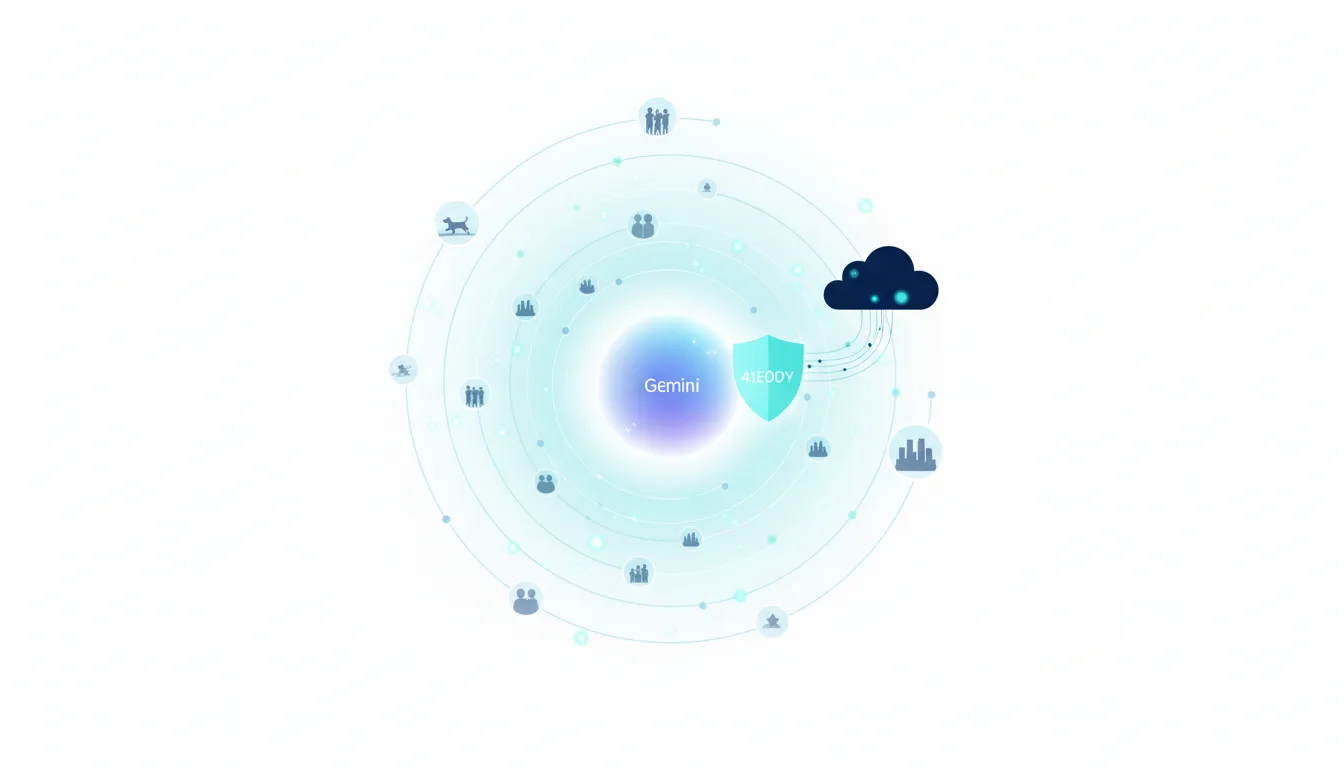
This isn’t about hoovering up data to juice general models, not at all. Think of it as Retrieval-Augmented Generation (RAG) done right—crafting embeddings, those math-y snapshots of what’s in your photos (faces staring back, objects scattered, text scribbled, places you’ve been)—and parking them in a vector index that’s yours alone, locked to your account. Query it with a question, and Gemini fishes out the matches, weaves them into the response. Google swears it’s off-limits for ads, but building that kind of rich personal map in their cloud? It’s a straight-up swap: killer usefulness for handing over control of something so core.
From what I’ve followed in these privacy plays, it stands in stark relief to Apple’s way—on-device everything for photo smarts and memories, keeping your secrets from ever phoning home. Sure, it’s got limits, that local processing, but your data stays put on your gear. Google? They tap the beast of their data centers for raw power, which demands you buy into their cloud safeguards hook, line, and sinker. For folks in the hot seat—journalists guarding source pics, execs with boardroom sketches—this cloud reliance opens up risks that device-bound setups dodge neatly.
In the end—and this is the question nagging at the whole field—where does our personal smarts even belong? Google’s laying out a strong pitch for a cloud brain that pulls from everywhere to serve you smooth, potent help. For outfits like OpenAI or Anthropic, boxed out from your emails, pics, docs, it’s a wake-up call on stakes. The fight’s evolved past leaderboard scores; now it’s about earning trust and nailing the bones of a real personal AI setup. Plenty to mull over there, isn’t there?
Stakeholders & Impact
| Stakeholder / Aspect | Impact | Insight |
|---|---|---|
| AI / LLM Providers | High | This raises the bar sky-high for weaving in personal context. Google’s ecosystem turns into a fortress, pushing rivals like OpenAI toward clunky plugins just to keep pace—it’s a tough spot. |
| Users (Consumer & Pro) | High | Folks get a game-changer for sifting through years of photos, no doubt, but it also builds this potent central file of your life story—time to up your game on digital habits and faith in Google’s locks. |
| Infrastructure & Security | Medium | Now the heavy lifting’s in scaling secure, zippy retrieval setups (think vector databases) for billions of solo user indexes—shifts the tech puzzle from training marathons to something more nimble, yet massive. |
| Regulators & Policy | Significant | Pushes the edges of consent and data rules like GDPR or CPRA. Watch for close looks at where “personal tweaks” cross into broader model boosts—scrutiny’s coming, and it’ll be fierce. |
About the analysis
Researched and written with AI assistance under the editorial responsibility of the i10X News team. The title image is an AI-generated illustration. Read our AI Use Policy. Spotted an error? Request a correction.
This piece comes from i10x as an independent take, drawing on Google’s straight-from-the-source announcements, their tech docs, and solid reporting from top tech spots. It’s geared toward developers, product heads, and strategy minds who want the lowdown on how generative AI meshing with personal data shakes up the architecture—and the market.
i10x Perspective
I’ve always figured the AI ahead isn’t one big brain ruling all, but a network of them laced with your own story. Google’s Photos play? It’s a milestone, plain and simple, showing the field’s pivoting from sheer smarts to safely folding in the bits of your digital existence.
It arms Google’s edge like a weapon against those model-only players. And the tug-of-war ahead, for years to come? That call? It’ll shape what personal AI even looks like—and that’s no small thing.