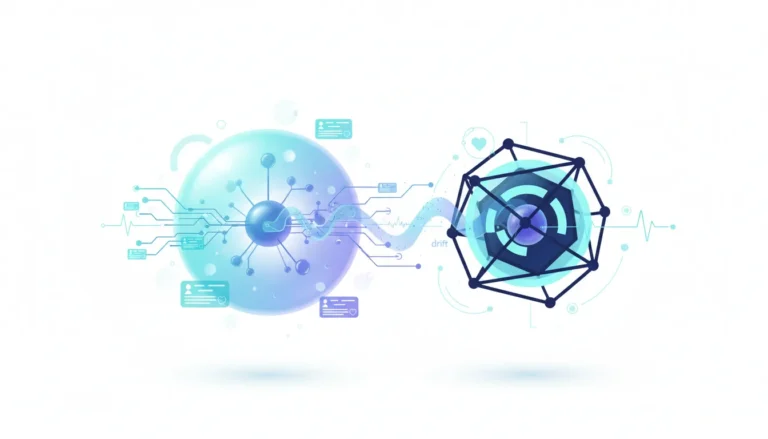
While OpenAI has not made a formal announcement, the name “GPT Rosalind” is emerging as a placeholder for the next frontier in AI: a specialized foundation model aimed squarely at biology and pharmaceutical R&D. This represents a strategic pivot from generalist AI to domain-specific, high-value vertical intelligence, placing the company on a collision course with entrenched players and complex regulatory frameworks in the life sciences.
Quick Take
- Summary: : Have you ever wondered if AI could truly crack the code on drug discovery? Well, the idea behind “GPT Rosalind” points to just that—a potential big leap from OpenAI into this specialized, potentially game-changing arena of AI-driven drug discovery. It’s not your typical GPT update; think of it as a model crafted from the ground up to wrestle with tough biological puzzles, like designing molecules or predicting protein structures, leaving behind the world of text and images for something far more intricate.
- What happened: : No official word yet, of course, but the buzz feels inevitable given the market’s hunger and the way foundation models are evolving. Specialized AI for science seems like the natural next step in this race. And the name? It nods to Rosalind Franklin, that trailblazing scientist whose work unlocked DNA’s secrets—hinting at strengths in genomics, chemistry, and the nuts-and-bolts of molecular biology.
- Why it matters now: : From what I’ve seen in the industry, the AI competition is evolving fast, moving away from flashy general tricks toward real, measurable wins in tightly regulated fields. If OpenAI jumps in here, it’d put a stamp of approval on the whole AI-for-drug-discovery scene, pushing rivals like Google’s Isomorphic Labs or Nvidia’s BioNeMo to up their game. That could speed up this whole Lab-in-a-Loop AI trend, turning labs into something more automated and efficient.
- Who is most affected: : Who’s feeling the ripples most? I’d say it’s the folks leading R&D in pharma and biotech—they could get a powerhouse tool in their hands, but it’ll come with hurdles around testing it out, weaving it into their workflows, and keeping everything compliant. AI companies and niche biotechs, too; they’d be up against a possible giant shaking up how things perform and what they cost.
- The under-reported angle: : But here’s the thing—nailing this won’t come down to the slickest algorithm by itself. Plenty of reasons why, really. It’s about handling the gritty side of pharma life: getting through GxP validation, sticking to 21 CFR Part 11 for electronic records, locking down IP and data like Fort Knox, and blending smoothly with lab information management systems (LIMS). The real fight? Over building trust and making sure everything’s audit-ready, not just chasing leaderboard scores.
Deep Dive
Ever catch yourself thinking the AI world might be ready for something bigger than chatbots and art generators? The industry’s charging ahead these days, shifting from those broad, do-it-all models to ones tailored for the high-pressure stuff—like the whispered “GPT Rosalind.” This isn’t merely a fresh gadget; it’s a bold bet on where the true payoff lies for intelligent systems: that meticulous, molecule-by-molecule realm of drug discovery. And let me tell you, this field will really put AI to the test, calling for sharp predictions plus traceable logic, safeguards against biosecurity risks, and a seamless fit into those massive R&D pipelines worth billions.
For something backed by OpenAI to really take off, it’d have to go beyond being a clever research aid—it’d need to act like a solid, rule-following enterprise setup. Pharma execs I’ve talked with aren’t just wondering, “Can this thing whip up a molecule?” No, they’re asking the hard questions: “Will it fit right into our GxP setup? Can we trace every step for an FDA filing? And how do we keep our secret screening data safe while protecting our IP?” These aren’t side issues; they cover everything from hooking up with Electronic Lab Notebooks (ELNs) and robotic gear to protocols for dual-use biosecurity. That’s the deep moat here—where a tech-only mindset might just run aground.
A “GPT Rosalind” wouldn’t be stepping into a vacuum, either. The field’s already crowded with sharp competitors. Google’s Isomorphic Labs spun out from DeepMind, riding the wave of AlphaFold’s breakthroughs. Nvidia’s BioNeMo puts out a lineup of foundation models on the cloud, letting teams craft their own tools. Then you’ve got veterans like Recursion, Insilico Medicine, and Schrödinger, who’ve logged years blending AI with hands-on lab data and jumping through customer approval hoops. For OpenAI, the big puzzle is delivering a leap—maybe 10x better—that makes switching platforms worth the gamble.
That said, the heart of it all is closing the divide between in-silico simulations and actual in-vitro lab outcomes. You won’t judge a model like this on textbook tests such as MoleculeNet or CASP alone. What counts is shortening those lead-optimization timelines, boosting the odds of solid drug candidates, and—ultimately—taming the sky-high costs of getting a new therapy to patients. We’re talking a tight feedback loop: AI guesses get lab-tested, checked, and looped back to sharpen the model. It’s this blend of data, smarts, and robotic automation that shapes today’s self-driving lab—and it feels like the future, doesn’t it?
Stakeholders & Impact
| Stakeholder / Aspect | Impact | Insight |
|---|---|---|
| Pharma & Biotech R&D | Transformative | This could speed up discovery like nothing else, yet it brings hefty vendor risks and calls for fresh strategies on validation and IT tie-ins. Suddenly, it’s less about off-the-shelf software and more about true partnerships in the hunt for breakthroughs. |
| AI Platform Providers | High | It ramps up the rivalry, stretching beyond hardware battles (think Nvidia) or search dominance (Google) into these premium scientific niches. Sets a tougher bar for what foundation model outfits need to bring to the table. |
| Regulators (e.g., FDA) | Significant | Sparks a fresh look at validating AI/ML in GxP setups (those Good Practice standards). Puts pressure on issuing straightforward rules around model openness, audit trails, and handling updates. |
| Patients & Public | Long-term | On the bright side, quicker paths to new treatments for tough diseases. But it stirs up concerns over biosecurity, risks from dual uses, and making sure AI-boosted meds reach everyone fairly. |
About the analysis
Researched and written with AI assistance under the editorial responsibility of the i10X News team. The title image is an AI-generated illustration. Read our AI Use Policy. Spotted an error? Request a correction.
I’ve put together this forward-looking take from i10x on a key turning point in the AI landscape, drawing from what the life sciences sector really demands for AI in regulated spaces. Shaped like a practical guide for R&D heads, CTOs, and compliance pros sizing up tomorrow’s enterprise AI tools—something to reference when the details start piling up.
i10x Perspective
What if the jump from everyday AI to these science-focused foundation models, say “GPT Rosalind,” tests more than just tech—does it challenge our core assumptions? It’s bigger than grabbing market share; it’s a clash between Silicon Valley’s fast-and-furious style and medicine’s steadfast “first, do no harm” rule.
In the end, the outfit that claims the biology AI crown won’t be the one flaunting the largest model or the cheapest calls. It’ll be whoever cracks the code on reliable foundations—showing their tech isn’t only potent, but steady, controllable, and secure enough to underpin the next era of healthcare. Here, finally, the AI excitement collides with the rigor of clinical trials, and that’s where things get truly interesting.