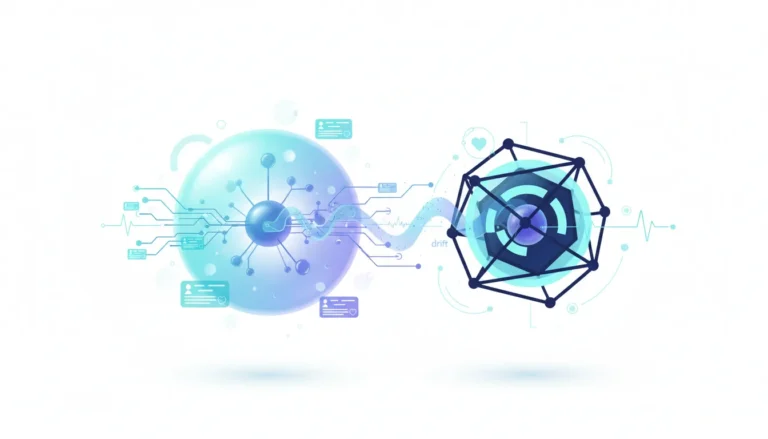
While xAI’s Grok captures attention with its distinct personality on the X platform, a significant “documentation void” is leaving developers and enterprises in the dark. The lack of a public, in-depth technical blueprint for Grok’s core algorithms raises critical questions about its architecture, performance, and safety, creating a major hurdle for its adoption beyond consumer novelty. The market is effectively asking for the instruction manual to a powerful engine it’s being asked to build with.
Quick Take
- Summary: You know that nagging feeling when something promising just lacks the details to trust it fully? That’s Grok right now – despite its growing buzz, there’s a near-total absence of public documentation on its core algorithmic functionality. This information vacuum – it really hits hard – covers everything from the underlying architecture to the methods for behavioral alignment and the tweaks that drive real-time inference. For anyone eyeing adoption, it’s a real source of uncertainty, plenty of reasons to pause and rethink.
- What happened: From what I’ve pieced together scanning the landscape, it’s clear xAI hasn’t followed the lead of competitors who roll out those detailed technical reports. They’re tight-lipped on Grok’s end-to-end pipeline specifics – think transformer architecture details, like its Mixture-of-Experts setup, or alignment techniques such as RLHF or DPO, right down to inference optimizations involving speculative decoding or quantization. It’s all just… not there.
- Why it matters now: But here’s the thing – in this cutthroat market, transparency around architecture isn’t optional anymore; it’s the foundation for building trust and making integrations work smoothly. Without it, developers are left guessing how Grok stacks up against heavyweights like OpenAI’s GPT-4, Google’s Gemini, or Anthropic’s Claude – on stuff like latency, throughput, cost-efficiency, and safety metrics that matter most. That turns what could be a smart pick into a gamble for any production system.
- Who is most affected: Ever wonder who feels the pinch most from these gaps? It’s the AI developers, ML engineers, and enterprise CTOs out there – the ones who need those deep technical specs to weigh their options wisely. They’re the folks deciding on foundation models for apps, budgeting for ops costs, and ticking compliance boxes, and without solid info, it’s all a bit of a shot in the dark.
- The under-reported angle: The under-reported angle: This isn’t simply a missing PDF tucked away somewhere. It’s a deliberate strategy, one that stands out as the industry pushes harder for AI that’s auditable and open to scrutiny. By keeping things so opaque, Grok comes across more like a slick, integrated perk for the X platform than a robust foundational model primed to fuel a wider world of third-party apps – and that framing, well, it limits its reach in ways that might not show up right away.
Deep Dive
Have you ever stared at a tool that’s powerful on paper but leaves you guessing on the how-to? That’s the frustration with Grok’s production model – xAI turned heads by open-sourcing Grok-1’s base weights, sure, but the algorithmic guts of what’s running on X and through the API? Still a total black box. For the engineers and architects grinding away on tomorrow’s AI products, this secrecy – it’s a real bottleneck, slowing everything down when speed is everything.
The market’s got three big questions burning here, really: architecture, alignment, and how it all performs in the wild.
Take the core architecture first off. Grok-1’s got that massive 314B-parameter Mixture-of-Experts (MoE) setup, a sparse activation style that hints production versions probably lean the same way to keep compute costs in check. But developers? They’re flying blind on the nuts and bolts – number of experts, how routing works, and what that means for tackling different tasks. Does it shine in factual recall, wrestle with complex reasoning, or just nail that quick, chatty vibe on X? Without answers, sizing it up against dense transformers like GPT-4 for your enterprise workloads feels more like educated guesswork than solid planning.
Then there’s alignment – and for a model with that signature “rebellious streak,” this one’s pivotal. How did they shape Grok to stay helpful, honest, and harmless without sanding down its quirky edge? We’ve got industry go-tos like Reinforcement Learning from Human Feedback (RLHF) or Direct Preference Optimization (DPO), but xAI’s mum on their exact approach, the datasets involved, or even the depth of safety red-teaming. In regulated fields, businesses just can’t move forward – this fog around safety and bias fixes? It’s a deal-breaker, plain and simple.
And don’t get me started on the inference stack – for anyone aiming to plug Grok in, this is where the rubber meets the road. Hitting low latency and high throughput means leaning on tricks like KV-caching, speculative decoding, or quantization (think FP8/INT8 levels). We can figure xAI’s probably on it, but no official word on targets, rate limits, or tips for tool-use and Retrieval-Augmented Generation (RAG) leaves teams reverse-engineering everything. That wastes hours – days, even – and amps up risks on projects. Planning capacity, costs, reliability? It’s guesswork without a clear path forward, and that’s no way to build.
Stakeholders & Impact
| Stakeholder / Aspect | Impact | Insight |
|---|---|---|
| AI Developers & Engineers | High | Without those technical docs, integration’s a slog – optimization goes out the window, and debugging? Forget it. You can’t build anything solid on what feels like a black box; it’s frustrating, and it stalls real progress. |
| Enterprise CTOs & Buyers | High | Tough to slot Grok into enterprise plans when you can’t gauge it properly. No insight on architecture, safety, or data handling means weighing ROI or compliance risks against proven options from OpenAI, Google, or Anthropic is all hunch-based – not the confidence you need for big bets. |
| xAI & The X Platform | Significant | This info drought? It chokes ecosystem growth and keeps enterprise folks at arm’s length. If Grok’s to outgrow its consumer roots, it needs that trusted, documented foundation for builders – dropping a solid technical report could flip the script, showing xAI’s ready for the next level. |
| AI Researchers & Auditors | High | Verification’s off the table without peeks into alignment processes or benchmarks – you can’t dig into behaviors, biases, or weak spots independently. It bucks that rising tide in the industry toward responsible, transparent AI, and that’s a missed chance for deeper trust. |
About the analysis
Researched and written with AI assistance under the editorial responsibility of the i10X News team. The title image is an AI-generated illustration. Read our AI Use Policy. Spotted an error? Request a correction.
I’ve put this i10x analysis together from a close look at what’s out there publicly – zeroing in on those nagging info gaps that block Grok’s path to enterprise and developer uptake. It pulls out the key unanswered tech questions by stacking them against what the field’s come to expect for LLM docs, all tailored for engineers, architects, and tech leads sifting through foundation models for their big-picture strategies.
i10x Perspective
From where I sit, Grok’s documentation state right now – it’s like a snapshot of how the AI market’s growing up, testing its own limits. We’re past wondering “what’s this model capable of?” and into “how’s it wired, and can I really count on it?” xAI holding back on the algorithmic details might fit their near-term play of locking Grok tight with X, but it clashes with the push across the board for openness and engineering you can verify.
In the end, xAI’s at a crossroads: Does Grok stay that personality-packed add-on, or does it step up as a core pillar for the wider AI landscape? The real tell won’t come from its next quip online – it’ll show in whether they finally share that technical blueprint the market’s been circling, waiting for.