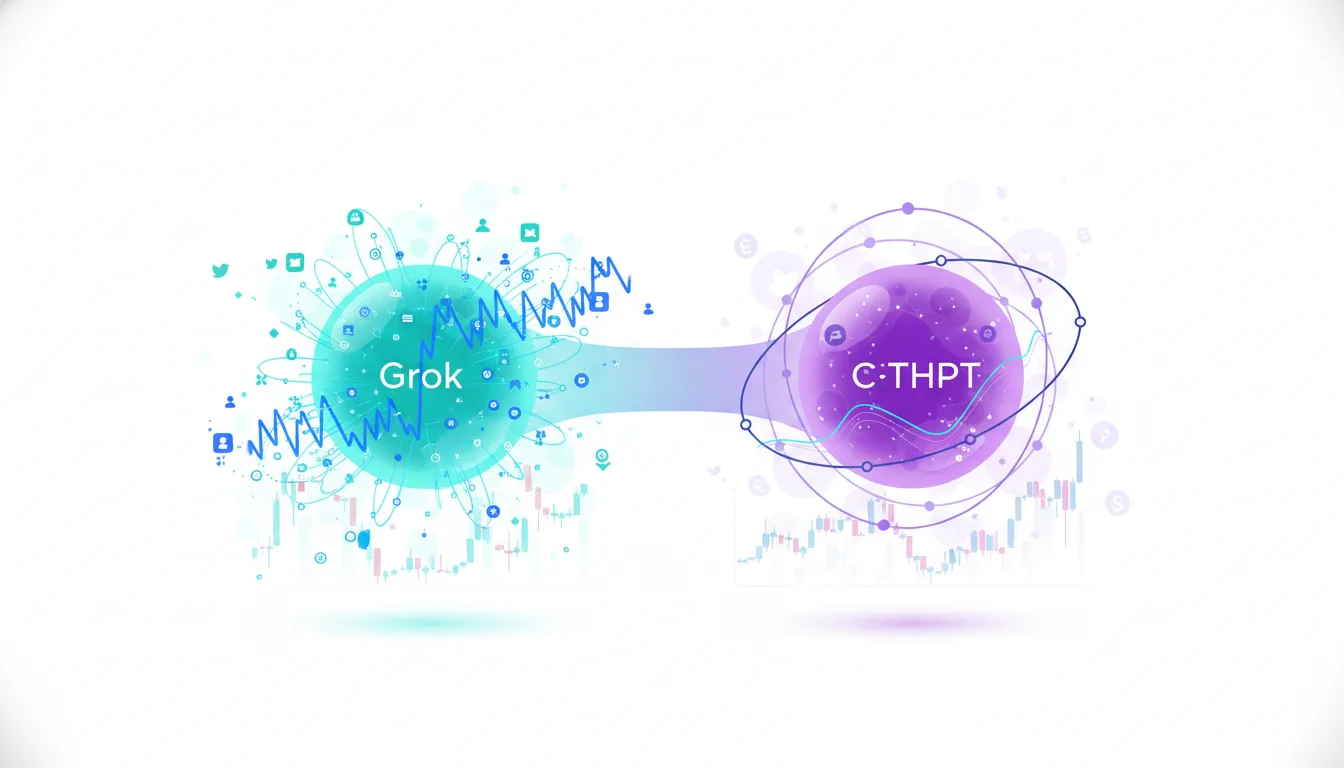
Have you ever wondered if the hype around AI could spill over into something as cutthroat as stock picking? In this fresh clash of public AI showdowns versus those AI stock-picking contests, the rivalry between xAI’s Grok and OpenAI’s ChatGPT is turning into a kind of proxy battle for deeper market smarts. But here’s the thing—while the headlines chase after who’s coming out on top, they’re overlooking the bigger picture: these unregulated setups aren’t really about crowning an AI king; they’re more like a wild, messy trial run on data grabs, baked-in biases, and how hype gets turned into a weapon.
Quick Take
- Summary: Publicly tracked, paper-traded stock-picking contests pitting Grok against ChatGPT are popping up everywhere in finance media and on YouTube. They paint these AI models as self-running investment pros, sparking a ton of buzz from everyday investors and the tech crowd, all hooked on those quick performance flashes.
- What happened: Places like Finder.com are keeping these contests going with portfolios out in the open, and you’ll find video breakdowns and news pieces shouting about clear “wins” for Grok over ChatGPT—especially when things get shaky in spots like crypto. That storyline gets extra fuel from the ongoing feud between their bosses, Elon Musk and Sam Altman, you know?
- Why it matters now: This marks a real pivot from those dry academic tests (think MMLU) to something grittier, like actual money-making trials in the wild. For the first time, everyday folks are sizing up these top LLMs not for how smoothly they chat, but for whether they can actually spit out some alpha—making the models stand-ins for the whole clash of ideas from their creators.
- Who is most affected: It’s the retail investors who stand to get tripped up, maybe taking these fun matchups as real-deal investment tips. And don’t forget the AI teams at OpenAI and xAI—their creations are getting dragged into these loose, spotlight-heavy experiments that could twist how the world sees their brands, way outside their grip.
- The under-reported angle: Truth is, these outcomes are mostly just random blips in the data. The coverage skips over the big gaps in how they’re run: no real look at risk-adjusted returns (like the Sharpe ratio), the hidden edges from uneven data flows (Grok’s live X updates versus ChatGPT’s search tools), and zero solid stats to back it up. At its core, this isn’t a showdown of smarts; it’s whoever’s got the slicker data setup and prompt tricks spinning the best short-term magic.
Deep Dive
Ever feel like the AI world is starting to mirror the wild ups and downs of the stock market itself? Well, the face-off between ChatGPT and Grok has stepped right into that ring—at least on paper, anyway. This surge of “AI vs. AI” investing battles is grabbing everyone’s attention, casting the models as the hot new breed of Wall Street number-crunchers. Sure, they’re billed as fair-and-square races, but really, they’re shaping up as a key front in the perception skirmish between OpenAI and xAI—shifting the fight from heady talks on AI ethics to the raw tally of wins and losses that hit harder.
That said, if you dig a bit deeper into the how-to—or the lack of it—you start seeing some shaky ground. A lot of these are just basic paper trades, eyeing straight-up gains over quick stretches, with no nod to risks, wild swings, or even the bite of fees. Picture a portfolio jumping 20% but leaving you white-knuckled the whole ride—hardly better than one that climbs 15% nice and steady, right? Without digging into things like max drawdown or returns that weigh the dangers, these feel less like smart assessments and more like rolling dice at a casino—handy for drawing in curious retail folks, but risky for building false confidence in AI’s money moves.
From what I’ve seen in these setups, the biggest blind spot—and the most telling—is how they get their info. Grok’s built with that direct line to X’s nonstop stream of buzz and news flashes (back when it was Twitter), which could give it a leg up on riding waves of hype or split-second trades. ChatGPT, on the flip side, leans on its browsing add-ons and such, which lag a touch and fish from a tidier but slower pool of data. So, this whole thing? It’s not a clean shot at pure AI brains. More like a showdown between clashing info worlds, where Grok might just be echoing whatever’s blowing up on X at the moment.
In the end—and I say this after watching a few cycles play out—these contests are sharp marketing ploys wrapped in engagement, not any kind of real financial deep-dive. With tiny samples and blink-and-you-miss-it timelines, calling a “winner” is like shouting at shadows—statistically shaky, wide open to picking the cherries. To actually shed light, they’d need clear rules up front, comparisons to human picks or plain indexes (S&P 500, say), and setups you could rerun, prompts and all. Until that happens, the “ChatGPT vs. Grok” stock battles are chasing today’s AI media frenzy more than tomorrow’s finance revolution—plenty to ponder there, isn’t there?
Stakeholders & Impact
| Stakeholder / Aspect | Impact | Insight |
|---|---|---|
| AI / LLM Providers (xAI, OpenAI) | High | It’s like a spotlight they didn’t ask for—uncontrolled benchmarking that amps up visibility. A strong showing? Instant viral boost. But slip-ups or odd choices? That could dent the brand quick. And underneath, it’s probing how well their data flows mesh with real decisions. |
| Retail Investors & Traders | High | Easy to get pulled in by flashy, un-risked numbers—could nudge folks toward bets driven by the fun, not fundamentals. This gamified take on AI trading might spark more speculation than sense. |
| Financial Media & Content Creators | Medium | Traffic goldmine, no doubt—keeps viewers hooked. But with that comes a duty: strong warnings, clear breakdowns of why stats can mislead in these quick-hit contests. |
| Regulators (e.g., SEC) | Low (for now) | Hovering in that fuzzy space between showbiz and advice-giving. As AI tips gain sway, expect more eyes on disclosures and whether they fit investor needs—it’s coming. |
About the analysis
Researched and written with AI assistance under the editorial responsibility of the i10X News team. The title image is an AI-generated illustration. Read our AI Use Policy. Spotted an error? Request a correction.
This draws from an i10x-style review of those public AI stock-picking contests, the news chatter, and social feeds buzzing about them. I’ve pulled it together with tech execs, AI product leads, and investors in mind—folks wanting the straight talk on how LLMs stack up in the real grind, way past the usual benchmark fluff.
i10x Perspective
Isn’t it wild how “AI stock-picking” is kicking off this whole new vibe—what I’d call Performance Art Benchmarking? These messy, in-the-trenches trials that pack more punch for how folks see AI than any lab-tested truth. We’re leaving those stuffy academic charts behind, heading into times where models get rated on how they hold up in the chaos of finance, politics, even swaying opinions.
The split to keep an eye on—and it’s a big one—is AIs wired for that insider, live-data rush (Grok’s tie-in with X, for instance) versus the all-purpose info-gatherers using tools to tap the globe’s knowledge (ChatGPT style). Not just tech talk; it’s a crossroads that could steer AI’s edge in money matters and smarts overall. One route? Models tuned to the now, hyper-alert. The other? Champs at sorting deep, organized insights. The market’s still figuring which pulls ahead—exciting times, really.