A new wave of robotics research is pushing back against the “end-to-end” AI hype, proving that hybrid systems—which combine learned visual perception with classical, symbolic planning—are outperforming monolithic models in complex, real-world tasks. This signals a strategic shift from black-box policies toward more interpretable, reliable, and developer-friendly robot intelligence.
Quick Take
- Summary: Recent breakthroughs, highlighted by MIT research, introduce a hybrid approach for Visual Task Planning. This method fuses the power of deep learning for perception with the reliability of symbolic reasoning and Behavior Trees for orchestrating actions, enabling robots to navigate dynamic environments and coordinate complex assembly tasks more effectively than ever before.
- What happened: Researchers have developed a modular planning system that separates “seeing” from “doing.” A perception module processes visual data, while a distinct planner (often using Behavior Trees) makes decisions and sequences actions. This architecture dramatically improves performance in scenarios with moving obstacles and multi-robot coordination, a known weakness of brittle end-to-end models.
- Why it matters now: As the AI world rushes to scale Vision-Language-Action (VLA) models, this research provides a crucial counter-narrative. For high-stakes industrial applications like warehousing and manufacturing, the transparency, debuggability, and verifiability of hybrid systems are non-negotiable advantages over opaque, black-box alternatives.
- Who is most affected: Robotics engineers, developers using ROS 2, and CTOs at companies deploying autonomous mobile robots (AMRs) or collaborative robots (cobots). This development provides them with a concrete, deployable architecture that bridges the gap between academic innovation and production-ready tools.
- The under-reported angle: This isn’t just about one new algorithm. It’s about the powerful convergence of academic AI planning theory with the mature, open-source robotics ecosystem. The architecture proposed in the lab directly maps onto practical tools like ROS 2’s Navigation 2 (Nav2) stack and BehaviorTree.CPP, creating a clear pathway from research paper to factory floor.
Deep Dive
Have you ever watched a robot stumble in a real-world setting, not because it couldn’t see, but because it couldn’t quite piece together what to do next? That’s the core challenge in modern robotics—it’s not just moving from point A to B, but grasping a tricky goal amid all the chaos and pulling off the right sequence of steps without a hitch. For years now, folks in the field have been caught between two camps: those reliable, rules-based planners that you can count on but that crack under pressure, and the end-to-end deep learning setups that adapt like pros yet leave you scratching your head when things go wrong. This push-and-pull sits right at the center of Visual Task Planning (VTP).
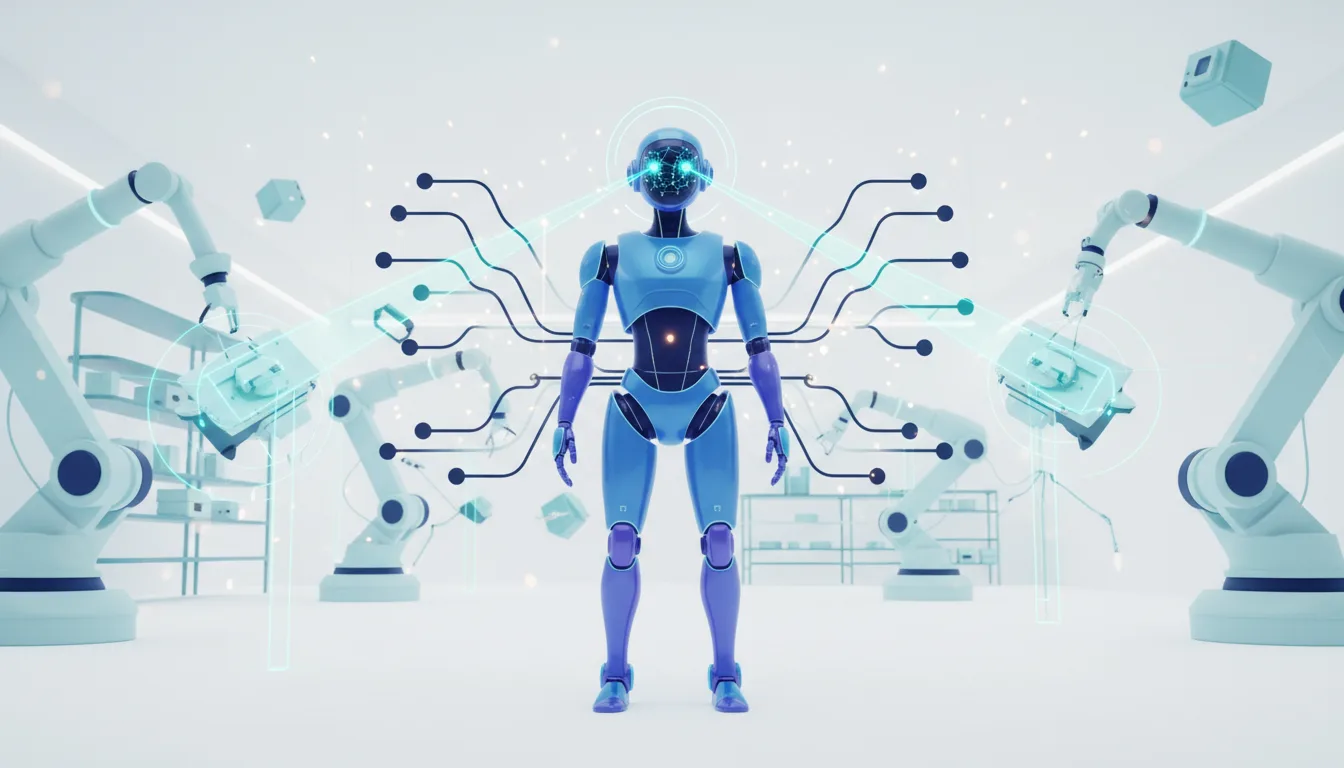
From what I’ve seen in recent papers, a breakthrough out of MIT points to a smart third path—the hybrid system. It blends a learned perception front-end with a symbolic planning back-end in a way that just clicks. Picture this: no more forcing a single, hulking network to leap straight from pixels to motor commands, as so many Vision-Language-Action models try to do. Instead, the system splits the load. A neural network handles the visual heavy lifting—making sense of the scene’s twists and turns. Then it hands off to a classical planner, typically built around a Behavior Tree, which shines at logical steps, ordering tasks, and bouncing back from slip-ups. You end up with the best of both worlds: the nuanced sight of deep learning paired with the steady hand of symbolic AI.
And here’s the thing—this isn’t some pie-in-the-sky idea. The setup meshes seamlessly with what robotics pros are already using day to day. Take the open-source ROS 2 world, for instance; its Nav2 stack leans hard on Behavior Trees to manage navigation’s finer points. Tools like BehaviorTree.CPP and editors such as Groot? They’re everyday staples for crafting behaviors that stay modular and easy to tweak. So this new research doesn’t demand a total overhaul of your kit—it hands you a research-backed plan to level it up, just by weaving in those cutting-edge perception bits.
What sets this modularity apart from the end-to-end crowd is how it tames the troubleshooting nightmare. Say a VLA-driven robot drops the ball—was it the eyes, the brain, or the hands that failed? Good luck sorting that out. But in a hybrid setup, you can poke at each piece on its own—test it, log it, prove it works. That’s gold for safety checks and earning trust, especially when robots are rubbing elbows with people or juggling pricey gear. Sure, end-to-end models keep chasing that grand vision of all-knowing AI, but these hybrid planners? They’re the ones quietly nailing the here-and-now challenge of robots that show up and get the job done, reliably, shift after shift. It’s a reminder that sometimes the steady path forward beats the flashy sprint.
Stakeholders & Impact
| Stakeholder / Aspect | Impact | Insight |
|---|---|---|
| Robotics & AI Developers | High | Provides a validated, modular architecture for building robust robot intelligence, leveraging existing tools like ROS 2 and Behavior Trees instead of relying on risky “black box” models. |
| Industrial Automation (Warehouses, Factories) | High | Enables more reliable and efficient deployment of AMRs and cobots in dynamic, human-filled spaces. Reduces cycle times for tasks like multi-robot assembly and improves overall system uptime. |
| AI Model Providers (VLAs) | Medium | This presents a competing, more conservative architectural paradigm. It may push VLA providers to offer more modular or interpretable outputs rather than just end-to-end actions, to better integrate with robotics stacks. |
| Open-Source Robotics (ROS 2) | Significant | Validates and strengthens the Behavior Tree-centric, plugin-based philosophy of modern robotics stacks. It positions the open-source ecosystem as the ideal platform for implementing cutting-edge, hybrid AI. |
| Safety & Regulation | Significant | Interpretable hybrid systems are far easier to analyze, test, and certify for safety than monolithic neural networks. This approach could accelerate regulatory approval for human-robot collaboration. |
About the analysis
Researched and written with AI assistance under the editorial responsibility of the i10X News team. The title image is an AI-generated illustration. Read our AI Use Policy. Spotted an error? Request a correction.
This article is an independent i10x analysis based on a synthesis of recent academic publications, technical documentation from the robotics ecosystem (ROS 2, BehaviorTree.CPP), and foundational AI planning theory. It is written for AI strategists, robotics engineers, and technical leaders navigating the choice between end-to-end AI models and modular, systems-level solutions.
i10x Perspective
Ever feel like the robotics field is hitting a turning point, where the buzz around big breakthroughs starts to settle into something more grounded? The rise of hybrid visual task planning feels exactly like that—a sign of embodied AI growing up. It’s the industry stepping past the thrill of endless scaling and tackling those tougher issues of reliability, safety, and figuring out what went wrong when it does. Vision-Language-Action models still spark plenty of excitement, no doubt, but for production robotics right now, these practical hybrid systems are stealing the show.
I’ve noticed how this trend bolsters the edge of open-source setups like ROS 2, with their modular bones perfectly suited for mixing learned smarts and symbolic structure. Plenty of reasons to watch closely over the next five years, really—will the sheer force of end-to-end scaling swallow up the need for this kind of order, or will tomorrow’s smart machines emerge from carefully linking up a bunch of specialized, checkable parts? It’s an open question, one that could reshape how we build and trust these systems.