Kimi K2.5 — Moonshot AI’s Open-Source Visual Agentic Intelligence
⚡ Quick Take
Have you caught wind of Moonshot AI’s latest push? They’ve just unleashed Kimi K2.5, an open-source visual agentic intelligence model that’s stepping right up to challenge the big players like GPT-4o and Claude 3.5. What sets it apart from the usual one-size-fits-all models is its clever blend of three core elements: a Mixture-of-Experts (MoE) setup for smarter efficiency, a built-in native vision encoder that handles visuals natively for real multimodality, and – at its heart – the Agent Swarm that orchestrates tricky tasks without breaking a sweat. From what I’ve seen in these early days, this isn’t treating agent coordination as some add-on handled by outside tools; it’s baked right into the model’s DNA.
Summary
Moonshot AI has open-sourced this powerhouse multimodal model, Kimi K2.5, weaving together a Mixture-of-Experts (MoE) architecture, a native vision encoder, and a seamless multi-agent setup known as Agent Swarm. It’s tailor-made for those demanding, step-by-step challenges—think coding marathons, deep web dives, or reasoning across text and images—enabled by the smooth teamwork of its specialized sub-agents.
What happened
Out came the model, complete with a detailed paper and a GitHub repo that spotlights its “visual agentic intelligence.” Here’s the twist: while most models lean on external kits like LangChain or AutoGen to handle agent-like behaviors, K2.5 brings “native swarm execution” to the table—a planner-executor system designed from the ground up for smoother, more reliable agent handoffs.
Why it matters now
Dropping into a market that’s anything but sleepy—with heavy hitters like OpenAI’s GPT-4o, Anthropic’s Claude 3.5 Sonnet, and Meta’s Llama 3.1 pushing the envelope on what AI can do—K2.5 makes a bold call. It argues that the real game-changer ahead won’t just be beefier brains, but better ways for agents to collaborate. By open-sourcing this all-in-one agent system with a clear vision, Moonshot AI is poking at the status quo of slapping orchestration onto generic models, and there are plenty of reasons to watch how that shakes out.
Who is most affected
Folks crafting agentic setups, researchers digging into multi-agent dynamics, and businesses eyeing self-running agents for code or research—they’re all in the crosshairs here. It sparks that familiar tug-of-war: build your own with K2.5’s integrated style, or stick with the buy-and-mix freedom of the current tools landscape?
The under-reported angle
Sure, the specs sound flashy, but its staying power comes down to nitty-gritty bits still under wraps. We’re all hanging on for solid benchmarks stacking it against rivals on tests like SWE-bench or WebArena, plus the hardware specs for running it, and—most importantly—the fine print on its open-source license. For something like “Agent Swarm” to truly take off in autonomous mode, we need the full picture on performance, costs, and essential safety nets; the launch buzz has left those details hanging, which feels like a deliberate pause for thought.
🧠 Deep Dive
Ever wonder if the future of AI lies less in solo superstars and more in smart ensembles? Moonshot AI’s Kimi K2.5 feels like a case for exactly that—it’s not merely a new model on the block, but a full-on statement about architecture. Pulling together the lean power of Mixture-of-Experts (MoE) for fewer wasted parameters, the immersive depth of native vision encoders for handling images and text in one go, and the breakdown muscle of multi-agent teams, it’s all wrapped in an open-source bow. The pitch: a unified package like this could outpace the patchwork of slapping a general LLM together with external orchestration tools—a real jab at dev routines shaped by LangChain, LlamaIndex, or AutoGen. That said, integrated bets can streamline things, even if they sometimes trade off a bit of that modular flexibility.
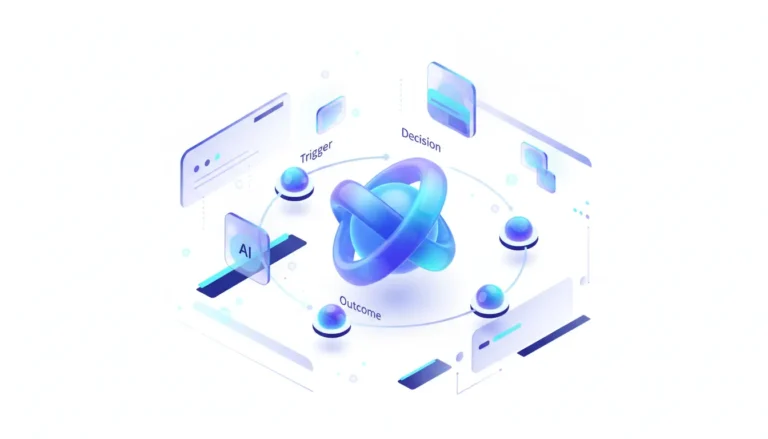
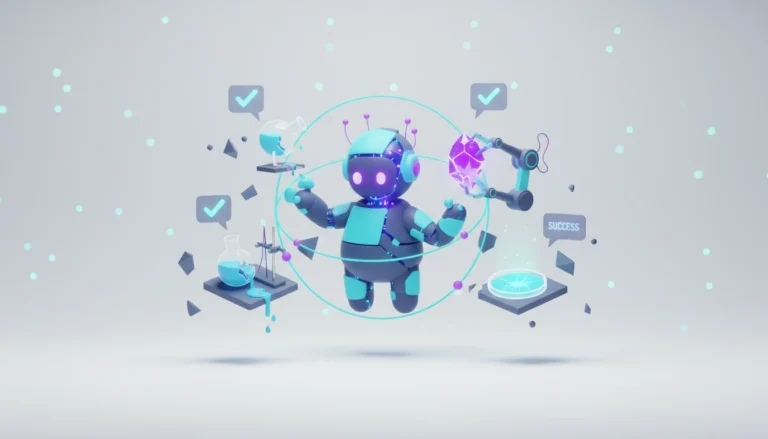
At the core sits the “Agent Swarm”—and while the full blueprint is still unfolding, it points to a homegrown setup where a lead “planner” agent hands off pieces to focused “executor” ones, e.g., one tackling code, another scouting the web, or a third parsing visuals. This hits square on a developer’s headache: the hassle of piecing together, troubleshooting, and keeping multi-agent flows steady. But how well “native swarm execution” holds up will ride on the strength of its chat protocols between agents, its error recovery, and that coordination backbone; those layers aren’t spelled out yet, leaving room for healthy skepticism.
K2.5 is throwing its hat into the arena with the top dogs, gunning for wins in multimodal puzzles and coding feats, but its standout edge is that agentic wiring from the start. The big question buzzing in the field: does this all-in approach deliver real boosts in speed, response time, and wallet-friendliness compared to tuning up a Llama 3.1 or Claude 3.5 Sonnet with a slick external agent layer? Lacking side-by-side tests on agent-heavy benchmarks (WebArena or SWE-bench, for starters), its edge stays more promise than proof—an intriguing spot to linger on.
For developers and companies gearing up, the hype comes with a side of caution, thanks to lingering unknowns in the ops side. The debut materials skip over basics like VRAM needs or compute baselines, omit a performance breakdown, and dodge a straight talk on license perks for business use. On top of that, rolling out an “Agent Swarm” that browses, tools up, and acts on its own in live settings calls for ironclad security, isolation, and monitoring to fend off leaks or sneaky injections—gaps the community will need to bridge to prove it’s not just clever, but safe.
📊 Stakeholders & Impact
| Stakeholder / Aspect | Impact | Insight |
|---|---|---|
| AI Developers & Researchers | High | Hands them a fresh, robust open-source base to craft and probe agentic setups—it nudges a rethink: go integrated with K2.5, or keep layering on modular stacks like AutoGen? Either way, it’s stirring the pot. |
| AI Tooling Ecosystem (LangChain, LlamaIndex) | High | Picture a mix of teamwork and rivalry. K2.5 might slot in as a prime model for these tools to direct, or it could lure users with its straightforward, bundled fix for agent flows—a dynamic worth tracking. |
| Enterprises | Medium-High | Opens a door to homegrown, budget-smart agents for tough jobs, but holdups linger around license clarity, security setups, and clear wins over proprietary APIs—ROI proof will be key. |
| Cloud & Hardware Providers (NVIDIA, etc.) | Medium | With MoE’s efficiency and agent parallelism in play, it sparks fresh tweaks for inference gear, though without deployment how-tos, gauging the hardware demands feels like educated guesswork for now. |
✍️ About the analysis
Researched and written with AI assistance under the editorial responsibility of the i10X News team. The title image is an AI-generated illustration. Read our AI Use Policy. Spotted an error? Request a correction.
This piece stems from an independent i10x take, drawing on first-wave tech reveals, core design ideas, and spots in the docs that could use more light. It’s framed against the cutthroat world of AI models today, aimed at developers, ops leads, and product folks knee-deep in agent builds—straightforward insights to chew on.
🔭 i10x Perspective
What if the AI showdown is pivoting from raw scale to something more collaborative? Kimi K2.5 from Moonshot AI feels like a clear signpost in that direction, moving the spotlight from hulking single models to nimble squads of targeted agents working in sync. They’re wagering big that built-in agent smarts will define tomorrow’s flagships, turning coordination into an essential building block, not an optional layer.
It puts the squeeze on outfits like Meta or Mistral—time to mull if their open-source stars should level up from versatile all-rounders to full agentic packages? Over the coming year and a half or so, the real pull will be between K2.5’s take-it-or-leave-it integration and the adaptable mix of general models plus dedicated orchestration kits. Whichever way it tips, it’ll shape how we architect smarts going forward—a shift that’s got me optimistic, but watchful.