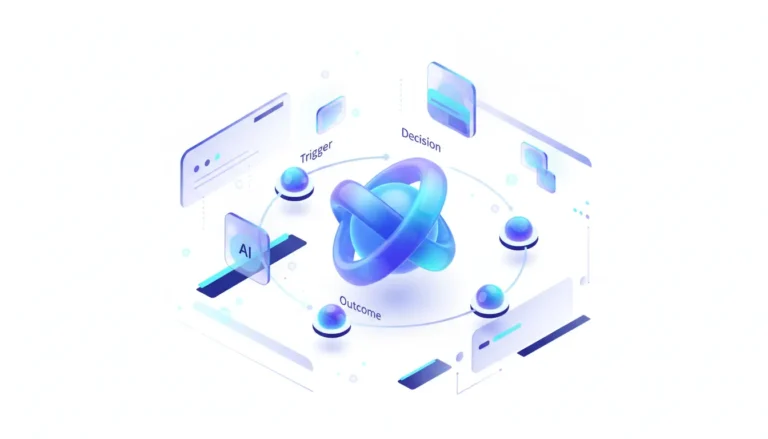
The era of manually spot-checking LLM outputs is over. As AI moves from demo to production, a new engineering discipline is emerging: automated, continuous, and auditable Quality Assurance. This shift isn’t just about finding bugs; it’s about building the trust layer required for enterprise-scale AI, turning non-deterministic models into reliable products.
Quick Take
- Summary: The AI industry is rapidly moving past ad-hoc, manual assessments of LLM applications towards systematic, automated Quality Assurance frameworks. This new discipline is essential for ensuring the functional correctness, safety, and reliability of AI products before they reach users, enabling teams to ship features faster and with greater confidence.
- What happened: Engineering teams are adopting specialized open-source frameworks (like DeepEval, Ragas, and Giskard) and methodologies to test LLM-powered systems. This involves moving beyond simple accuracy metrics to evaluate complex qualities like faithfulness (is the answer based on the context?), Retrieval-Augmented Generation (RAG) groundedness, and resilience against jailbreaks and prompt injections.
- Why it matters now: Without automated QA, scaling LLM features is brittle, risky, and expensive. This new engineering practice provides measurable quality gates, enabling CI/CD (Continuous Integration/Continuous Deployment) for AI, preventing performance regressions, and building the foundation for auditable compliance with emerging standards like the ISO/IEC AI management frameworks.
- Who is most affected: MLOps engineers, QA leaders, AI product managers, and compliance officers are at the center of this shift. They are responsible for building, implementing, and managing these new evaluation pipelines to de-risk AI deployments.
- The under-reported angle: While most discussion focuses on what to test (e.g., bias, toxicity), the critical, under-reported story is how to operationalize it. The real innovation is in building reliable LLM-as-a-Judge evaluators, creating automated quality gates in CI/CD pipelines, and generating the immutable evidence required for governance and regulatory scrutiny.
Deep Dive
Have you ever wondered why traditional software testing feels like a square peg in the round hole of generative AI? The generative AI boom created a quality assurance vacuum. Traditional software QA, built on deterministic logic and binary pass/fail outcomes, is fundamentally incompatible with the probabilistic, non-deterministic nature of Large Language Models. For the past year, the industry’s solution has been a patchwork of manual spot-checks, “golden set” evaluations, and vibes-based assessments – a process that is unscalable, inconsistent, and unacceptable for enterprise-grade products. This Wild West phase is ending as a new, engineering-first discipline of LLM QA takes root.
The new paradigm treats LLM evaluation as a core engineering problem, not an afterthought. It’s defined by specialized frameworks like DeepEval and Ragas that provide standardized metrics for previously subjective qualities. For Retrieval-Augmented Generation (RAG) systems – the dominant architecture for enterprise AI – this means moving past “did it answer the question?” to quantifiable metrics like context relevance, answer faithfulness, and retriever recall. Teams are now building automated evaluation pipelines that run against every code commit, treating a drop in groundedness with the same severity as a critical bug in traditional software. From what I’ve seen in recent projects, this approach really starts to pay off once it’s embedded in the workflow.
One of the most powerful, yet complex, techniques emerging is LLM-as-a-Judge, where another LLM is used to score the output of the model being tested. While this offers unprecedented scale for evaluation, it introduces a meta-problem: who judges the judge? The most sophisticated teams are now focused on the reliability of their evaluation systems, designing explicit rubrics, running calibration tests, and measuring inter-rater agreement between the AI judge and human experts to ensure the evaluator itself is trustworthy and not sensitive to prompt variations. That said, it’s a bit like building a house of cards – get one layer wrong, and the whole thing wobbles.
Ultimately, this shift is about integrating AI quality directly into the software development lifecycle (SDLC). The goal is to create a true CI/CD (Continuous Integration/Continuous Deployment) loop for AI. This involves setting up quality gates in GitHub Actions or GitLab CI that automatically block a release if key metrics – such as latency, cost-per-query, or hallucination rate – regress. It also includes continuous evaluation in production to detect model drift and trigger rollbacks, transforming QA from a pre-release checkpoint into a perpetual monitoring system. Plenty of reasons to think this will become standard practice soon enough.
This operational rigor extends beyond product quality to governance and compliance. As regulators and standards bodies (like ISO/IEC) turn their attention to AI, the ability to prove you tested for safety risks like PII leakage, toxicity, and bias becomes a critical business function. Automated QA pipelines are the mechanism for this, generating an auditable trail of test cases, results, and release decisions. This documentation is no longer just for internal developers; it’s becoming essential evidence for auditors, regulators, and enterprise customers who demand proof of responsible AI development. It’s a change that’s overdue, if you ask me.
Stakeholders & Impact
| Stakeholder / Aspect | Impact | Insight |
|---|---|---|
| MLOps & QA Engineers | High | Must master new tools (DeepEval, Ragas) and concepts (faithfulness, LLM-as-a-Judge) to build and maintain automated evaluation pipelines within CI/CD systems. |
| AI Product & Business Leaders | High | Can now set and enforce measurable quality SLAs for AI features, reducing reputational risk, lowering support costs, and accelerating time-to-market for new capabilities. |
| LLM & Tool Providers | Medium–High | The demand for reliable QA will create a competitive market for evaluation frameworks, MLOps platforms, and specialized models fine-tuned for judging tasks. |
| Regulators & Compliance Officers | Significant | Automated QA provides the auditable evidence trail needed to demonstrate compliance with emerging AI regulations and standards, moving from policy statements to provable actions. |
About the analysis
Researched and written with AI assistance under the editorial responsibility of the i10X News team. The title image is an AI-generated illustration. Read our AI Use Policy. Spotted an error? Request a correction.
This i10x analysis is based on a review of emerging LLM QA methodologies, open-source evaluation frameworks, and engineering best practices discussed in technical papers and practitioner guides. It is written for engineering managers, MLOps professionals, and CTOs tasked with operationalizing reliable and compliant AI applications.
i10x Perspective
Ever feel like the AI world is growing up right before our eyes? The professionalization of LLM Quality Assurance is a critical maturation signal for the entire AI industry. It marks the transition from AI as a high-potential research experiment to AI as a core, mission-critical enterprise technology stack. The “move fast and break things” ethos that defined the early days of generative AI is being replaced by a “move fast and prove it’s safe” mandate. In the near future, the competitive moat for AI companies won’t be the raw capability of their foundation models, but the demonstrable reliability, safety, and trustworthiness of the products they ship – and the sophisticated infrastructure they build to prove it. I’ve noticed how this reliability focus is already shifting priorities in boardrooms, and it’s only going to accelerate from here.