ml-intern: Hugging Face’s Agent for LLM Post-Training Workflows
⚡ Quick Take
Have you ever wondered what happens after the excitement of training a massive language model fades, when the real grind of shaping it for actual use begins? Hugging Face just dropped ml-intern, their open-source AI agent that’s laser-focused on smoothing out that pricey, tangled post-training workflow for LLMs. It’s a smart move to turn the messy “last mile” of model development—think fine-tuning, preference optimization, and evaluation—into something more like a reliable, MLOps-powered routine, rather than the handcrafted puzzle it often feels like.
What happened: Hugging Face unveiled ml-intern, this fresh open-source AI agent tailored for one thing: automating the LLM post-training lifecycle. Unlike broader setups like AutoGen or CrewAI, it’s no jack-of-all-trades—it’s a specialized conductor, handling everything from literature reviews to data prep, firing off fine-tuning jobs (SFT, DPO), and tackling evaluation benchmarks with precision.
Why it matters now: Base models are getting cheaper and more off-the-shelf every day, so the real edge comes from that post-training polish and specialization. Right now, though, it’s a major roadblock—full of manual scripts and shaky reproducibility that slow everyone down. Hugging Face is betting big on automation here to speed up the loop for building custom models, handing developers an efficient production line for leveling up their LLMs, really.
Who is most affected: This hits home hardest for ML engineers, LLM researchers, and MLOps crews. For them, ml-intern could cut out the drudgery of manual tasks while baking in solid habits like tracking experiments and tracing data lineage. At the same time, it’s nudging rival agent tools to sharpen their pitch, especially when it comes to streamlining LLM development workflows.
The under-reported angle: Sure, the headlines are all about the agent itself, but dig a bit deeper, and you’ll see Hugging Face cleverly weaving ml-intern into their world to keep users hooked. It’s built for seamless ties with Transformers, TRL, Accelerate, and the Hub, turning the whole Hugging Face suite into the go-to backbone for open-source model work. This isn’t merely a gadget—it’s a quiet way to build a lasting edge.
🧠 Deep Dive
Ever felt like the heavy lifting in AI doesn’t end with a shiny base model, but starts there, in that tricky post-training stretch where you mold it for something specific? That’s where the magic—or the frustration—happens in enterprise setups. It’s this hands-on, sometimes downright disorderly cycle of wrangling data, kicking off fine-tuning scripts like Supervised Fine-Tuning (SFT) or Direct Preference Optimization (DPO), and then testing how it stacks up. Slow? Check. Costly? Absolutely. Reproducible? Not always, from what I’ve seen in various teams. Enter Hugging Face’s ml-intern, a tool built to chip away at that very snag.
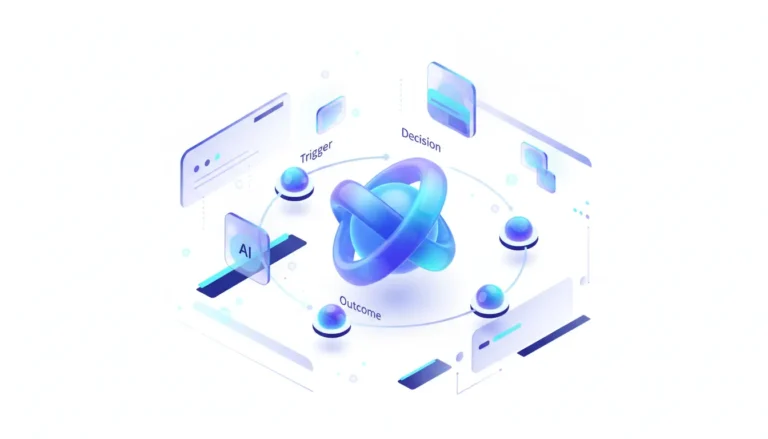
Think of ml-intern as your AI-savvy project lead for the post-training stage. Give it a clear directive, say, “boost Llama 3’s coding chops on Python benchmarks,” and it takes the wheel: scanning fresh papers for cutting-edge methods, pulling together training data, running those fine-tuning runs with TRL and PEFT under the hood, and capping it off with benchmark evals. What used to rely on a mishmash of bash commands, scribbled notes, and team lore? Now it’s streamlined, almost methodical.
This feels like a textbook MLOps shift to me. The agent’s true payoff isn’t only about picking up the pace—though that’s huge—it’s about bringing order and reliability to the table. Handling the full workflow means built-in tracking for experiments, clear data trails, and smarter cost controls. For companies aiming to craft AI that’s not just good but defensible, flipping from those one-off fine-tunes to a structured, automated setup marks real progress. It tackles those nagging enterprise headaches, from security slips to compliance worries and those GPU bills that spiral out of nowhere.
That said, ml-intern isn’t popping up in an empty field—the AI agent world is buzzing with options like LangGraph, AutoGen, and CrewAI. But here’s the thing: it’s all about focus. Those general frameworks shine for weaving together intricate, multi-agent systems, while ml-intern zeros in on the nuts-and-bolts of model building itself. Not your pick for crafting a slick customer service bot, no—it’s the engine room for making even better bots. That narrow aim? It’s what gives it real staying power, slotting it as core MLOps gear, not just another add-on for apps.
📊 Stakeholders & Impact
| Stakeholder / Aspect | Impact | Insight |
|---|---|---|
| LLM Developers & Researchers | High | Cuts down the grunt work in SFT/DPO loops, letting you iterate quicker and tinker with fresh post-training ideas without the usual headaches. |
| MLOps & Platform Teams | High | Delivers a repeatable, hands-off structure for one of the messiest ML phases—think better oversight, expense monitoring, and that elusive reproducibility we’ve all chased. |
| Hugging Face | Strategic | Bolsters the pull of their ecosystem. ml-intern glues together libraries like Transformers, TRL, and Accelerate, making it tougher to wander off from their platform. |
| Competing Agent Frameworks | Medium | Pushes them to get specific on their roles. Tools like AutoGen or LangGraph might need to spell out how they fit—or fight—in the MLOps automation niche. |
✍️ About the analysis
Researched and written with AI assistance under the editorial responsibility of the i10X News team. The title image is an AI-generated illustration. Read our AI Use Policy. Spotted an error? Request a correction.
This comes from an independent i10x lens, drawing straight from ml-intern’s rollout details and the well-known rough spots in today’s LLM pipelines. I’ve pulled these takeaways from sifting through the common struggles in post-training, aimed squarely at ML engineers, team leads, and CTOs pondering how to scale up their AI processes in a way that’s solid and repeatable.
🔭 i10x Perspective
What if the next big wave in AI isn’t about chasing ever-bigger models, but about perfecting the systems that customize them at speed? The launch of ml-intern points to just that pivot—we’re leaving behind the thrill of uncovering what base models can do, stepping into an age where specializing them becomes an industrial-strength operation.
From my vantage, Hugging Face isn’t content being a simple model hub anymore; they’re crafting the full, software-fueled production line for smarter AI. As agents like ml-intern evolve, fine-tuning and model tweaks will turn into everyday commodities, squeezing companies that bank solely on a marginally superior closed model. The real showdown ahead? It’s for the tools that shape—and safeguard—the whole craft of building AI.